 Jobboy

Introduction: Why Time Zone Mastery Matters for Digital Nomads
In 2026, the digital nomad lifestyle continues to thrive, with remote workers spanning continents to collaborate with clients in New York, London, Singapore, and beyond. Effective time zone strategies are essential for maintaining productivity, meeting deadlines, and preserving work-life balance. Poor scheduling can lead to missed calls, delayed projects, and exhaustion from irregular hours. This guide delivers actionable advice tailored to freelancers and remote professionals seeking to optimize their global workflows. Whether you are based in Southeast Asia or Latin America, mastering overlaps ensures you deliver high-quality remote work without constant disruption to your personal life. Many nomads report that structured time zone planning increases client retention by fostering reliability and reducing miscommunications that arise from simple oversights in hour calculations.
Understanding Core Time Zone Challenges in Remote Work
Digital nomads often juggle 3–6 time zones daily. The key is identifying overlap windows that respect all parties while protecting personal energy. For example, a freelancer in Bali (UTC+8) working with clients in California (UTC-7) and Germany (UTC+1) must calculate overlaps carefully to avoid 3 a.m. meetings. Tools like timeanddate.com provide reliable converters updated for 2026 daylight saving changes. Additional challenges include sudden shifts due to political changes in time zone policies and the mental load of constantly converting times mentally during conversations. Understanding these issues early prevents downstream problems such as client frustration or personal fatigue that compounds over weeks of inconsistent schedules.
Selecting Optimal Overlap Hours
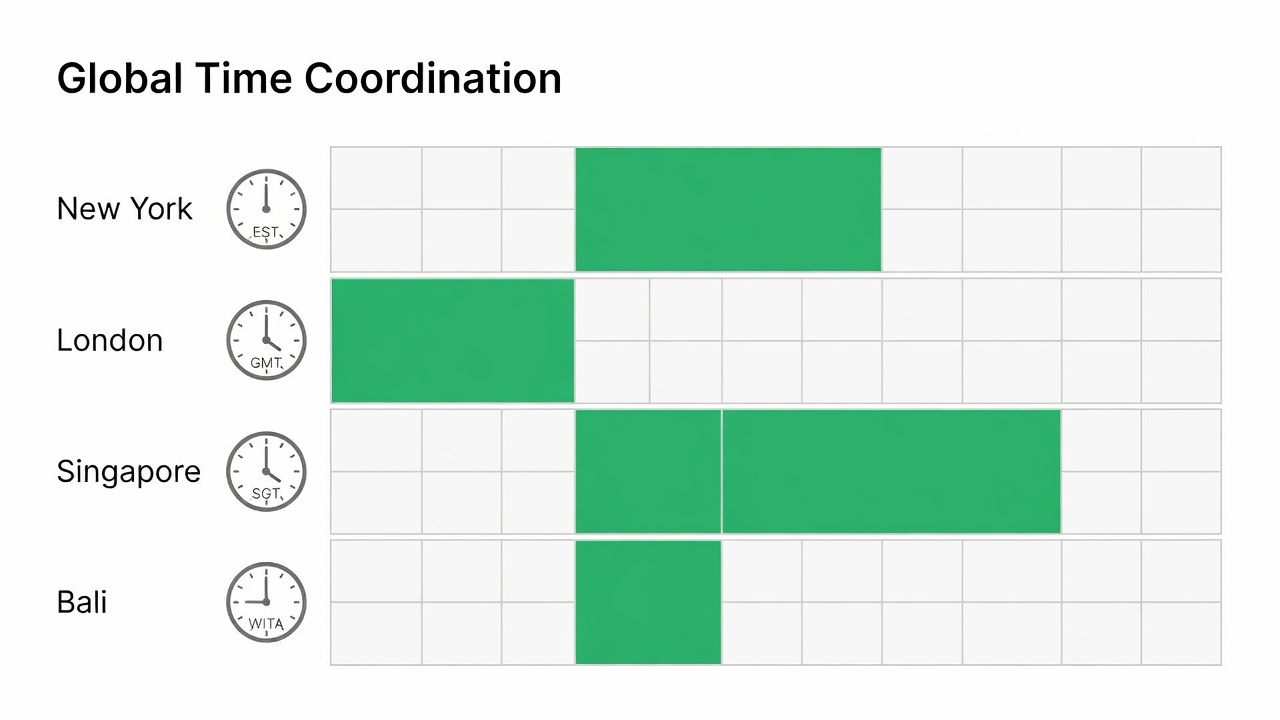
Begin by mapping your clients’ zones against your location. Aim for 2–4 hour overlap blocks during your peak productivity times. Prioritize high-value clients for prime slots. Use a simple matrix: list each client’s local business hours, then highlight mutual availability. This prevents constant rescheduling and builds trust through reliability. Consider seasonal variations, such as longer daylight hours in summer months that might naturally extend productive windows in certain regions. Test overlaps for one month before finalizing recurring blocks to ensure they align with actual energy levels rather than theoretical calculations alone.
Step-by-Step Process for Building a Weekly Calendar
- Choose a master tool (detailed below) and input all recurring client hours, including any one-off project deadlines that span multiple weeks.
- Block personal deep-work time first, typically 4-hour focused sessions in your morning when cognitive performance peaks, then protect these blocks from encroachment.
- Layer in overlap meetings, leaving 30-minute buffers between zones to allow for transitions such as preparing notes or switching between video platforms.
- Review every Sunday evening to adjust for any daylight saving shifts or client updates, ensuring the calendar remains accurate throughout the week.
- Share a public availability link with clients to reduce back-and-forth emails and empower them to self-schedule within your defined windows.
Following this process consistently creates a repeatable system that scales as your client base grows, minimizing the weekly planning overhead that often leads to decision fatigue.
Comparing Scheduling Tools: World Time Buddy vs Google Calendar
World Time Buddy excels at visual multi-zone displays, allowing quick drag-and-drop overlap views across 10+ cities. It is ideal for complex global teams. Google Calendar integrates seamlessly with email and video tools, offering recurring events and smart suggestions, though its time zone handling requires manual toggling. Many nomads use both: World Time Buddy for planning, then export to Google Calendar for execution. Test both during a one-week trial to see which interface reduces cognitive load. Additional features worth evaluating include mobile notifications, team sharing permissions, and integration with project management platforms like Asana or Trello. World Time Buddy shines when you need instant visual confirmation of overlaps, while Google Calendar provides superior automation for reminders and recurring patterns. In practice, combining them gives the best of both visual planning and execution reliability.
Real-World Case Studies of Successful Nomads
Sarah, a content strategist based in Portugal, manages U.S. East Coast and Australian clients by front-loading her week with 7–10 a.m. overlaps. She reports a 40% drop in rescheduled meetings after implementing fixed overlap blocks. Similarly, developer Raj in Thailand uses automated rules in his calendar to protect 10 p.m.–2 a.m. sleep windows, resulting in higher client satisfaction scores and fewer missed deadlines. Another example is Maria, a graphic designer in Mexico City, who coordinates with European marketing agencies by dedicating Tuesday and Thursday afternoons to 4-hour overlap sessions. She attributes her ability to take on two additional clients without increasing weekly hours directly to this disciplined approach. These cases illustrate that proactive planning leads to measurable improvements in output quality and personal sustainability.
Creating Personal Routines That Respect Multiple Zones
Establish non-negotiable anchors: consistent wake-up, meal times, and wind-down rituals. Use apps that simulate natural light cycles to combat jet-lag-like effects from zone-hopping. Batch communications into two daily windows rather than constant monitoring. This structure supports sustainable remote work without constant context switching. Incorporate movement breaks every 90 minutes during overlap periods and maintain a dedicated workspace that signals the transition into work mode regardless of the local clock time. Over time, these routines train both your body and clients to respect your structured availability.
Tips for Avoiding Burnout from Odd Hours
- Never schedule more than two late or early calls per week to preserve recovery time and prevent cumulative sleep debt.
- Track energy levels in a simple journal for two weeks to identify patterns and adjust overlap blocks accordingly.
- Build recovery days after heavy overlap periods, treating them as non-negotiable rest to maintain long-term productivity.
- Communicate boundaries clearly to clients upfront so expectations remain realistic from the start of any engagement.
- Leverage asynchronous updates via recorded videos when live overlap is impossible, reducing the need for real-time presence across extreme time differences.
FAQ: Common Time Zone Pain Points for Digital Nomads
How do I handle last-minute deadline changes across zones?
Build a 24-hour buffer into all deliverables. Use shared project boards with clear timestamps in UTC to eliminate confusion and ensure everyone references the same baseline regardless of location.
What if a client insists on their 9 a.m. slot that falls at 2 a.m. my time?
Politely offer two alternative overlaps within their business day and explain your productivity rationale. Most clients appreciate the transparency and are willing to compromise when presented with clear options.
Are there free tools that handle 2026 daylight saving automatically?
Both World Time Buddy and Google Calendar update automatically for daylight saving rules published by IANA, the organization responsible for maintaining the global time zone database at iana.org/time-zones.
How can I manage personal appointments alongside client overlaps?
Color-code personal events in your master calendar and treat them with the same priority as client meetings. This prevents accidental double-booking and reinforces work-life boundaries.
Conclusion
Mastering time zone strategies empowers digital nomads to deliver exceptional remote work results while protecting personal well-being. Start with one overlap mapping session this week, test the recommended tools, and refine your calendar process. The result is higher client retention, consistent output, and a sustainable nomadic career in 2026 and beyond. By implementing these detailed approaches, you create a professional foundation that scales with your growing global network.


No comments yet. Be the first!