 Jobboy

Introduction: Starting Your Remote Career Journey in 2026
Entering the world of remote work without prior experience can feel overwhelming, but 2026 offers more accessible entry points than ever for beginners. The gig economy continues to expand rapidly, creating opportunities for aspiring freelancers and job seekers who are just starting out. This comprehensive guide focuses on finding legit remote jobs and side hustles by targeting keywords like remote jobs and side hustle. It covers everything from identifying suitable roles to optimizing profiles, building skills for free, comparing job boards, avoiding scams, and securing your first client. Whether you are looking for part-time flexibility or a full transition to remote work, the strategies here provide actionable steps with real-world examples to help you succeed.
Identifying High-Demand Entry-Level Remote Roles
Many remote positions in 2026 welcome newcomers who demonstrate basic computer literacy and a proactive attitude. High-demand entry-level roles include virtual assistance, data entry, social media management, customer support, content moderation, transcription, and online research. These positions often provide on-the-job training and require minimal prior background. For example, virtual assistants handle scheduling, email management, and basic administrative tasks using tools like Google Calendar and Slack. Customer support roles involve responding to inquiries via chat or email, with companies supplying scripts and guidelines during initial weeks. Social media management for small businesses might start with scheduling posts using free tools like Buffer. Beginners can quickly build experience by taking on small projects that showcase reliability and attention to detail. Research industry trends through free reports from major career sites to stay updated on emerging opportunities in areas like e-commerce support and digital content moderation.
Optimizing Profiles on Freelance Platforms
Creating compelling profiles on platforms such as Upwork and Fiverr forms the foundation for attracting clients. Begin with a professional headshot that conveys approachability and competence. Craft a bio that highlights transferable skills from school projects, volunteer work, or personal hobbies, while naturally incorporating phrases like remote jobs and side hustle. Include a portfolio section even if it starts with sample work or mock projects. Add relevant keywords throughout the profile description to improve search visibility. Set up availability calendars and response times to demonstrate professionalism. Many beginners succeed by offering introductory packages at accessible rates initially to gather positive reviews. For instance, a new freelancer might create a Fiverr gig offering basic data entry services with clear deliverables and turnaround times, leading to repeat business and referrals.
Leveraging Free Skill-Building Resources
Developing in-demand skills requires no financial investment thanks to abundant free resources available in 2026. Platforms like Coursera offer audit options for courses on digital marketing and productivity tools, while Google Career Certificates provide structured learning paths in areas such as IT support and project management. YouTube channels dedicated to freelance skills teach Canva design, basic Excel functions, and customer service best practices through step-by-step tutorials. Dedicate consistent time each day, perhaps 90 minutes, to complete modules and practice exercises. Real-world examples abound: one beginner completed free LinkedIn Learning sessions on social media strategy and landed a side hustle managing Instagram accounts for local businesses within a month. Another used free YouTube transcription tutorials combined with practice on public domain content to secure initial remote transcription gigs. Track progress with simple spreadsheets listing completed courses and new skills acquired, then update profiles accordingly to reflect these additions.
Comparing Popular Job Boards
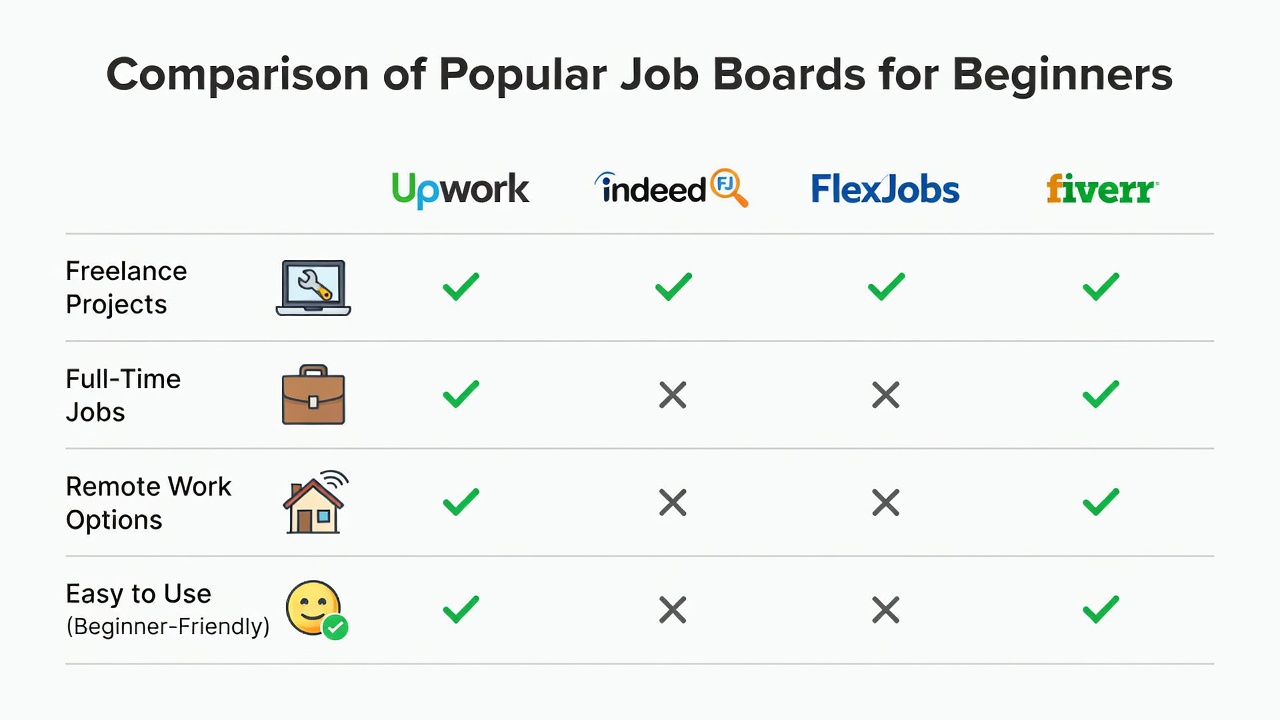
Selecting the right platforms streamlines your search and maximizes success rates. Here is a detailed comparison of leading options:
- Upwork: Ideal for freelancers seeking varied gigs; features proposal systems and client feedback but requires strong initial applications to stand out.
- Indeed and LinkedIn: Excellent for discovering full-time and part-time remote listings with one-click applications and company reviews; LinkedIn also supports networking through groups and direct messaging.
- FlexJobs: Focuses exclusively on verified remote and flexible opportunities, reducing scam exposure and offering curated listings suitable for beginners.
- Fiverr: Suited for creating gig-based side hustles where you define services; success depends on attractive thumbnails and competitive delivery timelines.
Experiment with two or three platforms simultaneously while maintaining an organized spreadsheet to track submissions, responses, and follow-ups. This approach prevents duplication and highlights which boards yield the best results for your target roles.
Step-by-Step Guide to Landing Your First Remote Job
Follow this structured process to move from application to offer efficiently. First, tailor your resume and LinkedIn profile to emphasize any relevant experiences, even informal ones, using action verbs. Second, submit 5 to 10 targeted applications daily, customizing each cover letter to reference specific job requirements. Third, engage in online communities such as Reddit’s r/remotejobs or specialized Discord servers to learn from peers and discover unadvertised openings. Fourth, prepare for interviews by rehearsing responses to common questions using free mock interview tools. Fifth, send polite follow-up messages after seven days if no reply arrives. Real examples show that consistent daily effort often leads to first opportunities within four to eight weeks, with many beginners securing virtual assistant roles after refining their outreach based on feedback from initial rejections.
Building a Portfolio and Networking Strategies
Even without paid experience, create a simple portfolio website using free builders like WordPress.com or Carrd to showcase sample projects. Include case studies of hypothetical tasks completed during skill-building courses. Networking amplifies visibility; join LinkedIn groups focused on remote work and participate in discussions by offering helpful insights. Attend virtual webinars hosted by industry leaders to connect with potential mentors. These activities often result in referrals that bypass traditional application processes.
Avoiding Common Scams
Protect yourself by recognizing warning signs such as requests for upfront payments, vague job details, or pressure to communicate outside verified platforms. Always verify employer legitimacy through official company websites and cross-check contact information. Stick exclusively to established platforms with built-in payment protections. Additional precautions include never sharing banking details until contracts are signed and using two-factor authentication on all accounts. Numerous beginners have avoided losses by researching company names on trusted review sites before proceeding with applications.
FAQ
How long does it take to get the first remote job?
Most beginners who apply consistently and optimize profiles secure an initial role within one to two months, though timelines vary based on effort and market conditions.
How do I get my first client as a freelancer?
Begin with straightforward gigs on platforms like Fiverr, deliver exceptional results, request testimonials, and gradually increase rates as reviews accumulate.
Are there truly no-experience remote jobs?
Yes, numerous entry-level positions offer training; focus applications on roles emphasizing willingness to learn alongside basic digital skills.
What should I include in my first proposals?
Highlight availability, relevant free training completed, and a clear plan for delivering results, keeping messages concise yet personalized.
Conclusion
With consistent application of the strategies detailed throughout this guide, landing legitimate remote jobs and side hustles without prior experience becomes entirely achievable in 2026. Start by refining one profile today, commit to daily skill practice, and apply persistently for sustainable progress. Additional support is available through resources at Upwork, LinkedIn, FlexJobs, and Indeed. Success comes from persistence and strategic action, opening doors to flexible and rewarding remote careers.


No comments yet. Be the first!