 Jobboy
Introduction to Deep Work for Remote Freelancers
In 2026, remote freelancers face unprecedented distractions in home offices, from endless notifications to family interruptions. Deep work, as popularized by Cal Newport, refers to professional activities performed in a state of distraction-free concentration that push cognitive capabilities to their limit. This how-to article explores the science behind focused productivity and provides practical, actionable strategies to cultivate these habits effectively. Freelancers who master deep work often report higher output quality, better client satisfaction, and reduced burnout rates compared to those stuck in shallow task cycles.
By implementing structured routines tailored to home environments, you can transform scattered days into highly productive sessions. The goal is sustainable change rather than short-term intensity, ensuring long-term success in a competitive freelance market.
The Science of Deep Work
Research from cognitive psychology shows that the human brain can sustain intense focus for about 90 minutes before needing a break, aligning with ultradian rhythms. Studies from institutions like the American Psychological Association highlight how multitasking reduces efficiency by up to 40%. For freelancers, embracing deep work counters the shallow work trap of constant emails and quick tasks that fragment attention.
Neuroplasticity supports habit formation: consistent practice rewires the brain for better attention spans over time. Additional findings from the National Institutes of Health emphasize the role of dopamine regulation in maintaining motivation during prolonged focus periods. In 2026, with remote work dominant and digital interruptions rising, these principles remain vital for maintaining a competitive edge. Understanding the biological basis helps freelancers appreciate why random productivity hacks often fail while systematic approaches succeed.
Designing Your Environment for Focus
Environment design is foundational to deep work success. Start by creating a dedicated workspace free of clutter and visual noise. Use noise-cancelling headphones or white noise apps to mask household sounds. Position your desk near natural light but away from high-traffic areas like kitchens or living rooms. Remove visual triggers such as phones, unrelated browser tabs, or tempting snacks that pull focus.
Practical steps include auditing your office today and removing one distraction item per day for a week. Add elements like a standing desk converter or ergonomic chair to support physical comfort during long sessions. Consider scent cues such as a specific essential oil diffuser activated only during work blocks to train your brain for focus mode. This gradual approach builds sustainable change without overwhelm, leading to measurable improvements in session length within the first month.
Time-Blocking and Daily Routines
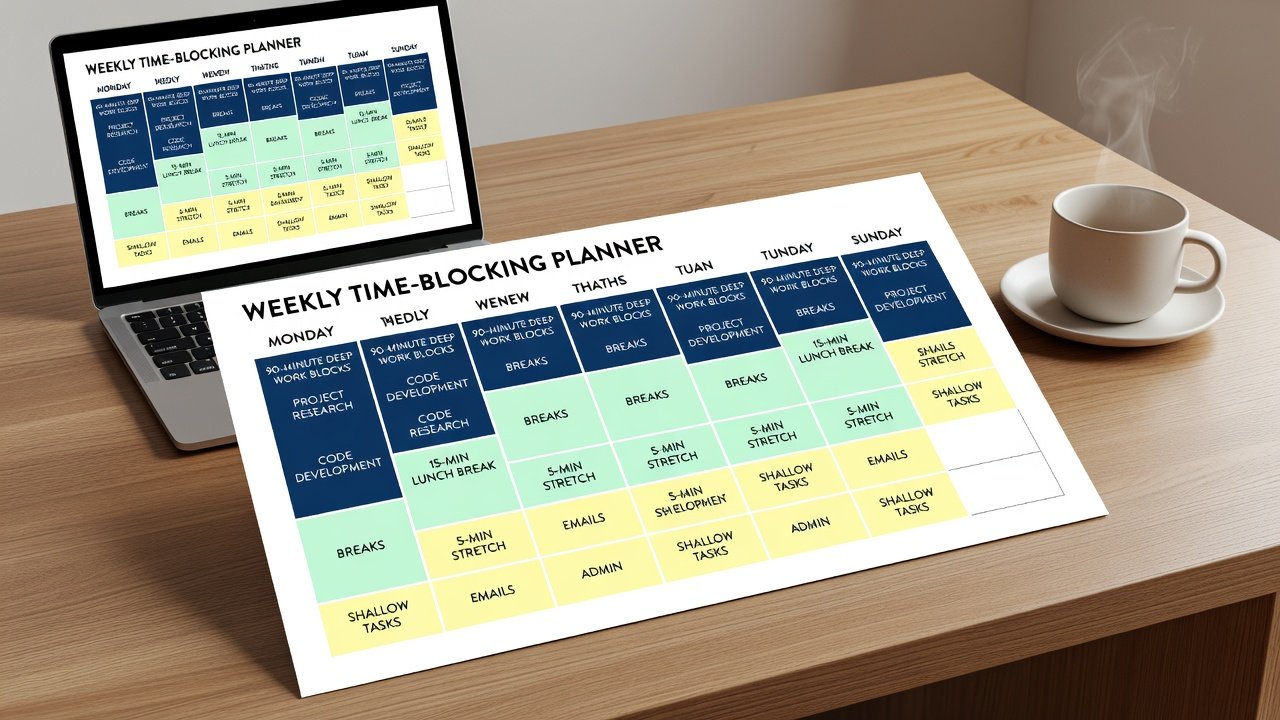
Time-blocking divides your day into focused segments, protecting deep work from interruptions. Schedule 90-minute deep work blocks in the morning when energy peaks, followed by 20-minute breaks using a modified Pomodoro variant suited for complex tasks. Include buffer time between blocks for transitions and unexpected issues.
A sample 2026 routine for a typical freelancer might look like this:
- 7:00 AM - 8:30 AM: Deep work on primary client project
- 8:30 AM - 9:00 AM: Break with movement or hydration
- 9:00 AM - 10:30 AM: Second deep work block on creative tasks
- 10:30 AM - 11:00 AM: Review and planning
- Afternoon: Shallow tasks like emails, admin, or client calls
- Evening: Wind-down and next-day preparation
Track adherence with a simple journal noting completed blocks and distractions encountered. Adjust for personal chronotypes, such as shifting blocks later for night owls. Over four weeks, most users see a 30% increase in completed high-value tasks.
Focus Apps vs Analog Methods: A Comparison
Digital tools like Freedom or Forest block distractions effectively through website and app restrictions, but they can introduce screen fatigue for those already on computers all day. Analog methods, such as paper planners or physical kitchen timers, offer tactile benefits and reduce tech reliance while promoting mindfulness. Many successful freelancers combine both approaches: use an app for blocking during sessions and a notebook for logging insights or task priorities.
Pros of apps include automation and data tracking; cons involve potential subscription costs and learning curves. Analog pros center on simplicity and no battery needs, while cons include lack of reminders. Choose based on your personal style—tech-savvy users prefer apps, while those seeking minimalism lean analog. Test each for one month and compare focus duration metrics like words written or designs completed to decide what works best.
Real-World Examples from Remote Workers
Consider a graphic designer in a small apartment who blocks mornings strictly for client briefs, achieving 25% more revisions completed monthly by eliminating afternoon distractions. Another example is a content writer who uses environment cues like a specific desk lamp turned on only for deep sessions, leading to faster article turnaround and higher client retention. A third case involves a virtual assistant who combines time-blocking with family boundary signals, resulting in consistent five-hour focused periods and improved work-life satisfaction. These examples demonstrate measurable gains in output quality and reduced burnout when habits are applied consistently.
Step-by-Step Implementation Plan
- Week 1: Assess current habits through a distraction log and design your workspace with targeted changes.
- Week 2: Introduce one 90-minute block daily, starting with your highest-priority task and noting any interruptions.
- Week 3: Add environment tweaks such as lighting or sound adjustments while tracking distraction frequency.
- Week 4: Evaluate progress using metrics like tasks finished or hours logged, then adjust blocks or tools accordingly.
Monitor outcomes such as billable hours, client feedback scores, or personal energy levels to refine the system continuously.
Measuring Outcomes and Tracking Progress
To ensure deep work habits deliver results, establish clear metrics from the start. Track weekly deliverables completed, average focus session length, and subjective satisfaction ratings on a 1-10 scale. Use free tools like spreadsheets or journals rather than complex software. After 30 days, compare against baseline data to quantify improvements, such as increased project completion rates or reduced stress. Regular reviews help identify what to amplify and what to drop.
Common Mistakes to Avoid
Many freelancers fail by starting with overly ambitious blocks that lead to burnout or by ignoring physical needs like posture and hydration. Another pitfall is inconsistent boundary setting with family or clients, allowing interruptions to erode progress. Avoid jumping between multiple tools without testing periods, as this fragments focus further. Instead, commit to one method for a full month before evaluating.
FAQ: Addressing Common Challenges
How do I handle notifications?
Turn off non-essential alerts during blocks and use do-not-disturb modes synced to your schedule. Batch responses for set times outside deep work periods.
What about family interruptions?
Communicate boundaries clearly with household members in advance. Use visual signals like a closed door, headphones, or a sign to indicate uninterrupted time.
Is deep work realistic for all freelancers?
Yes, with adaptation. Start small with 45-minute blocks and build tolerance gradually for sustainable results across different work styles.
How long until I see results?
Most practitioners notice improved focus within two weeks and significant productivity gains by week four when tracking consistently.
Conclusion
Cultivating deep work habits empowers remote freelancers to thrive in 2026's distraction-filled landscape. By focusing on science-backed methods, tailored routines, environment optimization, and consistent tracking, you can achieve superior productivity and better work-life balance. Begin today with one small change, such as a single focused block, and build from there for lasting professional impact.

No comments yet. Be the first!