 Jobboy

Introduction
In 2026, freelancers navigating the gig economy and international clients frequently encounter friction with traditional payment methods. Delays from wire transfers, high fees on platforms like PayPal, and currency conversion complications can disrupt cash flow and project timelines. Blockchain payments provide a modern solution by leveraging decentralized networks for direct, secure transfers that settle in minutes rather than days. This comprehensive guide walks through setting up systems on platforms such as Ethereum and Solana, including wallet configuration, smart contract implementation, and practical strategies for remote workers. Whether you are a digital nomad or a location-independent professional, understanding these tools can streamline your operations and expand your client base globally.
The search for secure, low-fee transaction methods has grown as more freelancers seek alternatives to legacy banking. Blockchain addresses core pain points by eliminating intermediaries, offering transparency through immutable ledgers, and supporting programmable agreements via smart contracts. Throughout this article, we examine real-world applications, compare performance metrics, and address potential risks including volatility and regulatory considerations relevant to 2026.
Why Blockchain Payments Suit Freelancers
Traditional banking systems often impose multi-day processing times for cross-border payments and charge fees ranging from fixed amounts to percentage-based commissions. Blockchain networks operate continuously without holidays or business-hour restrictions, enabling 24/7 transactions. Freelancers benefit from near-instant confirmation on efficient chains, reduced exposure to intermediary failures, and the ability to receive payment in stablecoins that maintain value parity with major currencies.
Additionally, blockchain fosters trust in client relationships through verifiable transaction histories. Public explorers allow both parties to confirm payment status independently, minimizing disputes over completed work. For those managing multiple international clients, this approach simplifies reconciliation and supports automated workflows that free up time for core creative or technical tasks.
Top Blockchain Platforms for 2026
Ethereum continues to lead in smart contract adoption due to its mature ecosystem and extensive developer tooling. Its transition to proof-of-stake has improved energy efficiency while maintaining strong security guarantees. Solana stands out for high-speed processing and minimal transaction costs, making it particularly attractive for freelancers handling frequent small invoices or micro-payments from clients worldwide.
Other options include layer-2 solutions built on Ethereum for even faster confirmations and lower costs. Stablecoins issued on these networks help freelancers avoid price fluctuations by anchoring value to established fiat references. When choosing a platform, consider your typical transaction volume, client locations, and comfort with network-specific wallets and tools.
Step-by-Step Wallet and Smart Contract Setup
Begin by selecting a reputable non-custodial wallet compatible with your chosen blockchain. For Ethereum, MetaMask offers browser integration and mobile support, while Phantom provides similar functionality for Solana. Download directly from official websites, create a new wallet, and store the recovery seed phrase in a secure offline location such as a hardware backup or encrypted note. Never share this phrase with anyone.
Next, acquire cryptocurrency or stablecoins through a licensed exchange and transfer funds to your wallet address. Always double-check the destination address to prevent loss. For Solana users, ensure the wallet supports the SPL token standard for stablecoins. Once funded, test a small outgoing transaction to familiarize yourself with gas fees and confirmation times.
Smart contract setup enables automated escrow for milestone-based projects. On Ethereum, platforms like Remix allow writing and deploying simple Solidity contracts that release funds upon client approval or predefined conditions. For Solana, the Anchor framework simplifies development of Rust-based programs. Start with audited open-source templates rather than custom code to reduce error risks. Deploy on test networks first, then migrate to mainnet after verification.
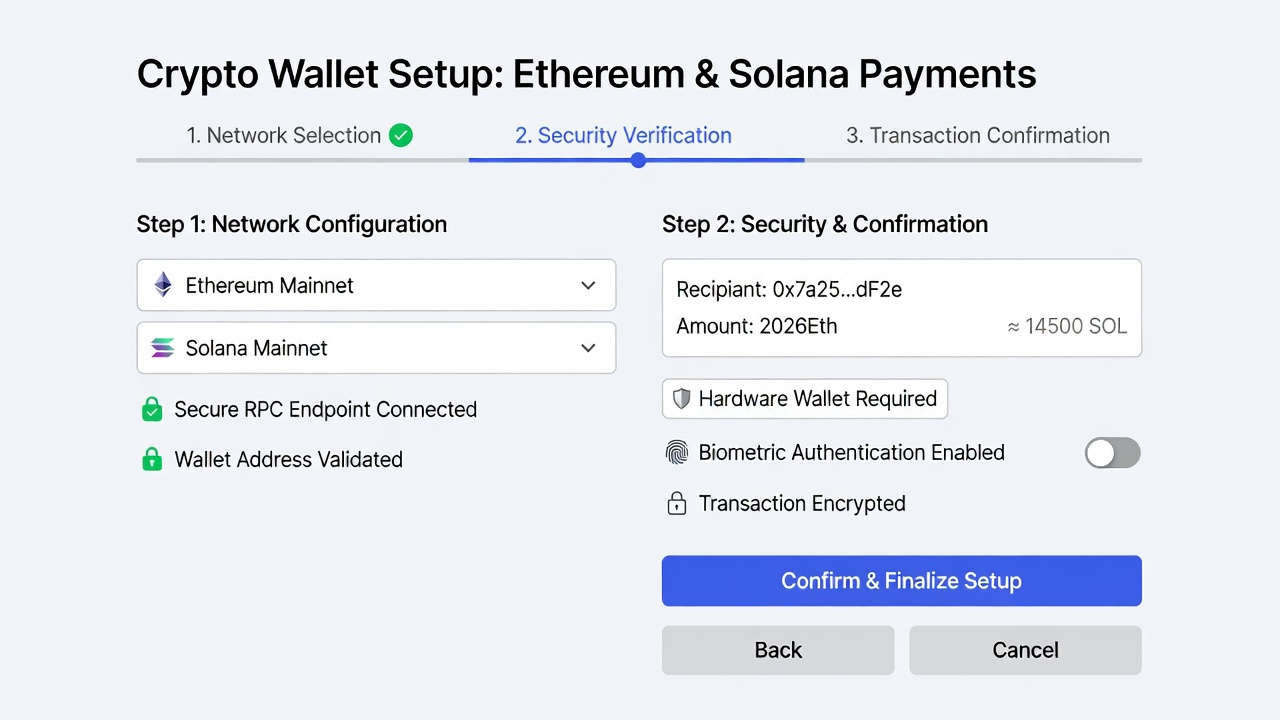
Integrate these tools into your invoicing workflow by providing clients with your wallet address or a payment link generated from the contract. Document each step and maintain records of all transactions for accounting purposes. Regular security audits of connected applications and periodic seed phrase rotation further protect your funds.
Speed and Cost Comparisons
Performance differences become evident when contrasting blockchain options with conventional services. Solana transactions typically achieve finality in under one minute, while Ethereum with layer-2 scaling solutions completes in two to five minutes. International wire transfers through banks may require three to five business days, and PayPal cross-border payments often involve one to three days plus additional verification holds.
Fee structures also favor blockchain for most freelancer scenarios. Network costs remain predictable and low regardless of transfer size, unlike percentage-based charges that scale with invoice amounts. This predictability aids budgeting and allows freelancers to offer competitive rates to clients sensitive to payment overhead.
Real-World Case Studies from Digital Nomads
A freelance graphic designer based in Thailand transitioned to Solana payments in early 2026 and now receives funds from European clients within seconds of invoice approval. Previously reliant on wire transfers that averaged seven days, the designer reported improved project turnaround and the ability to accept more short-term gigs without cash-flow concerns.
In another example, a software developer operating from Colombia implemented Ethereum smart contracts for milestone releases. By automating conditional payments, the developer reduced negotiation time with clients in North America and experienced a measurable drop in payment disputes. The transparent contract execution built client confidence, leading to repeat business and referrals.
A content writer traveling across Southeast Asia combined both platforms, routing larger retainers through Ethereum for its robust legal tooling and smaller one-off tasks via Solana for speed. This hybrid strategy minimized exposure to any single network while optimizing for client preferences and regional internet reliability.
Common Mistakes to Avoid
- Using custodial exchanges for long-term storage instead of transferring to personal wallets immediately after purchase.
- Deploying unaudited smart contracts without community review or professional audit.
- Ignoring network congestion periods that can temporarily increase fees or delays.
- Failing to maintain detailed transaction logs for tax reporting and client communication.
- Sharing wallet seed phrases or clicking suspicious links that lead to phishing attacks.
Security Best Practices
Protecting digital assets requires layered defenses. Enable hardware wallet integration for large balances, use unique strong passwords for every account, and activate two-factor authentication wherever available. Regularly review connected decentralized applications and revoke unused permissions. Educate yourself on common social engineering tactics targeting crypto users and verify all URLs before entering sensitive information.
Addressing Common Concerns in the FAQ
- How volatile is cryptocurrency? Stablecoins pegged to major currencies significantly reduce exposure to price swings, allowing freelancers to treat receipts similarly to traditional payments.
- What about taxes in 2026? Jurisdictions worldwide require reporting of cryptocurrency income. Maintain comprehensive records of acquisition costs, fair market values at receipt, and any subsequent conversions; consult local tax authorities or a qualified advisor for compliance.
- Is it secure? When best practices are followed, including hardware wallets and verified contracts, blockchain payments offer strong protection, though users must remain vigilant against evolving threats.
- Can clients without crypto experience use these systems? Many wallets now provide simple onboarding flows and fiat on-ramps that allow clients to pay directly from bank accounts while the freelancer receives cryptocurrency.
Conclusion
Implementing blockchain payments equips freelancers with tools for faster settlements, lower costs, and greater autonomy in 2026. Begin with a trusted wallet on Ethereum or Solana, progress to smart contract automation for complex projects, and adopt security habits that safeguard earnings. Official resources at ethereum.org and solana.com offer updated documentation and community support to guide your implementation. By integrating these systems thoughtfully, remote professionals can focus on delivering value rather than chasing payments.

No comments yet. Be the first!