 Jobboy
Introduction: Choosing the Right Recruiter Partnership in 2026
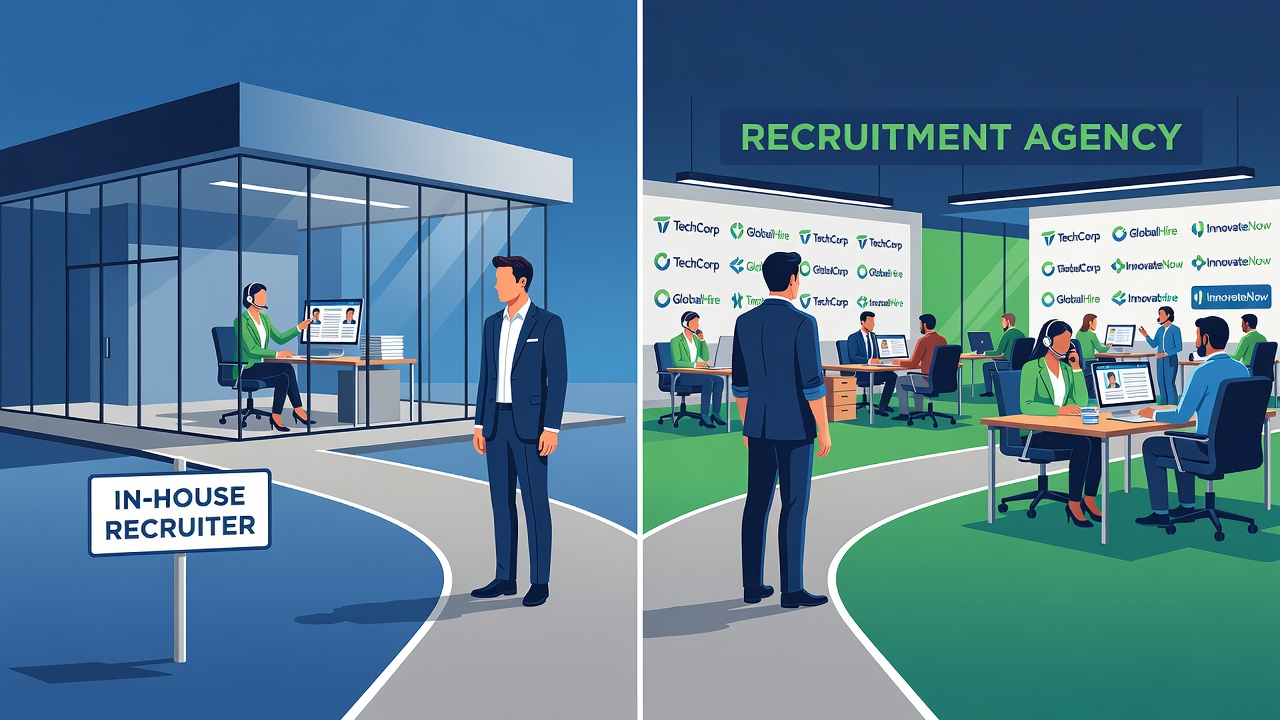
Navigating the job market in 2026 requires strategic decisions, especially when it comes to working with recruiters. Job seekers often wonder whether in-house recruiters or external agency professionals offer the better path to landing roles faster. This comparison examines key differences in communication, access to opportunities, response times, and success rates across industries, providing actionable insights to help you choose effectively. The modern job search landscape has evolved with increased remote opportunities and specialized hiring needs, making the choice between recruiter types more impactful than ever before.
Understanding these distinctions can significantly impact your application outcomes. In-house teams focus on internal company needs, while agencies maintain broad networks. Real-world examples from recent job searches highlight how each approach plays out in practice. Whether you are targeting a specific employer or exploring multiple sectors, aligning your strategy with the right recruiter type can reduce application fatigue and improve response quality. This guide goes beyond surface-level comparisons to deliver practical steps, industry insights, and decision frameworks that address the search intent of finding a job faster through optimal recruiter partnerships.
Key Differences in Communication Styles
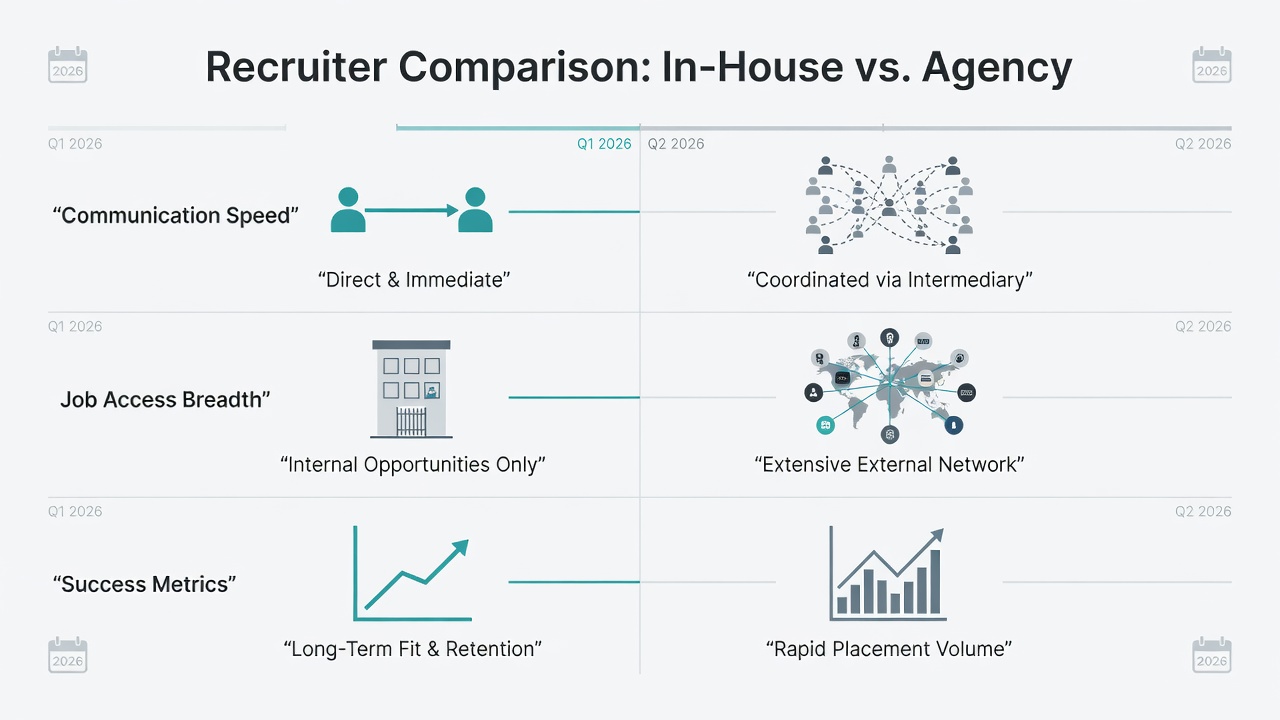
In-house recruiters typically communicate through structured corporate channels, emphasizing alignment with company culture and specific role requirements. Responses may take longer due to internal approvals but tend to be detailed and tailored. They often provide insights into team dynamics and long-term career paths within the organization. Agency recruiters, operating with more flexibility, often provide quicker updates and candid feedback, leveraging their external perspective to coach candidates on applications and interview techniques.
Follow-ups differ as well. In-house professionals may prioritize volume hiring periods, leading to batch communications, whereas agencies excel at personalized check-ins to maintain candidate pipelines. Job seekers report higher satisfaction with agency responsiveness in competitive fields like tech and finance. Effective communication also involves understanding tone: in-house messages frequently reference company values, while agency interactions feel more consultative and goal-oriented.
Access to Job Listings and Hidden Opportunities
In-house recruiters control direct access to unadvertised positions within their organizations, often filling roles before they reach public boards. This insider advantage suits candidates targeting specific employers. They can also influence internal mobility programs and succession planning. Agency recruiters, however, aggregate listings from multiple clients, exposing seekers to a wider range of opportunities across sectors and sometimes international markets.
Success rates vary by industry. Data from major job platforms shows agencies frequently achieve faster placements in dynamic markets, while in-house teams deliver higher retention for specialized corporate roles. LinkedIn remains a vital tool for both, enabling direct outreach regardless of recruiter type. In fields such as healthcare and manufacturing, in-house access often leads to longer-term stability, whereas agencies shine in creative and consulting industries where project-based work dominates.
Response Times, Follow-Ups, and Application Handling
Response times for in-house recruiters average several days to a week, as they manage multiple stakeholders and hiring manager schedules. Agencies often reply within 24-48 hours due to their commission-driven model. When handling applications, in-house teams screen rigorously against exact criteria, while agencies may advocate more broadly to match candidates creatively and highlight transferable skills.
Effective follow-ups involve polite persistence. For in-house, reference specific company initiatives; for agencies, highlight recent achievements to keep momentum. Tracking your applications through dedicated tools helps maintain organization across both channels. Understanding these timelines allows job seekers to set realistic expectations and avoid unnecessary anxiety during the process.
Industry-Specific Success Rates and Insights
Success rates depend heavily on sector dynamics. In technology and finance, agency recruiters often deliver quicker interviews because of their established relationships with multiple hiring firms. In contrast, government and large enterprise roles benefit from in-house recruiters who understand compliance requirements and internal promotion tracks. Marketing and sales professionals frequently report better results combining both approaches, starting with agencies for volume and switching to in-house for targeted companies.
Recent trends show hybrid hiring models where in-house teams collaborate with agencies on senior positions. This creates opportunities for candidates who build relationships with both. Job seekers should research industry benchmarks through professional associations to calibrate their expectations accordingly.
Side-by-Side Comparison Table
| Aspect | In-House Recruiters | Agency Recruiters |
|---|---|---|
| Communication | Formal, detailed, slower | Flexible, candid, faster |
| Job Access | Internal, exclusive roles | Broad network, diverse listings |
| Response Time | 3-7 days typical | 24-48 hours typical |
| Success Rate Focus | High retention, cultural fit | Speed and volume placements |
| Best For | Targeted company searches | Exploring multiple industries |
| Follow-Up Style | Batch updates during peaks | Personalized coaching |
Real-World Examples from Job Seekers
One marketing professional in 2026 secured a role at a Fortune 500 firm through an in-house recruiter after three targeted applications, appreciating the deep company insights provided during the process. The recruiter shared details about upcoming team expansions that helped the candidate prepare stronger interview responses. Conversely, a software engineer used an agency to explore remote options across startups, receiving three interviews within a month due to the recruiter's extensive client base and proactive matching.
A healthcare administrator combined both strategies: starting with agencies for quick contract roles and transitioning to in-house for permanent positions at hospital systems. This hybrid approach yielded two offers within six weeks. Another example involves a recent graduate in finance who leveraged an agency for entry-level introductions and later connected with in-house teams for advancement opportunities, demonstrating how recruiter type can evolve with career stage.
Practical Steps to Approach Both Effectively
- Research the recruiter's background via professional networks before engaging, reviewing their recent placements and client focus.
- Prepare tailored resumes highlighting quantifiable achievements for each interaction, customizing keywords to match either corporate or multi-client needs.
- Follow up consistently but respectfully, spacing messages 5-7 days apart and referencing prior conversations.
- Leverage Indeed for initial applications while building relationships with recruiters on both sides.
- Track all communications in a dedicated spreadsheet to manage multiple pipelines and avoid duplicate submissions.
- Request feedback after interviews to refine your approach, whether dealing with in-house or agency professionals.
Mistakes to Avoid When Working with Recruiters
Common pitfalls include over-relying on one type without diversifying outreach, failing to follow up promptly, and sharing confidential information prematurely. Avoid treating recruiters as the sole source of applications; continue applying directly where possible. Another mistake is neglecting to update your LinkedIn profile consistently, which both in-house and agency recruiters use for sourcing.
FAQs on Fees, Confidentiality, and Switching Strategies
Are there fees for job seekers?
Reputable recruiters never charge candidates; fees come from employers. Always verify this upfront to avoid scams.
How is confidentiality handled?
In-house recruiters protect internal data strictly, while agencies use NDAs for sensitive searches. Share only necessary details initially and confirm privacy policies.
When should you switch strategies?
If responses lag beyond two weeks with no feedback, pivot to the alternative type or combine both for broader reach. Monitor progress weekly and adjust based on industry norms.
Can you work with multiple recruiters simultaneously?
Yes, but maintain clear records to prevent conflicts and ensure consistent messaging across applications.
What role does SHRM play in recruiter standards?
SHRM provides resources on ethical recruiting practices that both in-house and agency professionals follow, helping candidates understand professional expectations.
Conclusion: Optimizing Your 2026 Job Search
Selecting between in-house and agency recruiters depends on your target roles, timeline, and industry. By understanding their strengths in communication, access, and follow-up, you can partner strategically to find opportunities faster. Combine approaches where possible, track your progress diligently, and stay proactive for the best outcomes in the evolving 2026 job market.

No comments yet. Be the first!