 Jobboy

Introduction: Why Podcast Guesting Is a Smart Job Search Strategy in 2026
In today’s competitive job market, traditional applications often get lost in applicant tracking systems. Podcast guesting offers a powerful alternative by letting you demonstrate expertise directly to engaged audiences, including hiring managers and recruiters. This approach builds authority, expands your network, and can lead to unadvertised opportunities. As remote work and digital networking continue to grow, appearing on industry podcasts positions you as a thought leader who stands out from the crowd of generic resumes.
Research shows that professionals who share insights publicly often attract more inbound interest from employers. Podcast guesting combines storytelling with skill demonstration, making it ideal for roles in tech, marketing, consulting, and leadership. Many job seekers in 2026 are discovering that one strong podcast appearance can generate more meaningful connections than dozens of cold applications. By focusing on value-driven conversations, you create lasting impressions that hiring managers remember when positions open up.
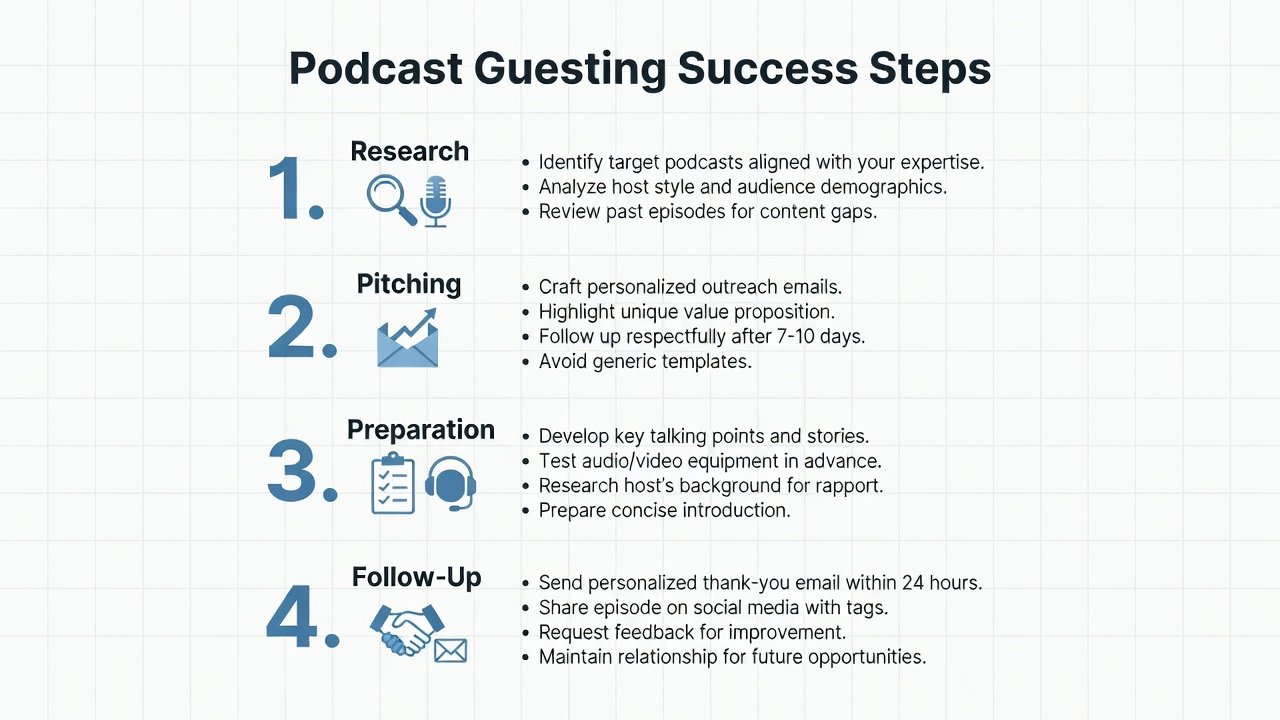
Step 1: Identify Relevant Podcasts in Your Industry
Start by researching podcasts that align with your target role and industry. Use directories like Apple Podcasts and Spotify to search keywords such as “marketing leadership” or “software engineering careers.” Focus on shows with 5,000–50,000 listeners per episode for better engagement without overwhelming competition from high-profile hosts.
Look for episodes featuring guests in similar roles. Check show notes for host contact information and review recent episodes to ensure the tone matches your expertise. Tools like Google Alerts can notify you of new shows in your niche. Consider niche platforms that cater to specific sectors, such as those focused on remote work or emerging technologies, to increase your chances of landing episodes where listeners are actively hiring.
Step 2: Pitch Yourself Effectively
Craft a concise pitch email highlighting your unique angle. Include a hook tied to current industry trends, your background, and 2–3 specific talking points. Keep the email under 150 words and personalize it for each host. Mention why their audience would benefit from your perspective rather than simply listing your achievements.
Example subject line: “Idea for Your Next Episode: Scaling Remote Teams in 2026.” Follow up once after 10 days if no response. Many hosts appreciate value-first pitches that solve listener problems rather than self-promotion. Attach a short media kit with past speaking experience or relevant articles to build credibility quickly.
Step 3: Prepare Talking Points That Highlight Your Skills
Develop stories using the STAR method (Situation, Task, Action, Result) to showcase achievements. Prepare 5–7 key points that weave in quantifiable results, such as “increased team efficiency by 30%.” Anticipate common questions and practice concise answers under two minutes. Rehearse transitions between points to keep the flow natural during live recording.
Record mock interviews to refine delivery. Bring one surprising insight or data point that listeners can apply immediately. This keeps the conversation engaging while subtly demonstrating your value. Prepare backup examples for different audience types, such as entry-level versus executive listeners.
Measuring Impact on Job Applications
Track metrics such as listener downloads, social shares, and direct messages received after each appearance. Use unique links or promo codes in show notes to measure website traffic and application submissions. Many guests report a 20–40% increase in recruiter outreach within two weeks of airing. Set up simple spreadsheets to log episode performance and correlate it with LinkedIn connection requests or interview invitations.
Update your LinkedIn and resume with the episode link under a “Featured” or “Media” section. This creates social proof that strengthens applications. Monitor analytics from podcast hosting platforms to understand which episodes drove the most engagement from potential employers.
Following Up with Listeners Who Are Hiring Managers
After the episode airs, monitor comments and direct messages. Respond promptly to anyone mentioning hiring needs. Send a short thank-you note referencing a specific point from the discussion and attach your resume or portfolio. Personalize each message to show you listened to their feedback.
Join the podcast’s listener community or LinkedIn group to nurture relationships. One well-timed follow-up has led many guests to interview invitations. Keep a running list of contacts and schedule light touchpoints every few weeks to stay top of mind without being pushy.
Real-World Examples of Successful Guest Appearances
A product manager appeared on a startup podcast and discussed agile methodologies. Within a month, three listeners from venture-backed companies reached out, resulting in two interviews and one offer. Another example involves a career coach whose episode on remote leadership generated inbound requests from HR directors at Fortune 500 firms. These cases illustrate how targeted appearances can accelerate hiring timelines significantly compared to traditional methods.
Common Mistakes to Avoid When Guesting
Many first-time guests focus too heavily on self-promotion instead of providing actionable advice. Avoid this by centering every answer on listener benefits. Another frequent error is failing to follow up after the episode, which wastes the momentum created during the conversation. Always prepare technical backups in case of recording issues, and never assume the host will handle all promotion—share the episode yourself across multiple channels.
Building a Long-Term Podcast Guesting Strategy
Treat podcast appearances as an ongoing part of your personal brand rather than one-off events. Aim for one appearance per month to steadily build visibility. Repurpose clips into short social media videos and blog posts to extend reach. Over time, you may be invited back as a recurring expert, which further solidifies your reputation among hiring managers.
Step-by-Step Podcast Guesting Checklist
- Research 10–15 target podcasts using directories and keyword searches.
- Review 3 recent episodes per show and note host preferences.
- Prepare a personalized pitch with 3 value-driven talking points.
- Practice answers using the STAR method and record yourself.
- Record the episode and request show notes with your LinkedIn URL.
- Share the episode on your networks within 48 hours.
- Track inbound messages and follow up within 5 business days.
- Measure traffic and applications using unique tracking links.
Comparison of Popular Podcast Platforms for Guesting
Apple Podcasts offers the largest global reach and strong SEO for show discovery. Spotify provides excellent analytics for hosts and integrates well with video formats. YouTube is ideal for visual industries, allowing clips to be repurposed easily. Smaller platforms like Buzzsprout-hosted shows often have more approachable hosts and niche audiences. Choose platforms based on your industry: tech roles perform well on Spotify and Apple, while creative fields benefit from YouTube exposure.
FAQ: Common Concerns About Podcast Guesting
How much time does it take?
Preparation typically requires 4–6 hours per episode, including research, pitching, and practice. Recording itself lasts 30–60 minutes. The return on investment often justifies the time when it leads to interviews.
Will my audience be large enough to matter?
Even mid-sized shows with 10,000 listeners can connect you with the right decision-makers. Quality of audience matters more than quantity—target shows where listeners match your ideal employers.
What if I have no prior media experience?
Start with smaller or local podcasts to build confidence. Many hosts welcome first-time guests who bring fresh perspectives. Focus on authenticity over polished delivery.
Conclusion
Podcast guesting transforms passive job searching into active personal branding. By strategically selecting shows, delivering value-driven content, and following up thoughtfully, you can turn conversations into job offers. Begin with one pitch this week and build momentum throughout 2026.

No comments yet. Be the first!