 Jobboy

Understanding Employment Gaps in the 2026 Job Market
Employment gaps have become more common than ever, with many professionals taking time off for caregiving, layoffs, health, or personal growth. In 2026, recruiters and ATS systems prioritize skills and adaptability over perfect timelines. This guide shows you how to explain employment gaps confidently while aligning with current hiring trends. Whether your break lasted six months or several years, the key is to frame it as a period of intentional development rather than a liability. Modern hiring managers understand that life events happen, and they value candidates who can articulate how those experiences enhanced their professional capabilities.
Identifying the Root Causes of Your Career Break
Before crafting your narrative, pinpoint why the gap occurred. Common reasons include layoffs due to company restructuring, family responsibilities such as caring for children or elderly parents, personal health recovery, pursuing further education, or planned sabbaticals for travel and reflection. Take time to journal specific details: what challenges did you face, and what solutions did you implement? This reflection helps you identify transferable skills like project management from coordinating family care or technical proficiency gained through self-study. Documenting these elements creates a foundation for authentic yet strategic storytelling across your application materials.
Reframing Gaps as Growth Opportunities on Your Resume
Instead of hiding gaps, address them strategically by using a functional or hybrid resume format that leads with skills. Add a brief professional summary line such as "Career Break for Family Caregiving (2024-2025): Developed advanced organizational, crisis management, and remote collaboration abilities while overseeing complex household and medical logistics." Focus on quantifiable achievements where possible. For instance, if you managed budgets during time off, highlight that. Compare honest but blunt phrasing like "Unemployed from March 2023 to June 2024" with strategic language: "Professional Development and Caregiving Period: Completed three industry certifications in data analytics and honed leadership skills through volunteer board service." This approach keeps the resume ATS-friendly by incorporating relevant keywords without drawing negative attention to the timeline.
Crafting Compelling Cover Letters That Address Gaps
Your cover letter provides an excellent opportunity to add context without overwhelming the reader. Keep the explanation to two or three sentences maximum, then pivot immediately to the value you offer the employer. A strong example reads: "Following a planned career break to support an aging parent through recovery, I returned to the workforce with sharpened empathy, enhanced remote communication skills, and a renewed commitment to client-centered project delivery that directly strengthened my previous roles in account management." Tailor each letter to the job description by weaving in company-specific language and demonstrating research. This method shows maturity and self-awareness while keeping the focus on future contributions.
Preparing Interview Narratives with Real-World Scripts
Practice delivering 30- to 60-second responses that follow a clear structure: acknowledge the gap briefly, emphasize positive outcomes, and express enthusiasm for the role. For caregiving scenarios, try: "I stepped away to care for a family member during a serious illness. During that time I developed exceptional prioritization and emotional intelligence skills that I now apply to stakeholder management. I'm eager to bring that resilience to your team." For layoffs: "My previous employer underwent a major restructuring in late 2025. Since then, I have completed advanced training in cloud technologies and completed two freelance consulting projects that kept my skills sharp." Rehearse these answers aloud until they feel natural and confident.
Skills to Highlight from Time Off
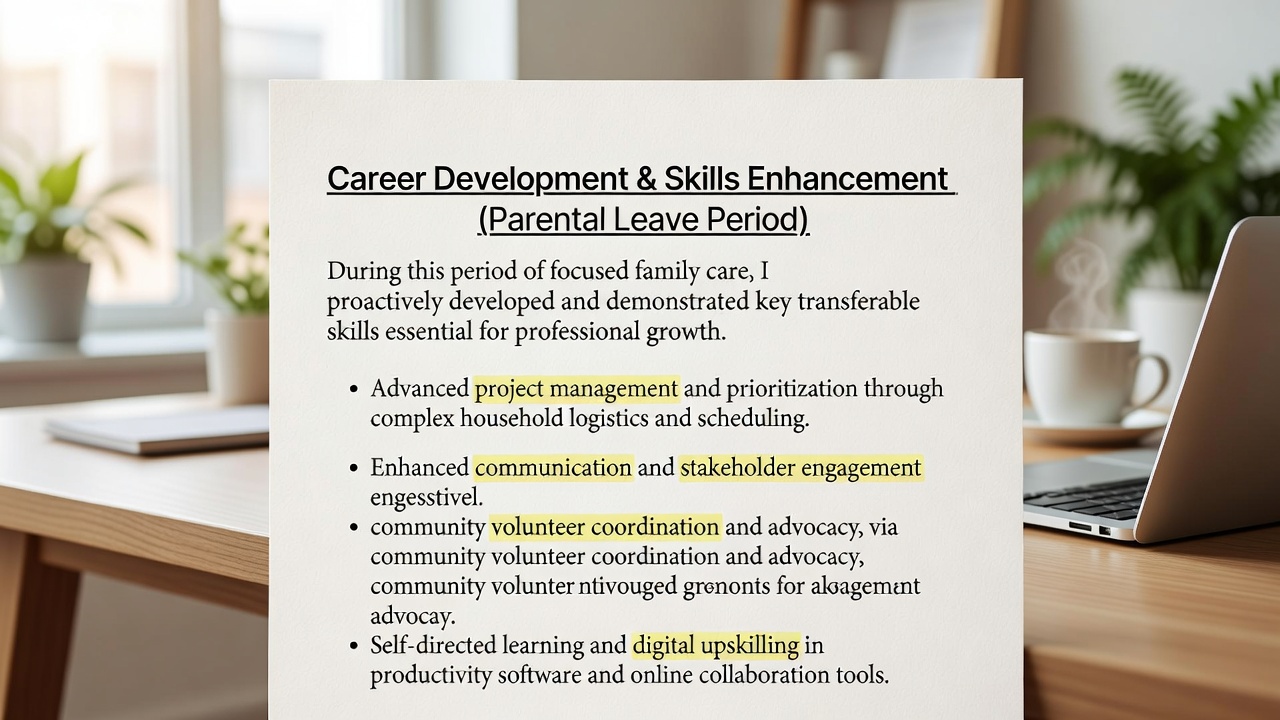
Time away from traditional employment often builds valuable competencies that employers seek. Consider highlighting these areas in bullet points or your professional summary:
- Freelance consulting or volunteer leadership roles that demonstrate initiative and results
- Online courses, bootcamps, or certifications completed in high-demand areas like AI tools or cybersecurity
- Soft skills including adaptability, emotional intelligence, and cross-cultural communication from personal projects or travel
- Industry research, networking events attended, or side projects that show continuous learning
Quantify where possible, such as "Managed a community volunteer program serving 200 participants monthly."
Dos and Don'ts for Explaining Gaps Effectively
- Do keep every explanation brief, positive, and forward-looking.
- Don't apologize or use negative language like "I had to" or "Unfortunately."
- Do tie the gap directly to job-relevant growth and recent accomplishments.
- Don't fabricate employment history or exaggerate details—authenticity builds long-term trust.
- Do customize your story for each application based on the job requirements.
- Don't dwell on the gap; spend 80 percent of your narrative on what you bring to the new role.
Optimizing for ATS Systems in 2026
Applicant tracking systems continue to scan for keyword relevance and consistent formatting. Avoid creative date formats or large unexplained gaps by using consistent month-year entries. Incorporate action verbs and industry terms from the job posting throughout your materials. Test your resume with free ATS simulators to ensure the gap explanation does not trigger parsing issues. Many systems now weigh skill clusters more heavily than chronological perfection.
Legal Considerations and Addressing Recruiter Concerns
Under U.S. employment law, recruiters cannot discriminate against candidates for protected reasons such as family medical leave or disability-related absences. For deeper guidance, consult resources from EEOC and DOL. When concerns arise during screening, respond with concise, professional language that redirects to your qualifications. Transparency combined with brevity reduces bias and positions you as a thoughtful candidate.
Frequently Asked Questions
How long is too long for an employment gap in 2026?
Gaps of any duration are acceptable when accompanied by evidence of skill maintenance or personal growth. Recruiters increasingly view extended breaks as neutral if the candidate demonstrates current expertise.
Should I address gaps directly on my LinkedIn profile?
Yes. Add a short, positive note in the experience section using the same strategic language you would on a resume. This maintains consistency across platforms.
What if a recruiter asks about the gap in the first interview?
Use your prepared script, keep the answer under one minute, and immediately transition to questions about the role and company goals.
Are there industries where gaps are viewed more strictly?
Fields like finance or academia may request more detail, but even there, focusing on relevant development activities mitigates concerns effectively.
For additional job search tools and templates, explore Indeed and LinkedIn.
Conclusion
Explaining employment gaps successfully in 2026 requires preparation, positivity, and a clear connection to the value you offer employers. By identifying root causes, reframing experiences strategically, and practicing concise narratives, you transform potential weaknesses into compelling stories of resilience and growth. Apply these techniques consistently, and you will approach applications with greater confidence and improved outcomes.

No comments yet. Be the first!