 Jobboy
Introduction: Why Gamify Your Job Search in 2026?
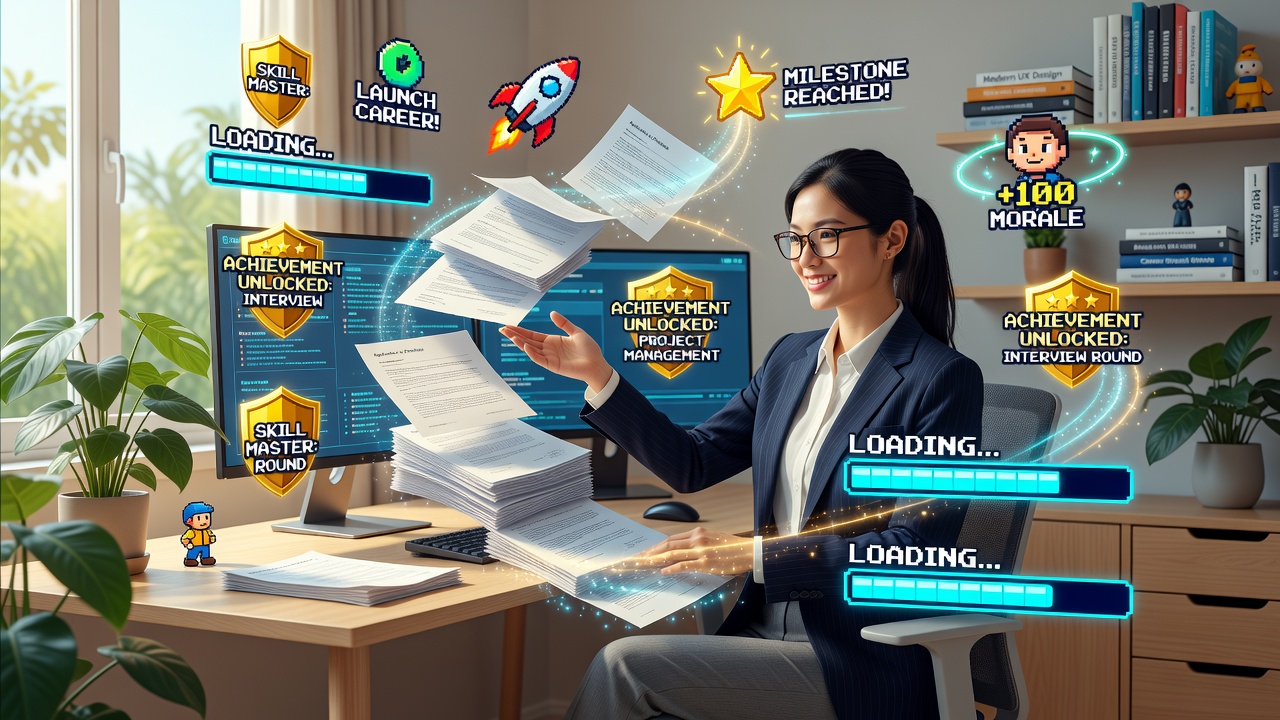
The job search process can feel like an endless grind of applications, rejections, and uncertainty. In 2026, with competitive markets and evolving hiring trends, traditional advice often falls short on sustaining long-term motivation. Gamification applies game mechanics—points, levels, rewards, and challenges—to turn drudgery into an engaging experience. This approach helps job seekers build consistent habits while reducing emotional fatigue. By treating your search like a game, you create structure and immediate feedback loops that traditional methods lack. Research from behavioral psychology shows that reward systems boost dopamine, keeping you engaged longer. This article dives deep into practical tactics, complete with implementation guides and examples from real candidates who have successfully used these methods to land roles faster.
Understanding Gamification for Job Hunting
Gamification borrows elements from video games to make non-game activities more compelling. In a job search context, it means assigning points to tasks like tailoring resumes or networking on LinkedIn. The goal is not just completion but sustained motivation through visible progress. Key mechanics include points and badges for daily actions, levels that represent milestones like 50 applications sent, leaderboards for personal tracking or friendly competition, and quests or challenges that introduce variety. Unlike standard advice such as polishing your resume, gamification addresses the psychological side of the hunt by making every small action feel rewarding and purposeful.
Building Reward Systems for Sending Applications
Rewards provide instant gratification that counters the delayed payoff of landing interviews. Start by defining micro-rewards for small wins and macro-rewards for bigger milestones. Step-by-step guide: First, list core tasks such as resume customization, cover letter writing, application submission, and follow-ups. Next, assign points like 10 points per tailored application or 5 for company research. Then set thresholds where 100 points unlocks a reward like a favorite coffee or 30 minutes of gaming. Track everything in a simple spreadsheet or app. Real-world example: Sarah, a marketing professional, reached her 100-application milestone after using a points system and treated herself to a weekend hike, which refreshed her for the next phase. Another candidate named Marcus used escalating rewards, starting with small treats after 10 applications and progressing to a new gadget after 100, helping him maintain momentum through a three-month search.
Using Progress Trackers Styled as Game Levels
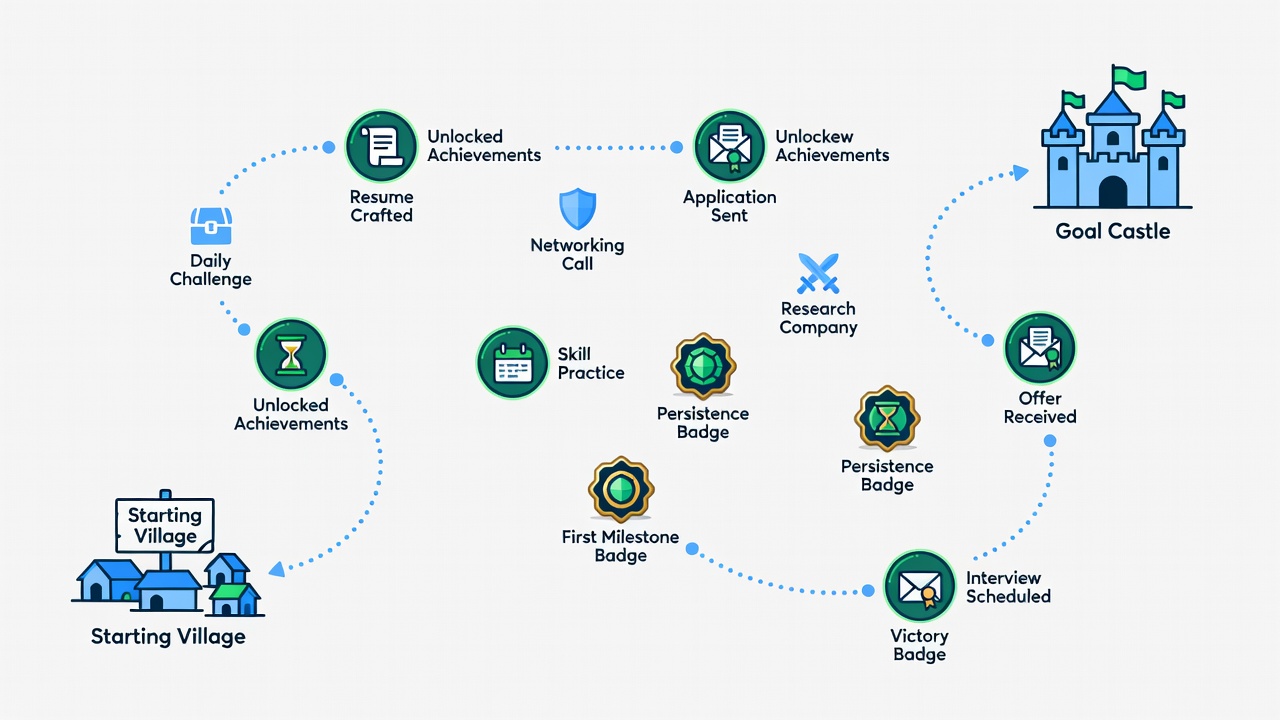
Visual progress trackers mimic game interfaces and make abstract effort feel concrete. Convert your job search pipeline into levels: Level 1 might be research phase, Level 5 interview stage. Practical implementation includes using tools like Trello or Notion with custom templates that include XP bars. Color-code stages such as green for completed applications and gold for interviews scheduled. Unlock new powers such as advanced LinkedIn strategies upon reaching certain levels. LinkedIn profiles can serve as your character sheet, updating skills as you level up. This visual approach helps prevent the feeling of stagnation that often derails traditional job seekers.
Incorporating Challenges for Daily Job Hunting Tasks
Daily challenges prevent monotony by introducing variety and urgency. Examples include Application Blitz Tuesday where you submit five targeted applications before noon, or Network Quest requiring three meaningful connections. Build a 30-day challenge calendar: Week 1 focuses on research quests, Week 2 on application marathons with time limits, Week 3 on skill-building side quests like online courses, and Week 4 on review and optimization based on analytics. These timed challenges create a sense of competition with yourself and keep energy high throughout the week.
Comparing Gamified Methods to Traditional Approaches
Traditional job searches rely on linear to-do lists and can lead to burnout from lack of feedback. Gamified versions add layers of engagement through immediate rewards and visual progress. Comparison points include motivation where traditional methods offer none until an offer while gamified provides daily wins, consistency where games encourage streaks and lists often get abandoned, and fun factor where challenges make tasks playful rather than obligatory. Many successful candidates report higher completion rates with gamified systems because the immediate feedback loop keeps dopamine levels steady.
Tools and Apps to Support Your Gamified Job Search
Several accessible tools can help implement these strategies without starting from scratch. Free options like Google Sheets work well for custom point trackers, while apps such as Habitica turn your entire routine into an RPG character. Notion templates designed for job seekers allow you to build level-based dashboards quickly. For accountability, consider joining online communities on Reddit or Discord where users share their gamified progress. Always choose tools that match your tech comfort level to avoid adding unnecessary complexity.
Real-World Examples from Successful Candidates
John, a software engineer, used a custom app to gamify his search and secured a role at a tech firm after 120 applications. He attributed success to his boss battle mindset during final interviews. Another example involves a recent graduate named Priya who created a Discord server for accountability buddies, turning solo searching into a multiplayer experience and landing her first marketing role within two months. A third candidate, David, combined points with weekly boss-level reviews of his application quality and saw his interview rate double compared to his previous unstructured search.
Measuring Success and Adjusting Your System
Track not only points but also key metrics like applications per week and response rates. Review your system every two weeks and adjust rewards or challenges if motivation dips. Successful users often add new mechanics, such as bonus points for applications that lead to interviews, to keep the game evolving with their progress.
Common Pitfalls and How to Avoid Them
Overcomplicating the system is a frequent mistake—keep mechanics simple at first. Another pitfall is ignoring real metrics; always tie rewards to quality applications, not just quantity. Avoid comparing your points to others if it creates pressure instead of inspiration. Finally, do not let the game overshadow actual job search activities; the mechanics should support, not replace, strategic applications and networking.
Frequently Asked Questions
How do I start gamifying if I'm not a gamer?
Begin with basic points and rewards using paper or free apps. Focus on one mechanic like daily streaks before adding complexity.
What if rewards lose their appeal?
Rotate rewards regularly and tie some to long-term goals like career growth resources. Consider non-material rewards such as extra time off or a new book.
Can gamification work for senior-level roles?
Yes, adapt levels to reflect networking depth or personal branding milestones rather than sheer application volume. Focus on high-impact activities like executive networking events.
How long does it typically take to see results?
Most users notice improved consistency within the first week and measurable progress like more interviews within three to four weeks when the system is followed consistently.
Conclusion
Gamifying your 2026 job search transforms a stressful process into an empowering journey. By implementing rewards, levels, and challenges with the right tools and adjustments, you build resilience and consistency that traditional tactics alone cannot provide. Start small today and watch your motivation—and results—level up.


No comments yet. Be the first!