 Jobboy

Introduction
Panel interviews have become a standard part of the hiring process in today's competitive job market. Unlike traditional one-on-one meetings, these sessions involve multiple interviewers evaluating you simultaneously, testing your ability to handle pressure, communicate clearly, and demonstrate leadership. This 2026 guide provides advanced tactics to help job seekers excel beyond basic preparation. Success requires more than rehearsing answers. Candidates must research each panelist, adapt the STAR method for group dynamics, manage eye contact strategically, and handle virtual formats with technical precision. Real-world examples from recent successful applicants illustrate how these techniques work in practice. The search intent for this topic focuses on advanced tactics that go far beyond standard one-on-one advice, so this article delivers in-depth strategies, checklists, and decision-making frameworks to prepare thoroughly.
Researching Each Panel Member Thoroughly
Begin preparation by identifying every participant. Request names and roles from the recruiter in advance. Review their LinkedIn profiles, company bios, and recent publications to understand their priorities. For instance, a hiring manager may focus on team fit while a technical lead emphasizes skills alignment. Create a simple matrix listing each person's background, potential questions they might ask, and how your experience aligns with their department goals. This research allows tailored responses. One candidate in 2025 secured a senior role by referencing a panelist's published article on sustainable practices during the discussion, showing genuine interest and preparation. Another applicant researched a finance panelist's recent conference presentation and tied her cost-saving initiative directly to those metrics, creating an immediate connection that stood out.
Handling Multiple Question Styles in a Panel Setting
Panels often mix behavioral, situational, technical, and opinion-based questions. Prepare by categorizing potential questions in advance. Behavioral questions require past examples, situational ones test hypothetical thinking, and technical queries demand specific expertise. Practice transitioning smoothly between styles. If one panelist asks a technical question and another follows with a cultural fit inquiry, bridge your answers by showing how your skills support team collaboration. This flexibility demonstrates composure under varied scrutiny.
Structuring Responses with the STAR Method for Panels
The STAR method (Situation, Task, Action, Result) remains effective but needs adaptation. When multiple people ask questions, keep answers concise yet comprehensive. Start with a brief situation overview, then address how your actions impacted the team or organization. Example: A marketing professional described leading a campaign under tight deadlines. She outlined the situation of declining engagement metrics, her task coordinating cross-functional teams across three time zones, specific actions like implementing new analytics tools and weekly check-ins, and measurable results that increased engagement by 40 percent within six weeks. Panelists appreciated the structured yet engaging delivery because it highlighted both individual contribution and collective outcomes. Expand each STAR element slightly when facing a group to ensure everyone follows your logic without losing momentum.
Managing Eye Contact, Body Language, and Time Effectively
Distribute eye contact evenly across the panel to build rapport. Avoid fixating on one person. Practice by imagining a triangle connecting the interviewers and shifting gaze naturally every 10-15 seconds. Maintain open body language by sitting upright, nodding occasionally to show active listening, and using hand gestures sparingly to emphasize points. Time management is critical. Aim for responses under two minutes unless prompted for more detail. This respects everyone's schedule and keeps energy high. If a question feels rushed, politely ask for clarification to buy a moment while demonstrating thoughtful engagement.
Virtual Panel Interview Tech Checklist
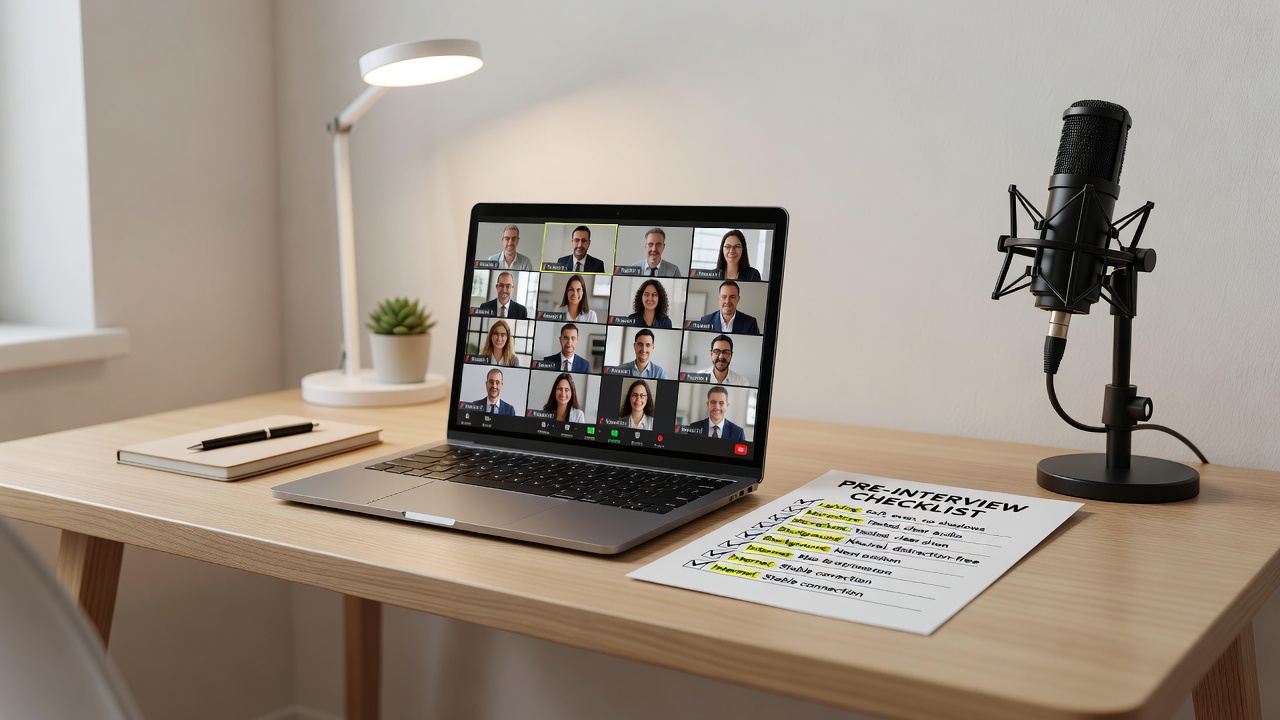
Virtual panels require extra preparation. Test your setup at least 48 hours in advance and again on the interview day. Key items include a stable high-speed internet connection with a backup mobile hotspot ready, a professional background or virtual blur enabled, a camera positioned at eye level with natural or ring lighting to avoid shadows, a quality microphone tested for clarity paired with headphones to reduce echo, multiple device logins prepared in case of primary failure, and practiced screen sharing for portfolio or presentation elements. One applicant avoided disaster by having a secondary laptop charged and ready when their primary connection failed mid-interview. Another candidate created a dedicated interview playlist of calming music beforehand to reduce pre-call anxiety while confirming all software updates were complete.
Demonstrating Leadership Qualities Under Group Scrutiny
Show leadership by taking initiative in responses. Use phrases like "In my experience leading similar projects..." to highlight ownership. Address the group collectively when appropriate and invite questions from quieter panelists by saying "I'd value your perspective on this as well." Prepare two or three leadership stories that emphasize influence without authority, conflict resolution, and strategic thinking. These examples should illustrate how you motivated teams, navigated ambiguity, and delivered results that aligned with broader company objectives.
Common Mistakes to Avoid in Panel Interviews
Many candidates falter by focusing too much on the most senior person and ignoring others, which can appear dismissive. Another frequent error is providing overly long answers that lose the group's attention. Avoid negative talk about previous employers or colleagues. Practice with a mock panel of friends or mentors to receive feedback on pacing and inclusivity. Candidates who rehearse only solo often struggle with the dynamic energy of multiple voices interrupting or building on each other's questions.
Post-Interview Follow-Up Strategies
Send personalized thank-you notes to each member within 24 hours. Reference specific discussion points to reinforce interest. A well-crafted follow-up can differentiate you from other candidates. Include one key insight from the conversation and restate your enthusiasm for the role. If the panel included a technical expert, mention how their question prompted you to reflect on a particular solution. Track all contacts in a spreadsheet for future networking opportunities.
Real-World Examples from Successful Candidates
A software engineer prepared by mapping questions to each panelist's expertise. During the session, he connected technical answers to business outcomes valued by the executive present, leading to an offer within a week. Another candidate used the STAR method to handle conflicting questions from operations and marketing leads, maintaining composure and earning praise for adaptability. A project manager turned a tough question about failure into a leadership lesson by detailing how she realigned team priorities after a missed deadline, resulting in improved processes that benefited the entire department.
Frequently Asked Questions
How do I handle conflicting opinions from panelists?
Acknowledge both perspectives and provide a balanced view based on your experience. This demonstrates diplomacy and critical thinking without taking sides prematurely.
What if I forget a panelist's name?
Use general address like "As we discussed earlier" or politely ask for clarification at a natural pause. Most panels understand the pressure and appreciate the professionalism.
Are panel interviews more stressful than one-on-one?
They can feel intense, but thorough preparation reduces anxiety. Focus on connection rather than perfection and treat the session as a collaborative discussion.
Should I prepare questions for the panel?
Yes. Prepare three to five thoughtful questions that show research, such as inquiring about team challenges or upcoming initiatives. Direct different questions to specific panelists when possible.
How long should my answers be in a group setting?
Keep core answers between 90 seconds and two minutes. Watch for nonverbal cues like nodding or shifting to know when to wrap up or expand.
Conclusion
Panel interview success in 2026 hinges on preparation, adaptability, and authentic engagement. By researching thoroughly, refining STAR responses, mastering virtual logistics, avoiding common pitfalls, and following up strategically, job seekers can turn group scrutiny into an opportunity to shine. Apply these tactics consistently to stand out in the modern hiring landscape. For additional resources, explore guidance from Indeed, LinkedIn, Glassdoor, and CareerOneStop.
No comments yet. Be the first!