 Jobboy

Why Interviewers Ask 'Why Should We Hire You?'
This classic question reveals how well you understand the role and the company. It also shows your ability to connect your background directly to their needs. In 2026, hiring managers face rapid changes from AI integration and hybrid work models, making strong answers more important than ever. Candidates who deliver thoughtful responses stand out because they demonstrate research, self-awareness, and forward-thinking skills that align with evolving workplace demands.
The Psychology Behind the Question
Interviewers want to see confidence without arrogance. They seek evidence that you have researched the company and can solve specific problems. A generic answer fails because it shows no preparation. Instead, focus on mutual fit and measurable value. The question tests your communication skills and emotional intelligence. Employers know that technical qualifications alone do not guarantee success. They want to understand your motivation and how you will contribute to team dynamics in a hybrid environment where collaboration often happens across time zones and digital platforms.
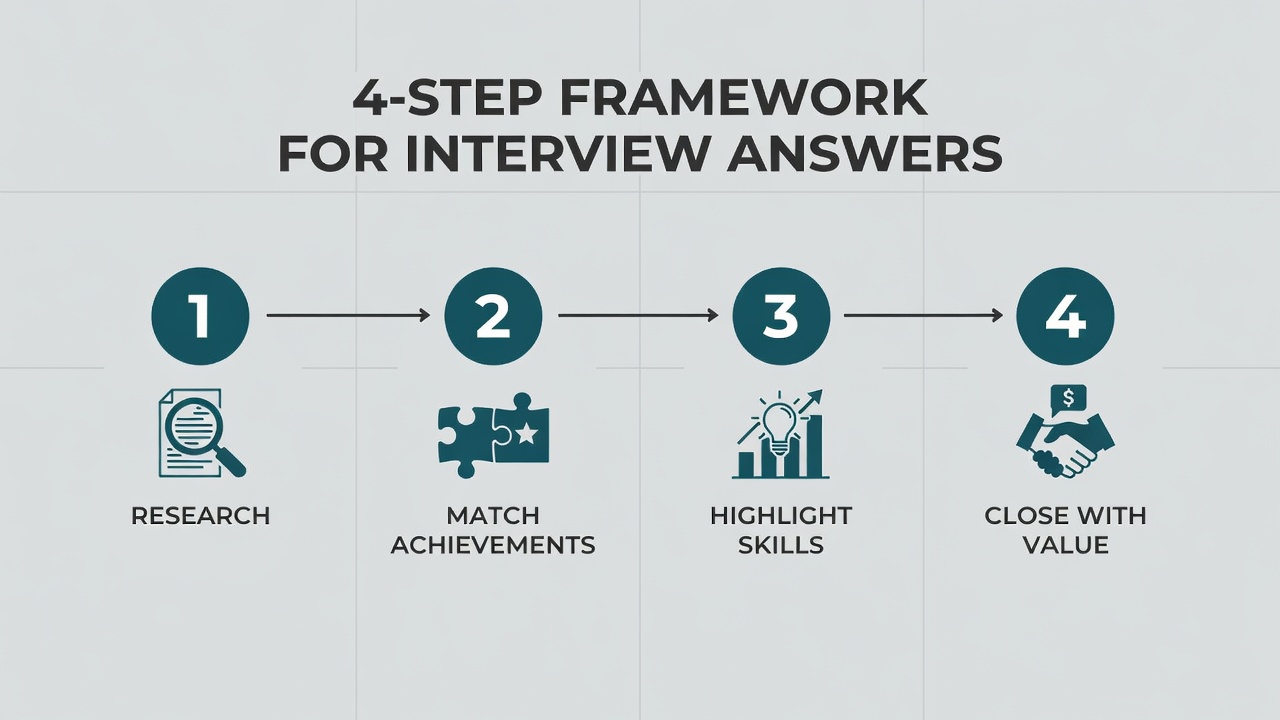
The 4-Step Framework for Powerful Answers
Follow this repeatable structure every time. The framework ensures your response remains focused and relevant regardless of the industry or role level.
- Research company pain points using recent news and job descriptions. Start by reviewing the company's latest announcements, earnings calls, or social media updates to identify challenges such as scaling operations or integrating new technologies.
- Match your top two achievements to those needs with numbers. Select accomplishments that directly address the identified issues and include specific metrics like percentage improvements or time savings achieved in previous roles.
- Highlight 2026-relevant skills such as AI tool proficiency or remote collaboration. Mention concrete examples of using platforms that support automation or virtual team management to show you are prepared for current trends.
- Close by stating the unique value you bring to the team culture. Explain how your approach complements existing team members and supports long-term company objectives.
Industry-Specific Examples
Technology: Weak: "I am a hard worker." Strong: "Your recent expansion into AI-driven analytics matches my experience leading a project that improved data processing speed by 40 percent last quarter. This directly supports your roadmap for enhanced machine learning capabilities." The strong version works because it references a current initiative and provides evidence of impact.
Marketing: Weak: "I love creating content." Strong: "With hybrid campaigns now standard, my 2025 campaign that increased engagement 65 percent across remote teams aligns with your Q3 goals. I achieved this by coordinating asynchronous content reviews that kept projects on schedule despite distributed teams."
Finance: Weak: "I am detail-oriented." Strong: "I reduced reporting errors by 30 percent using automated tools, supporting your shift to AI compliance systems. This experience will help streamline your audit processes while maintaining regulatory standards."
Healthcare: Weak: "I care about patients." Strong: "My implementation of telehealth protocols improved follow-up rates by 25 percent, matching your hybrid care expansion. I trained staff on secure virtual platforms to ensure consistent patient outcomes across locations."
Sales: Weak: "I hit targets." Strong: "I exceeded quota by 22 percent in 2025 by using AI lead scoring, which directly supports your new CRM rollout. This approach allowed me to prioritize high-value prospects and close deals faster in a hybrid sales environment."
Weak vs Strong Answers Comparison
| Aspect | Weak Answer | Strong Answer |
|---|---|---|
| Research | Generic praise of company | Specific reference to current projects |
| Achievements | Vague claims | Quantified results with dates |
| Skills | Basic soft skills only | AI and hybrid work examples |
| Close | Repeats resume | Shows cultural fit |
Avoiding Common Clichés in 2026
Phrases like "team player" or "fast learner" appear in most responses. Replace them with concrete stories. Mention specific AI platforms you have used or hybrid meeting tools that improved outcomes. Clichés signal a lack of preparation and fail to differentiate you from other candidates. Instead, prepare three to four tailored stories in advance that illustrate your points with real results.
Adapting Answers for AI and Hybrid Trends
Employers now prioritize candidates who can work with AI tools daily. Reference certifications or projects from the past year. For hybrid roles, discuss successful remote collaboration examples that maintained productivity. According to labor market data from the Bureau of Labor Statistics, many sectors continue to adopt technology that changes daily workflows. Similarly, resources from the Department of Labor highlight the growing importance of digital collaboration skills. Professionals who demonstrate these abilities position themselves ahead in competitive applicant pools.
Practical Preparation Steps
Begin by recording yourself answering the question and reviewing the playback for clarity and pacing. Next, research three specific company initiatives and prepare matching examples. Practice with a friend or mentor who can provide feedback on delivery. Finally, prepare variations for follow-up questions such as "Can you give an example?" or "How would you handle a challenge in this role?" This preparation builds confidence and reduces anxiety during the actual interview.
Frequently Asked Questions
How long should my answer be?
Keep it to 60-90 seconds. Practice aloud to stay concise while covering all four framework steps without rushing.
What if I lack direct experience?
Emphasize transferable skills and willingness to learn quickly, backed by recent examples. Focus on how your background equips you to adapt rapidly to new tools and processes.
Should I mention salary expectations?
No. Focus on value delivered rather than compensation. Salary discussions belong later in the process when both parties have established mutual interest.
How do I handle curveball follow-ups?
Stay calm and return to your prepared examples. Bridge the question back to your strengths by saying "That situation reminds me of when I..." and then deliver a relevant story.
Conclusion
Mastering this question requires preparation and specificity. Use the 4-step framework, tailor examples to 2026 trends, and practice until natural. Strong answers turn interviews into job offers by clearly showing how you solve problems and fit into the team. Consistent application of these techniques increases your chances of success across multiple opportunities.


No comments yet. Be the first!