 Jobboy
Introduction
Job interviews in 2026 continue to serve as pivotal moments in professional trajectories, yet they are frequently shaped by unconscious cognitive biases that can distort even the most well-intentioned hiring decisions. These mental shortcuts, while natural, often lead to unfair judgments that overlook qualified candidates. Understanding interviewer biases equips job seekers with the knowledge to prepare more strategically during interview preparation. This comprehensive guide delves into prevalent bias types, presents multiple real-world hiring scenarios, and outlines detailed step-by-step techniques for redirecting conversations positively while staying ethical. Candidates searching for ways to answer interview questions effectively will find actionable advice tailored to countering these challenges without compromising authenticity.
Common Types of Interviewer Biases
Interviewers, like all humans, rely on cognitive shortcuts that can introduce systematic errors. Confirmation bias causes recruiters to seek out and emphasize information that supports their initial gut feeling about a candidate, often ignoring contradictory evidence. The halo effect happens when a single positive attribute, such as strong communication skills, creates an overly favorable impression that masks weaknesses in other areas like technical expertise. Conversely, the horn effect amplifies one negative trait across the entire evaluation.
Affinity bias leads interviewers to favor individuals who remind them of themselves through shared alma maters, hobbies, or cultural backgrounds. The contrast effect distorts judgments when candidates are compared directly to the person who interviewed before them rather than against objective job requirements. Stereotyping remains pervasive, with assumptions based on age, gender, ethnicity, or even appearance influencing perceptions of capability. Recency bias gives disproportionate weight to the most recent answers or events in the conversation. These biases persist across sectors despite ongoing diversity training, as documented by resources from the U.S. Equal Employment Opportunity Commission.
Real-World Hiring Scenarios
In one technology firm scenario, a candidate with a non-traditional educational path encountered confirmation bias when the panel repeatedly questioned her coding abilities despite a portfolio of successful projects. The interviewers focused only on potential gaps, overlooking her demonstrated problem-solving record. Another example involves a sales role where a mid-career applicant faced affinity bias; the hiring manager bonded with a younger candidate over recent college experiences, sidelining the more experienced professional whose results were stronger on paper.
A third case from healthcare hiring illustrates the contrast effect: after an exceptionally polished first interviewee, the second candidate's solid but less flashy responses were rated lower than they deserved. These situations highlight why proactive strategies during interview preparation are essential for leveling the playing field.
Strategies to Navigate Biases Ethically
Candidates can counter biases through preparation and thoughtful delivery. Begin by researching the organization and interviewers via professional platforms to identify possible affinity or stereotyping risks. Craft an opening statement that showcases a broad range of achievements early, using specific metrics. When responding to questions, employ the STAR method (Situation, Task, Action, Result) to ground answers in evidence rather than personality impressions.
Step-by-step techniques include: First, practice active listening to detect when a question veers into biased territory and gently redirect with phrases like "Building on that, my experience in X demonstrates...". Second, prepare three to five versatile stories that highlight adaptability and results. Third, ask thoughtful clarifying questions that refocus the discussion on job-relevant criteria. Fourth, maintain consistent body language and professional attire aligned with company culture to minimize halo or horn effects. Fifth, send a follow-up email that reiterates key qualifications with concrete examples.
These methods emphasize self-presentation that invites objective evaluation.
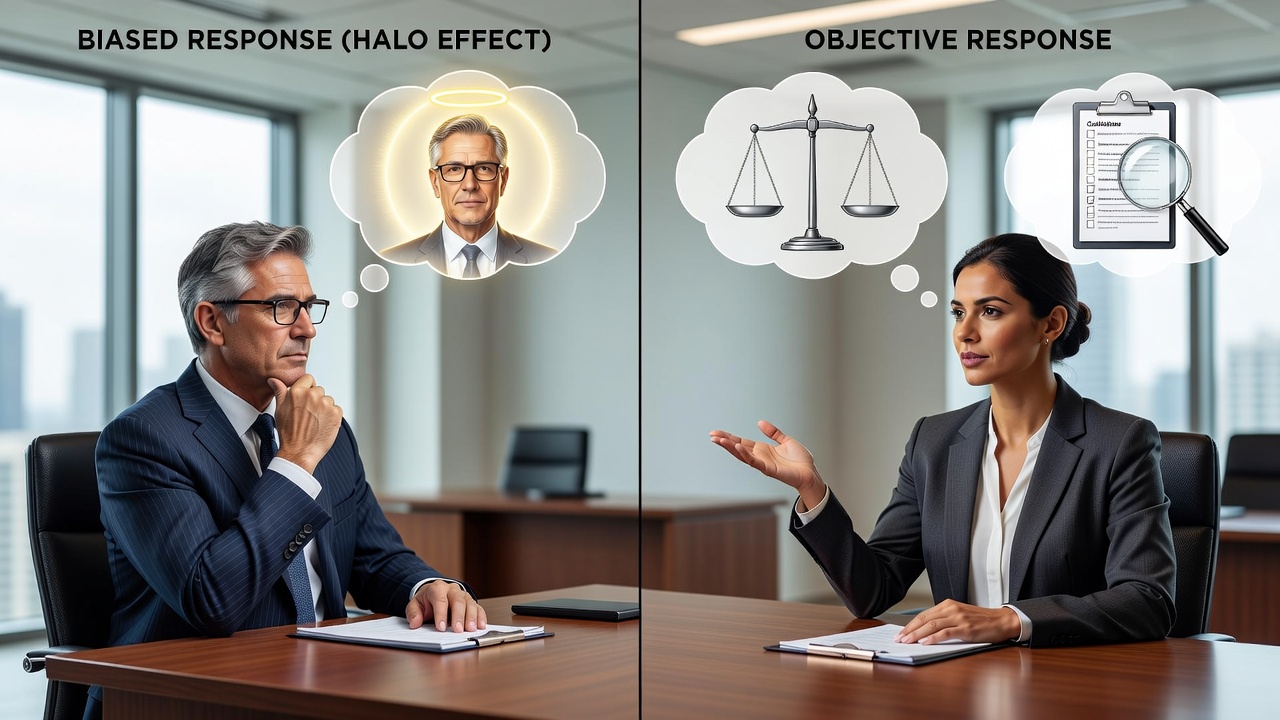
Biased vs. Objective Responses: Comparisons
Compare responses to a question about employment gaps. A biased reply might be defensive: "I had to step away for family reasons." This invites further probing. An objective version states: "During that time I earned two professional certifications in data analytics and led a community project that improved local resource access, sharpening my project management and stakeholder communication skills."
Another comparison involves questions touching on age or experience assumptions. A weak response accepts the premise passively, while a strong one pivots: "My twenty years in the field have given me deep expertise in scaling operations, which I applied recently to deliver a 30 percent efficiency gain in my last role." Such reframing demonstrates preparation and shifts focus to value.
Preparing for Interviews in 2026
Thorough interview preparation in 2026 involves more than rehearsing answers. Record practice sessions to analyze tone and pacing. Study industry reports from the U.S. Department of Labor on evolving hiring trends. Build a portfolio of recent accomplishments with measurable outcomes. Role-play scenarios with mentors to receive feedback on how responses land objectively.
Develop resilience by focusing on controllable factors: clear articulation of transferable skills, research into company challenges, and framing of continuous learning. Incorporate mindfulness techniques before interviews to maintain composure when biases surface.
Additional Techniques for Specific Question Types
Behavioral questions often trigger affinity bias. Prepare by mapping past experiences to the job description using quantifiable language. Situational questions benefit from forward-looking answers that emphasize collaboration and results. When salary expectations arise, reference current market data qualitatively rather than specific figures to avoid anchoring bias.
Frequently Asked Questions
How can I tell if bias is influencing my interview?
Signs include repeated focus on personal details unrelated to the role or sudden changes in questioning tone. Respond by redirecting to professional accomplishments with specific examples.
Should I mention bias directly during the interview?
Direct mentions are rarely productive. Instead, use evidence-based responses that naturally counter assumptions and keep the conversation on qualifications.
What is the best way to prepare for biased interviewers?
Combine mock interviews, research on common bias patterns, and development of versatile stories that highlight diverse strengths and measurable impacts.
Can these strategies work for virtual interviews?
Yes. Maintain strong eye contact via camera, use clear verbal transitions to redirect topics, and share screen-based examples of work to reinforce objective evidence.
How long should I spend on interview preparation to address biases?
Dedicate at least several focused sessions over one to two weeks, practicing both content and redirection techniques until responses feel natural and confident.
Conclusion
Mastering the navigation of interviewer biases demands awareness, deliberate practice, and ethical communication. By understanding bias mechanisms, applying structured preparation, and using evidence-driven responses, 2026 candidates can improve their interview outcomes while contributing to fairer hiring practices overall. These skills extend beyond single interviews, supporting sustained career growth through confident self-presentation.

No comments yet. Be the first!