 Jobboy

Introduction: Mastering Career Goals Questions in Modern Interviews
Interviewers frequently ask about your career goals to understand your motivation, long-term fit, and how your ambitions align with the organization's direction. In 2026, with rapid shifts in technology, remote work norms, and industry demands, these questions have become even more nuanced. Employers are looking for candidates who can articulate a clear vision that supports both personal growth and business objectives amid evolving trends like AI integration and sustainable business practices. This guide provides a complete framework for crafting authentic, compelling responses that highlight realistic ambition while avoiding common pitfalls like overpromising or generic answers.
Whether you're a recent graduate or a seasoned professional, structuring your reply around research, personal alignment, and measurable steps will set you apart. We'll explore phrasing variations, strong versus weak examples, research methods, and tailored exercises to prepare effectively. By the end of this article, you'll have actionable tools to turn these questions into opportunities that showcase your value.
Common Phrasing Variations of Career Goals Questions
Employers rarely use the exact phrase "What are your career goals?" Instead, expect variations that probe different angles. Recognizing these helps you prepare flexible answers that adapt to the conversation flow. Common variations include inquiries about five-year visions, long-term aspirations, role fit within a broader path, and sources of professional motivation. Each variation invites you to connect personal growth with the company's needs, such as innovation in AI-driven roles or sustainability initiatives trending in 2026. Preparing for these helps demonstrate flexibility and foresight.
- Where do you see yourself in five years?
- What are your long-term professional aspirations?
- How does this role fit into your overall career path?
- What motivates you to advance in your field?
- Can you describe a professional milestone you hope to achieve?
Understanding the intent behind each allows you to pivot smoothly while maintaining authenticity. For instance, a question about five-year plans often seeks evidence of commitment rather than job-hopping tendencies.
Structuring Your Response: The Proven Framework
A strong answer follows a clear structure: brief context about your background, specific short- and long-term goals, alignment with the role, and a forward-looking statement. Keep responses concise yet detailed, aiming for 60-90 seconds when spoken. This framework ensures your reply remains focused and engaging.
Step 1: Research Role Pathways Beforehand
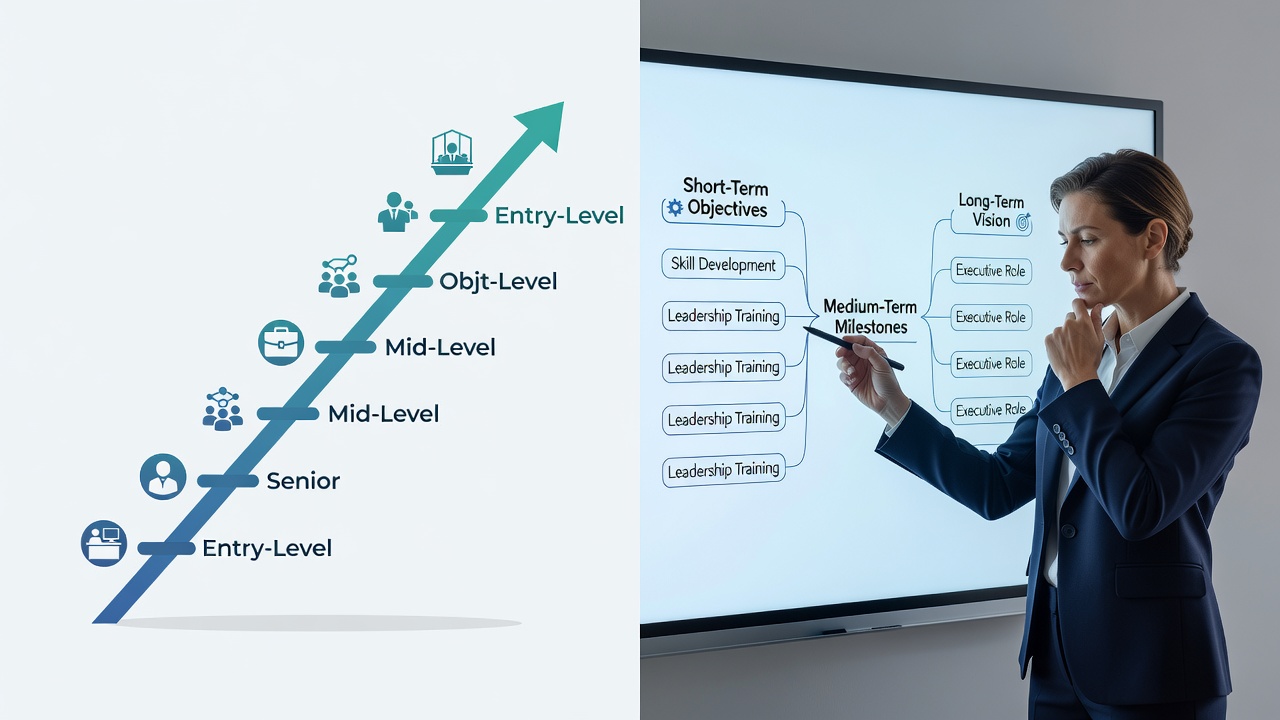
Begin by examining the company's career page, recent job postings, and industry reports. Identify typical progression paths, such as moving from analyst to senior strategist within three years. Use resources like Indeed for real-world role insights and LinkedIn to review employee career trajectories at the target organization. Additionally, consult reports from authoritative bodies to understand 2026 labor market shifts.
Practical exercise: List three potential advancement routes for the position and note required skills or milestones for each. Practice verbalizing how the current role serves as a foundation. Spend time analyzing employee testimonials on professional networks to gauge realistic timelines and skill requirements.
Step 2: Align Personal Objectives with Company Vision
Demonstrate you've studied the organization's 2026 priorities, such as digital transformation or employee upskilling programs. Tie your goals to these elements without fabricating interest. This alignment shows you've done your homework and see the role as a mutual fit rather than a stepping stone.
Step 3: Demonstrate Realistic Ambition with Evidence
Support your goals with past achievements and quantifiable outcomes. Reference industry data where relevant, such as growth in hybrid roles, to add credibility without overpromising. This step prevents answers from sounding aspirational but unattainable.
Strong vs. Weak Answers: Real Examples
Weak answers sound vague or self-centered. Strong answers are specific, evidence-based, and role-focused. Comparing them side by side reveals the power of detail and relevance.
Entry-Level Example
Weak: "I want to be a manager someday and make good money."
Strong: "My goal is to build expertise in data analytics over the next two years, contributing to projects that support our team's efficiency targets. Eventually, I'd like to lead cross-functional initiatives, similar to how the company expanded its analytics division last year. This role provides the hands-on experience needed to reach that milestone."
Mid-Level Example
Weak: "I hope to get promoted quickly."
Strong: "In the short term, I aim to master the operational aspects of this position and contribute to process improvements. Long-term, I see myself mentoring junior team members, drawing from my experience leading a successful project that improved efficiency by 25 percent in my previous role."
Senior-Level Example
Weak: "I'm aiming for a C-suite position."
Strong: "I'm focused on scaling strategic partnerships in emerging markets. This role aligns perfectly because it involves high-level stakeholder management, which will help me drive the kind of growth initiatives I've seen succeed at companies like yours. My background in international negotiations positions me well for these responsibilities."
Entry-Level Versus Senior Responses: Key Comparisons
Entry-level candidates should emphasize learning curves and foundational skills, while senior professionals highlight leadership and strategic impact. Both must avoid sounding entitled. Entry-level responses often focus on skill acquisition and team contribution, whereas senior ones stress legacy-building and organizational influence. Tailoring the depth of ambition accordingly prevents mismatches in expectations.
Practical Exercises for Tailoring Answers
- Write your core goal in one sentence, then expand it with two supporting achievements from your past.
- Role-play with a friend: Have them ask follow-ups like "What if the role doesn't offer that path?"
- Record yourself and review for authenticity—ensure you sound enthusiastic but grounded.
- Review 2026 industry trend summaries from sources like the World Economic Forum to incorporate timely context.
- Map your goals against the company's published values and revise for natural integration.
Mistakes to Avoid When Discussing Career Goals
Common errors include being too vague, ignoring company context, or promising unrealistic timelines. Another pitfall is focusing solely on personal gain without mentioning team or organizational benefits. Always balance ambition with collaboration. Overpromising on speed of advancement can raise red flags about commitment.
Handling Tricky Follow-Ups in the FAQ Section
What if my goals don't perfectly match the company?
Emphasize transferable skills and express openness to evolving paths while staying honest. Pivot to shared values like continuous learning. Research shows that adaptable candidates often succeed more in dynamic 2026 environments.
How do I show ambition without seeming overeager?
Focus on realistic timelines and company-supported development. Reference industry trends, such as the rise of hybrid skill sets in 2026 reports, to add credibility. This approach keeps your response professional and collaborative.
What if the interviewer probes for salary expectations tied to goals?
Redirect to value creation and growth opportunities rather than immediate compensation. Use phrases that highlight mutual benefit.
Conclusion: Authenticity Wins in 2026 Interviews
By researching thoroughly, structuring responses thoughtfully, and practicing with real examples, you can turn career goals questions into opportunities to showcase fit and drive. Remember to stay authentic—interviewers value candidates who balance ambition with a genuine commitment to the team's success. Apply these strategies consistently, and you'll navigate 2026 interviews with confidence and clarity. The key is preparation combined with genuine enthusiasm for the role at hand.


No comments yet. Be the first!