 Jobboy

Introduction: Returning to Work as a Parent in 2026
Re-entering the workforce after an extended career break can feel daunting, especially for parents balancing family responsibilities. This guide provides targeted job interview tips for parents returning after a career break in 2026, helping you reframe employment gaps as strengths rather than liabilities. Employers increasingly value the resilience, organization, and problem-solving developed through parenting. Many parents worry that time away signals a lack of commitment, yet the modern workplace rewards the very competencies gained during family-focused periods, such as crisis management and empathetic leadership. By focusing on transferable skills, crafting concise answers, and practicing mock interviews, you can approach opportunities with renewed confidence. We'll cover resume updates, real-world behavioral examples, common pitfalls to avoid, skill refreshers, company research, and FAQs including salary discussions. The journey back is achievable with preparation, and this comprehensive resource equips you with actionable strategies tailored to 2026 hiring trends.
Reframing Employment Gaps as Professional Strengths
Many parents worry that time away signals a lack of commitment. Instead, view your break as a period of growth. Parenting hones leadership, time management, and adaptability—skills directly applicable to modern workplaces. Research from the Bureau of Labor Statistics shows flexible career paths are common, with many professionals successfully returning after family-focused intervals. In interviews, frame your gap positively: emphasize how raising children enhanced your ability to handle pressure and multitask effectively. Consider examples like coordinating complex family schedules that parallel project management in corporate settings. This mindset shift transforms perceived weaknesses into compelling narratives that demonstrate maturity and real-world experience. Employers appreciate candidates who can articulate personal growth, so prepare stories that link parenting milestones to professional outcomes.
Updating Your Resume with Transferable Parenting Skills
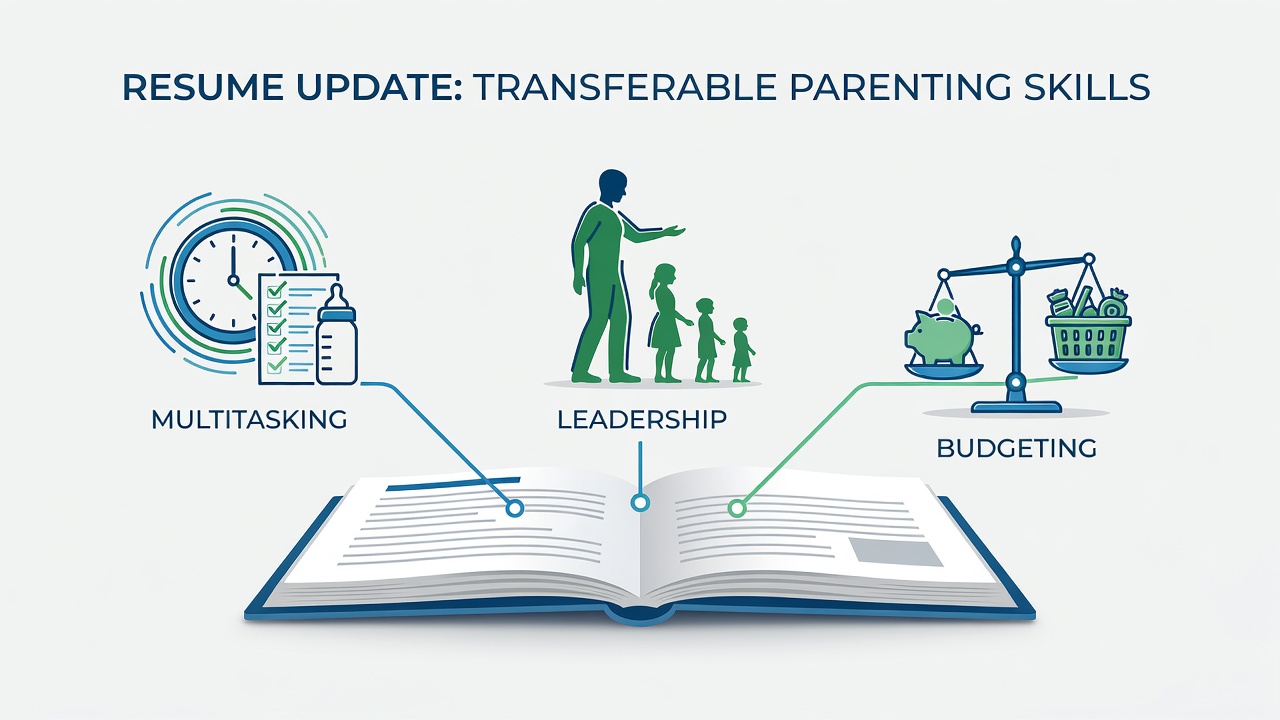
Start by auditing your resume. Replace chronological gaps with a skills-focused section. Highlight abilities like conflict resolution from managing family dynamics or project coordination from household budgeting and scheduling. Use action verbs and quantify achievements where possible, such as organizing community events that mirror workplace projects. Expand this section further by creating dedicated bullet points under a "Professional Skills Developed" heading. For instance, list "Led family decision-making processes involving multiple stakeholders, resulting in efficient resource allocation and conflict resolution" or "Managed household operations equivalent to overseeing a small team, including budgeting, scheduling, and performance evaluations." Incorporate keywords from job descriptions to pass applicant tracking systems. Add any volunteer work, online courses completed during the break, or part-time freelance tasks to demonstrate continuous engagement. This approach turns the resume into a powerful marketing tool that showcases relevance rather than absence.
Preparing Concise Answers About Your Career Break
Interviewers often ask about time away. Keep responses brief, positive, and forward-looking. Tie your experience back to the role by preparing structured STAR-method answers (Situation, Task, Action, Result). Practice delivering them in under two minutes to maintain interviewer engagement. This preparation prevents rambling and ensures your narrative remains professional and focused on value addition.
3-5 Real-World Answer Examples for Behavioral Questions
Question: Tell me about your career break.
Answer: "I took time to focus on my family, during which I developed strong organizational and leadership skills by managing household operations and extracurricular activities. This experience has sharpened my ability to prioritize tasks efficiently, which I'm excited to apply in a team environment like yours." Why it works: It acknowledges the break without apology and immediately pivots to benefits.
Question: How do you handle unexpected challenges?
Answer: "Parenting requires constant adaptation to changing needs. For instance, coordinating multiple children's schedules taught me to stay calm and implement contingency plans quickly—skills I've used to resolve issues proactively." Why it works: Provides a concrete example linking family life to workplace resilience.
Question: Why should we hire you after time away?
Answer: "My break allowed me to refresh my perspective and build fresh skills through online courses. Combined with my prior professional experience, I'm bringing enhanced empathy and efficiency to contribute immediately." Why it works: Highlights proactive learning and unique perspective.
Question: Describe a time you led a team.
Answer: "As a parent, I led family decision-making processes, delegating tasks and motivating everyone toward common goals. This mirrors workplace leadership I've successfully applied in previous roles." Why it works: Demonstrates transferable leadership with measurable family outcomes.
Question: How do you stay current in your field?
Answer: "I maintained industry knowledge through webinars and professional networks while away, ensuring a seamless transition back." Why it works: Shows ongoing commitment to professional development.
Building Confidence Through Mock Interviews
Practice with a friend or career coach using common questions above. Record sessions to refine delivery, focusing on body language and concise storytelling. Aim for 3-5 practice rounds to reduce anxiety and polish responses. Create a mock interview checklist covering posture, eye contact, and voice modulation. Simulate real conditions by using video platforms and timing your answers. Seek feedback on areas like filler words or overly detailed personal stories. This iterative practice builds muscle memory for confident delivery during actual interviews.
Practical Steps for Skill Refreshers
Before interviews, update technical knowledge. Enroll in short online modules relevant to your field. Join local parent-returner networking groups for peer support. Dedicate daily time to reviewing industry news via reputable sources like CareerOneStop. Develop a 30-day refresh plan: Week 1 focuses on core tools, Week 2 on new trends, and Week 3 on mock applications. Supplement with free resources from public libraries or professional associations to stay cost-effective while rebuilding expertise.
Common Mistakes vs. Successful Approaches
Mistake: Apologizing for the gap or providing overly personal details.
Success: Briefly acknowledge the break then pivot to skills gained and enthusiasm for the role.
Mistake: Using outdated terminology in responses.
Success: Incorporate current industry language learned during refreshers.
Mistake: Failing to research the company.
Success: Reference specific initiatives showing alignment with your values.
Mistake: Over-explaining family logistics instead of professional relevance.
Success: Keep family references minimal and always connect back to job requirements.
Mistake: Neglecting to prepare questions for the interviewer.
Success: Ask insightful questions that demonstrate strategic thinking and cultural fit.
Researching Companies Effectively
Review company websites, recent news, and employee reviews on professional platforms. Prepare 2-3 thoughtful questions about team culture or growth opportunities. This demonstrates genuine interest and helps assess fit. Use resources from the U.S. Department of Labor for labor market insights and company compliance data. Analyze recent earnings calls or press releases to understand strategic priorities, then tailor your responses to show how your background supports those goals. Effective research also includes checking social media presence and employee testimonials for cultural clues.
FAQ Section
How should I approach salary negotiation after time away?
Research market rates for your role and location using tools from authoritative sites. Emphasize your full value, including refreshed skills, without underselling experience. Practice stating your range confidently based on contributions you bring.
What if the interviewer focuses too much on the gap?
Redirect gently by highlighting recent achievements and how your background uniquely positions you for success in the position.
How can I address concerns about work-life balance?
Frame your response around proven reliability and time-management systems developed during your break, reassuring employers of your dedication without overpromising.
Conclusion
With preparation and the right mindset, parents can leverage their unique experiences to thrive in interviews. Apply these job interview tips for parents returning after a career break in 2026 to turn your return into a successful career chapter. Start updating your materials today and practice consistently for the best results. Remember that persistence combined with strategic storytelling opens doors to fulfilling professional opportunities.


No comments yet. Be the first!