 Jobboy

Introduction: Why Curveball Questions Matter in 2026 Interviews
Job interviews in 2026 continue to evolve with AI-driven assessments and hybrid work models, making curveball questions a key test of adaptability. These unexpected queries reveal how candidates think on their feet, handle pressure, and align with company values. Recruiters increasingly use them to evaluate emotional intelligence and real-time problem solving beyond standard behavioral questions. In today's competitive landscape, mastering these moments separates top performers from average applicants. This article examines seven real-world case studies from tech, finance, and healthcare, providing actionable frameworks to turn surprises into opportunities. Behavioral interview preparation remains essential, as hiring teams seek evidence of resilience and strategic thinking. Drawing from industry examples, we compare weak and strong responses while offering practical, industry-specific adaptations that help candidates prepare effectively. Understanding the intent behind curveball questions allows you to demonstrate composure and creativity under pressure.
Case Study 1: Tech – The Unexpected AI Ethics Query
A software engineer interviewing at a leading AI company faced this curveball: "If your algorithm could save lives but discriminate against a minority group, what would you do?" The candidate initially froze and delivered a weak answer focused solely on technical patches without considering broader impacts. In contrast, a strong response began with a brief pause to clarify assumptions, then referenced a past project where ethical review boards were involved. The candidate outlined a multi-stakeholder process including legal, ethics, and user testing teams before deployment. This approach demonstrated both technical depth and ethical maturity valued in 2026 tech roles. Interviewers noted how the structured reply showcased leadership potential.
Step-by-Step Framework Applied
- Clarify the question by restating key elements.
- Share a concise, relevant past example using the STAR method.
- Propose balanced, multi-perspective solutions.
- End with a reflection on ongoing learning and future improvements.
Case Study 2: Finance – Market Volatility Hypothetical
An investment banking analyst encountered: "How would you advise a client during a sudden 20% market drop in 2026?" Weak responses jumped straight to generic buy-and-hold advice without referencing current data or risk models. Strong answers incorporated real-time market analysis tools, discussed diversification strategies, and emphasized client communication protocols. Candidates who succeeded highlighted regulatory compliance and long-term portfolio rebalancing techniques tailored to volatile conditions. One standout response included a brief walkthrough of stress-testing scenarios using 2026 market data tools.
Case Study 3: Healthcare – Ethical Resource Allocation
A nurse manager was asked: "With limited beds after a post-pandemic surge, how do you prioritize patients?" Effective answers stressed empathy first, followed by adherence to hospital protocols, transparent team communication, and documentation practices. Weak answers focused only on clinical metrics without addressing emotional or legal considerations, leaving interviewers concerned about leadership under stress. Successful candidates also incorporated examples of past triage decisions and their outcomes.
Case Studies 4-7: Additional Real-World Examples
Further cases include a product manager responding to questions about handling competitor sabotage claims by outlining transparent communication plans and legal consultation steps. A financial advisor navigated sudden regulatory shifts by referencing compliance updates and client education strategies. A physician discussed telemedicine burnout management through workload balancing and support systems. A data scientist addressed algorithmic bias detection in live datasets by proposing iterative audits and cross-functional reviews. Each scenario reinforced the value of structured thinking, with successful candidates using bridging phrases to buy thinking time while maintaining professionalism and relevance to the role.
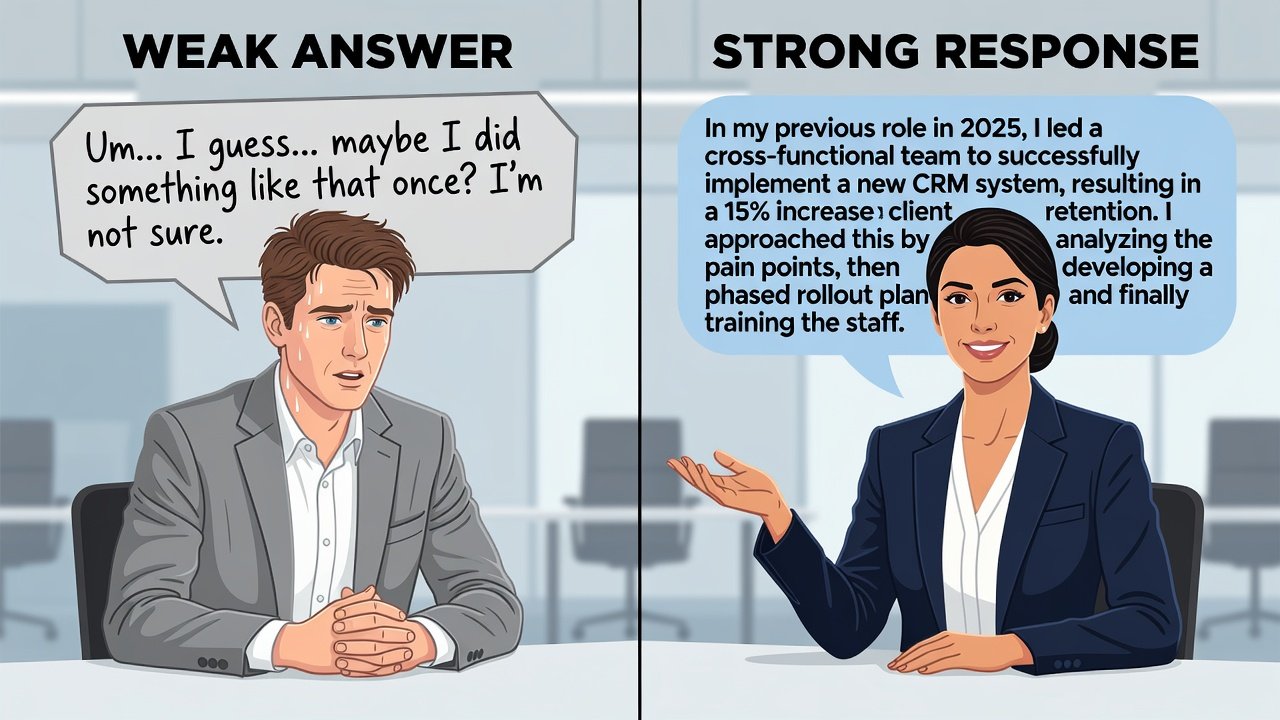
Weak vs Strong Answer Comparisons
Weak answers often feature rambling without clear structure, personal opinions lacking evidence, or abrupt topic changes that signal discomfort. Strong answers apply adapted STAR frameworks, incorporate 2026-specific context such as AI tools or hybrid workflows, and always close with forward-looking insights. For example, when asked about handling team conflict, a weak reply might blame others or provide vague assurances, while a strong one details mediation steps, measurable outcomes achieved in past roles, and personal growth gained from the experience. Another comparison involves innovation questions where weak answers stay surface-level and strong ones tie directly to business impact metrics.
- Practice pausing for five seconds before responding to gather thoughts.
- Use phrases like "That's an interesting angle—let me consider the key factors."
- Always tie answers back to company values or role requirements for maximum relevance.
- Review recordings of practice sessions to eliminate filler words and hesitation patterns.
Industry-Specific Adaptations
Tech roles reward innovation framing and ethical foresight, often referencing agile methodologies and rapid iteration cycles. Finance positions demand emphasis on compliance, risk quantification, and client-centric language backed by data. Healthcare interviews prioritize patient outcomes, regulatory adherence, and interdisciplinary collaboration while maintaining compassion. Tailor your frameworks by researching sector trends through resources like Indeed and SHRM for up-to-date preparation materials that reflect current 2026 hiring practices.
Practical Tips for Quick Thinking Under Pressure
Develop mental templates for common curveball categories such as ethics, crisis management, and innovation. Incorporate daily mindfulness exercises to reduce anxiety during interviews and improve focus. Prepare three versatile stories that can flex across multiple question types with slight variations. Record mock sessions and review them for filler words or hesitation patterns. Additional authoritative guidance appears on platforms including LinkedIn and Glassdoor, where professionals share recent 2026 experiences and lessons learned. Remember that interviewers often value the reasoning process more than the final answer itself, so focus on transparency and logical flow.
Short FAQ on Follow-Up Scenarios
Q: What should I do if the interviewer probes deeper after my initial answer? A: Stay consistent with your core message while adding one new supporting detail or example to show depth. Q: How can I recover gracefully from stumbling over words? A: Acknowledge briefly with light humor if appropriate, then pivot to your prepared framework without dwelling. Q: Are follow-up questions always curveballs? A: Not always, but they frequently test consistency and depth of thought under sustained pressure. Q: Should I ask clarifying questions during a curveball? A: Yes, when it demonstrates thoughtfulness rather than avoidance.
Conclusion
Mastering curveball questions in 2026 builds lasting interview confidence across tech, finance, and healthcare. Apply the case study insights, comparison techniques, and quick-thinking strategies outlined here to transform unexpected challenges into demonstrations of your professional strengths and secure the roles you target.

No comments yet. Be the first!