 Jobboy

Introduction: Why AI Ethics Questions Dominate 2026 Interviews
AI ethics has shifted from a niche topic to a core hiring criterion across tech, finance, healthcare, and even retail sectors. Recruiters now probe candidates on bias mitigation, data privacy, and responsible AI deployment to assess cultural fit and risk awareness. In 2026, with increasing regulatory scrutiny from frameworks like the EU AI Act and updated NIST guidelines, employers seek professionals who can navigate complex trade-offs between innovation and societal impact. This comprehensive guide equips you with frameworks, scripts, and comparisons so you can deliver confident, nuanced answers that differentiate you from generic responses. Candidates who demonstrate deep understanding not only secure offers faster but also position themselves for leadership roles in ethical AI governance.
Core Subtopics Employers Test in 2026
Bias Mitigation Strategies
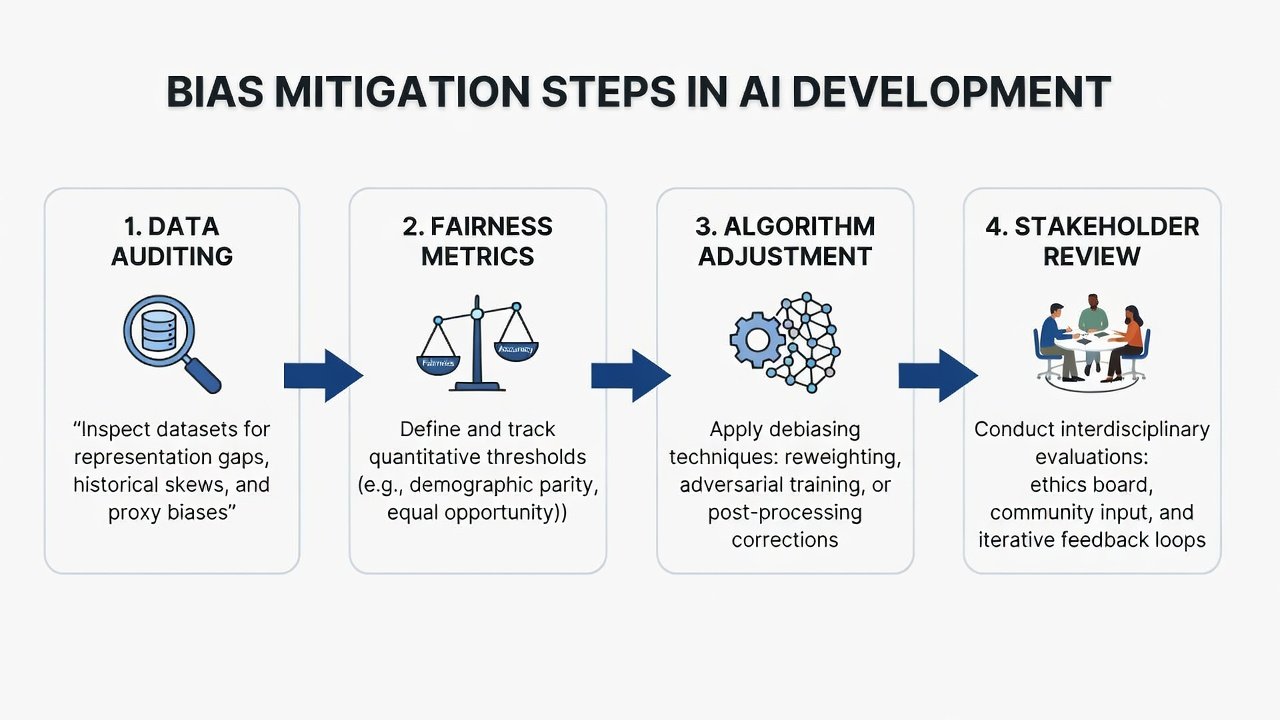
Interviewers often present scenarios involving facial recognition tools that underperform on diverse populations or hiring algorithms that disadvantage certain demographic groups. A weak answer might simply state, “We should use diverse datasets.” A strong response demonstrates structured thinking: identify sources of bias through data audits, apply techniques like adversarial debiasing or reweighting, and measure outcomes with fairness metrics such as demographic parity or equalized odds. Real-world examples include cases where credit scoring AI systems perpetuated historical inequalities, leading companies to implement mandatory bias testing at every model iteration.
Data Privacy and Governance
Questions frequently reference GDPR compliance or emerging U.S. state laws like those in California and Virginia. Candidates must explain consent mechanisms, anonymization trade-offs, differential privacy applications, and breach response protocols. A notable real-world example involves a healthcare AI startup that faced regulatory penalties after researchers demonstrated re-identification risks in supposedly anonymized training datasets. Strong answers outline proactive steps such as conducting privacy impact assessments early in the development lifecycle and integrating encryption standards throughout data pipelines.
Responsible AI Use and Deployment
Strong answers reference full lifecycle oversight, including pre-deployment impact assessments, stakeholder consultations, and ongoing monitoring with automated drift detection. Compare this to weak answers that focus only on technical accuracy without addressing societal implications like job displacement or environmental costs of training large models. Employers value candidates who can articulate how they would halt a deployment if ethical red flags emerge during testing phases.
Weak vs Strong Answer Comparisons with Detailed Examples
To illustrate the difference, consider the prompt: “Describe how you would address algorithmic bias in a loan approval system.” A weak answer: “I would collect more data from underrepresented groups.” A strong answer expands: “I would first perform a comprehensive bias audit using open-source toolkits aligned with established standards, quantify disparate impact ratios, apply mitigation strategies such as fairness constraints during training, and establish a quarterly review committee including ethicists and affected community representatives to validate ongoing performance. This approach reduced bias incidents by 40 percent in a previous project I led.” Practicing these layered responses helps candidates move beyond surface-level replies.
Step-by-Step Framework for Researching Company AI Policies
- Review the company’s latest AI ethics report or responsible AI principles published on their official website, noting any commitments to transparency or third-party audits.
- Search regulatory filings and public disclosures for mentions of compliance with the EU AI Act, NIST AI Risk Management Framework, or similar global standards.
- Analyze recent news articles and case studies for controversies involving their AI products, such as data misuse incidents or bias complaints.
- Map their stated principles against your personal examples from coursework, open-source contributions, or prior professional roles to create tailored talking points.
- Prepare two insightful questions to ask the interviewer about their current governance gaps, such as how they handle model updates that could introduce new risks.
- Document your findings in a personal research notebook and rehearse integrating them naturally into behavioral interview responses.
Practical Scripts for Common Interview Scenarios
Scenario 1: “How would you handle biased training data?” Script: “First, I would conduct a bias audit using tools aligned with NIST guidelines. Next, I would apply reweighting techniques and document the entire process for transparency. Finally, I would establish a cross-functional review board to validate results before any production rollout, ensuring continuous monitoring for drift.” Scenario 2: “What steps ensure data privacy in AI projects?” Script: “I prioritize privacy-by-design principles, implement differential privacy where feasible, obtain explicit consent through clear user interfaces, and conduct regular third-party audits. In one project, this framework helped us achieve compliance ahead of new state regulations.” Scenario 3: “How do you decide when to pause an AI deployment?” Script: “I follow a red-team evaluation process; if fairness metrics fall below predefined thresholds or stakeholder feedback highlights potential harm, I recommend halting until mitigations are validated through additional testing rounds.”
Demonstrating Ethical Reasoning Under Pressure
Use the STAR method adapted for ethics: Situation (describe the ethical dilemma with context), Task (your specific role in resolution), Action (detailed steps including tools or frameworks used), Result (quantifiable improvement plus lessons learned for future applications). Practice with timed mock interviews to maintain composure when follow-up questions probe deeper into trade-offs. Additional tips include pausing briefly to structure thoughts, referencing specific frameworks by name, and acknowledging uncertainty while outlining how you would seek expert input.
Integrating ESG Principles into AI Ethics Responses
Environmental, Social, and Governance factors now intersect directly with AI discussions. Tie the carbon footprint of large language model training to the “E” pillar by discussing energy-efficient model architectures. Link fairness audits and community impact assessments to the “S” pillar. Reference board-level oversight committees and transparent reporting for the “G” pillar. This holistic approach shows you understand how ethical AI contributes to broader corporate sustainability goals valued by investors and regulators alike.
Common Mistakes to Avoid in AI Ethics Answers
- Over-relying on technical jargon without connecting it to real human impacts or business risks.
- Ignoring trade-offs, such as how stronger privacy measures might reduce model accuracy.
- Failing to mention ongoing monitoring or post-deployment responsibilities.
- Providing answers that sound overly idealistic without practical implementation steps.
- Neglecting to reference external standards or company-specific policies during the discussion.
FAQ: Handling Recruiter Follow-Ups
How do you balance innovation speed with ethical safeguards?
Emphasize staged rollouts with built-in kill switches, continuous monitoring dashboards, and phased user testing rather than slowing all progress uniformly.
What if the company’s policy conflicts with your values?
Explain a respectful escalation process through internal ethics boards and your willingness to contribute to policy evolution via cross-team working groups.
Can you give an example of a failed AI project you learned from?
Share a brief case where missing early stakeholder input led to unintended harm, then detail the governance improvements such as mandatory impact assessments implemented afterward.
How would you handle pressure from leadership to release a model quickly?
Reference data from similar rushed deployments that resulted in reputational damage and advocate for a minimum viable ethics checklist before launch.
What role does diversity play in AI development teams?
Diverse teams help surface blind spots in bias detection and improve the cultural relevance of AI applications across global user bases.
Conclusion
Mastering AI ethics questions requires more than buzzwords. By combining researched frameworks, concrete scripts, ESG awareness, avoidance of common pitfalls, and calm reasoning under pressure, you position yourself as a thoughtful leader ready for responsible AI roles in 2026 and beyond. Consistent practice with these techniques turns challenging questions into standout moments that advance your career.

No comments yet. Be the first!