 Jobboy

Introduction to ESG Ethics in Behavioral Interviews
In 2026, environmental, social, and governance (ESG) considerations have become central to corporate strategy across industries. Interviewers increasingly evaluate candidates not only on technical skills but also on their ability to demonstrate ethical reasoning and sustainability awareness through behavioral examples. This comprehensive guide shows you how to integrate ESG principles into STAR-method responses, helping you stand out as a values-aligned professional. By researching company reports, crafting impact-focused stories, and aligning your personal values with corporate sustainability objectives, you can deliver compelling answers that resonate with hiring managers focused on long-term responsibility.
Behavioral interviews test past actions as predictors of future performance. When ESG topics arise, recruiters want evidence that you understand climate risks, diversity metrics, ethical supply chains, and governance transparency. Extending classic AI ethics and ESG concepts, this article provides step-by-step frameworks, multiple weak-versus-strong answer comparisons, sector-specific scripts, and practical checklists to prepare thoroughly for 2026 opportunities.
Researching Company ESG Reports Effectively
Begin preparation by thoroughly analyzing the target company's most recent ESG or sustainability report. These documents, usually published annually on investor relations websites, detail carbon reduction targets, diversity statistics, board oversight practices, and community impact initiatives. Identify three to five priorities that match your experience, such as net-zero commitments or supplier ethics audits. Supplement your review with global benchmarks from organizations like the OECD to understand how local practices align with international standards. Note specific metrics mentioned, such as percentage reductions in Scope 3 emissions or gender pay equity ratios, so you can reference them naturally during interviews. This research prevents generic answers and demonstrates genuine interest in the organization's sustainability journey.
Step-by-Step Framework for ESG-Integrated STAR Responses
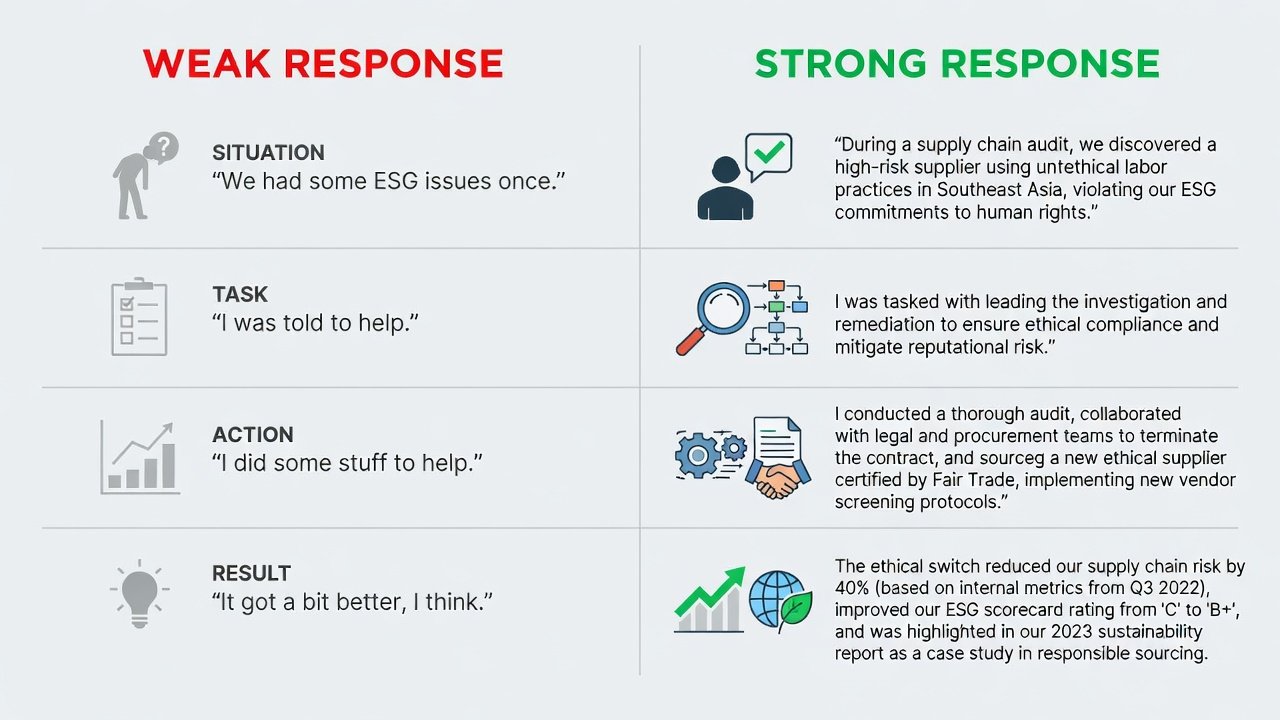
Use this enhanced STAR framework tailored for ESG topics. First, define the Situation by describing an environmental, social, or governance challenge you encountered, including relevant context like regulatory changes or stakeholder expectations. Next, clarify your Task, emphasizing your responsibility in advancing ethical or sustainable outcomes rather than routine duties. In the Action phase, detail concrete steps such as conducting impact assessments, collaborating with cross-functional teams, or implementing new measurement tools, always tying actions to ESG principles. Finally, present the Result with quantifiable improvements, such as reduced waste volumes, improved inclusion scores, or enhanced compliance rates, and explain how these outcomes supported broader corporate goals. This structure ensures every response feels purposeful and results-oriented.
Weak vs Strong Answer Comparisons
Consider a common question about sustainability initiatives. A weak response might state: "I worked on a green project at my last job." This lacks specificity and measurable impact. A strong version expands: "In my previous role, I identified inefficiencies in our packaging process. I led a cross-departmental task force that introduced biodegradable materials, resulting in a 22 percent reduction in plastic use within six months and directly supporting our company's 2030 zero-waste target." Another weak example on diversity: "We tried to hire more diverse candidates." Strong alternative: "Recognizing underrepresentation in engineering teams, I designed targeted outreach programs and bias-reduced screening protocols. This increased applications from underrepresented groups by 40 percent and improved retention rates by 18 percent over the following year."
Sector-Specific Q&A Examples
Technology roles often probe data ethics and AI governance. Prepare stories about bias detection in algorithms or transparent data usage policies. Manufacturing candidates should emphasize supply-chain traceability and emissions tracking. In finance, focus on responsible investment screening and climate-risk modeling. Healthcare professionals can highlight equitable access initiatives and ethical clinical trial practices. For each sector, prepare two to three STAR stories that reference measurable ESG outcomes relevant to the company's published goals. This targeted approach shows deep industry awareness.
Practical Scripts for Climate Action, DEI Metrics, and Ethical Dilemmas
For climate action questions, use this script: "When our division faced rising energy costs, I analyzed consumption data and proposed a transition to renewable sources. After securing leadership approval, we installed solar panels and optimized HVAC systems, cutting emissions by 17 percent and lowering operational expenses. This aligned with the company's science-based targets and improved our ESG rating." On DEI metrics, try: "I noticed disparities in promotion rates across demographic groups. I partnered with HR to launch mentorship programs and track progress through quarterly dashboards. Within twelve months, promotion equity improved by 25 percent, strengthening our inclusive culture." For ethical dilemmas: "Faced with a supplier using questionable labor practices, I initiated a third-party audit and recommended alternative vendors. The decision upheld our governance standards and protected brand reputation while maintaining supply continuity." Practice delivering these scripts conversationally, adapting details to your actual experience.
Common Pitfalls to Avoid
Many candidates fall into traps that weaken their ESG responses. Avoid vague language without numbers or timelines. Never fabricate achievements; interviewers can verify claims through references or public records. Do not ignore company-specific context by reciting generic sustainability buzzwords instead of linking to published targets. Another frequent mistake is focusing solely on environmental topics while neglecting social and governance dimensions. Finally, resist the urge to shift blame to others; always own your contributions and lessons learned. Reviewing your stories against these pitfalls ensures professional, credible delivery.
Checklists for Interview Preparation
- Download and annotate the company's latest ESG report, highlighting at least five measurable goals.
- Prepare five STAR stories covering environmental, social, and governance themes with specific metrics.
- Practice aloud using a timer to keep responses between 90 and 120 seconds.
- Cross-reference your examples with external frameworks from the United Nations Sustainable Development Goals.
- Record mock interviews and review for clarity, confidence, and ethical depth.
- Prepare thoughtful questions to ask recruiters about their current ESG challenges.
- Update LinkedIn and portfolio materials to reflect ESG-related accomplishments.
AI Tool Recommendations for Customizing Answers
Leverage reputable AI assistants such as Claude or Gemini to refine your STAR narratives. Input your raw experience and request versions that incorporate specific company ESG metrics or sector language. Use these tools to generate multiple variations, then personalize them further. Always review outputs for accuracy and authenticity. Tools can also simulate interview questions based on public company reports, helping you anticipate follow-ups on climate action or DEI progress. Combine AI assistance with human feedback from mentors or career coaches for the strongest results.
Aligning Personal Values with Corporate Sustainability Goals
Beyond scripted answers, reflect on how your core values connect with the organization's mission. During interviews, articulate genuine motivations, such as a commitment to climate justice or equitable workplaces, using brief personal anecdotes. This authenticity builds rapport and demonstrates cultural fit. When values misalignment appears, prepare diplomatic ways to discuss it while still showing respect for the company's direction.
Conclusion
Mastering ESG ethics frameworks transforms behavioral interviews into opportunities to showcase leadership in sustainability and responsibility. By combining thorough research, structured STAR responses, sector-specific examples, and careful avoidance of common pitfalls, you position yourself as a forward-thinking candidate ready for 2026 roles. Apply these strategies consistently, refine with AI tools, and enter every interview prepared to discuss climate action, DEI metrics, and ethical decision-making with confidence and clarity.

No comments yet. Be the first!