 Jobboy

Introduction: Why Sentiment Analysis Matters for Retention in 2026
Traditional employee surveys often fail to capture real-time insights, leaving HR leaders reactive rather than proactive. Sentiment analysis offers a data-driven approach by processing unstructured text from emails, feedback forms, and internal communications to gauge employee emotions and predict turnover risks. This guide explains how to integrate sentiment analysis ethically with HR platforms, interpret results, and implement retention strategies that work for mid-sized companies. In 2026, organizations face evolving workforce dynamics including hybrid work models and generational shifts, making continuous emotional intelligence essential for maintaining competitive talent pools.
As organizations face evolving workforce dynamics in 2026, leveraging AI for sentiment analysis helps move beyond annual polls to continuous monitoring. It identifies patterns like frustration in team communications before they escalate into resignations. Companies that adopt these methods report higher engagement levels and lower replacement costs, turning potential exits into opportunities for improvement through targeted interventions.
What Is Sentiment Analysis and How It Integrates with HR Tools
Sentiment analysis uses natural language processing to classify text as positive, negative, or neutral. When applied to HR, it scans sources such as Slack messages, survey responses, and performance reviews. Integration with existing engagement platforms like Workday or BambooHR allows seamless data flow without replacing current systems. The technology parses tone, context, and keywords to produce actionable scores that HR teams can review alongside traditional metrics like tenure and performance ratings.
Start by connecting APIs from your sentiment tool to HR software. This setup enables automated analysis of incoming feedback, generating dashboards that highlight trends over time. Integration also supports cross-referencing with demographic data to uncover disparities, such as differing sentiment levels across departments or locations. Mid-sized firms benefit particularly because they often lack dedicated data science teams yet possess enough internal text volume for meaningful analysis.
Selecting Ethical AI Tools for Sentiment Analysis
Choosing the right tool requires prioritizing privacy and bias mitigation. Look for platforms with transparent algorithms and compliance features for data protection regulations. Key criteria include audit trails, employee consent mechanisms, and options to anonymize data. Ethical tools should also provide explainability features so HR professionals understand why certain texts receive specific scores rather than operating as black boxes.
Compare options such as tools from established vendors that offer customizable models trained on HR-specific datasets. Avoid solutions lacking clear ethical guidelines or third-party certifications. Test tools during pilot phases for accuracy on your company’s unique language patterns, including industry jargon and regional dialects. Documentation on data storage locations and deletion policies is equally important for building employee trust.
Analyzing Communication Channels: Emails, Feedback Forms, and More
Focus on multiple channels for comprehensive insights. Emails can reveal tone shifts in project discussions, while feedback forms provide structured data. Combine these with exit interview notes for a fuller picture. Additional sources like internal forums, pulse survey open-text fields, and even transcribed meeting notes expand the dataset while respecting boundaries around private conversations.
Implement filters to exclude sensitive personal information. Tools should flag recurring negative themes, such as workload complaints, across departments. Regular calibration ensures the system adapts to evolving company culture and communication styles. HR teams should establish clear policies on which channels are included and communicate these transparently to staff to maintain ethical standards.
Interpreting Results for Early Warning Signs
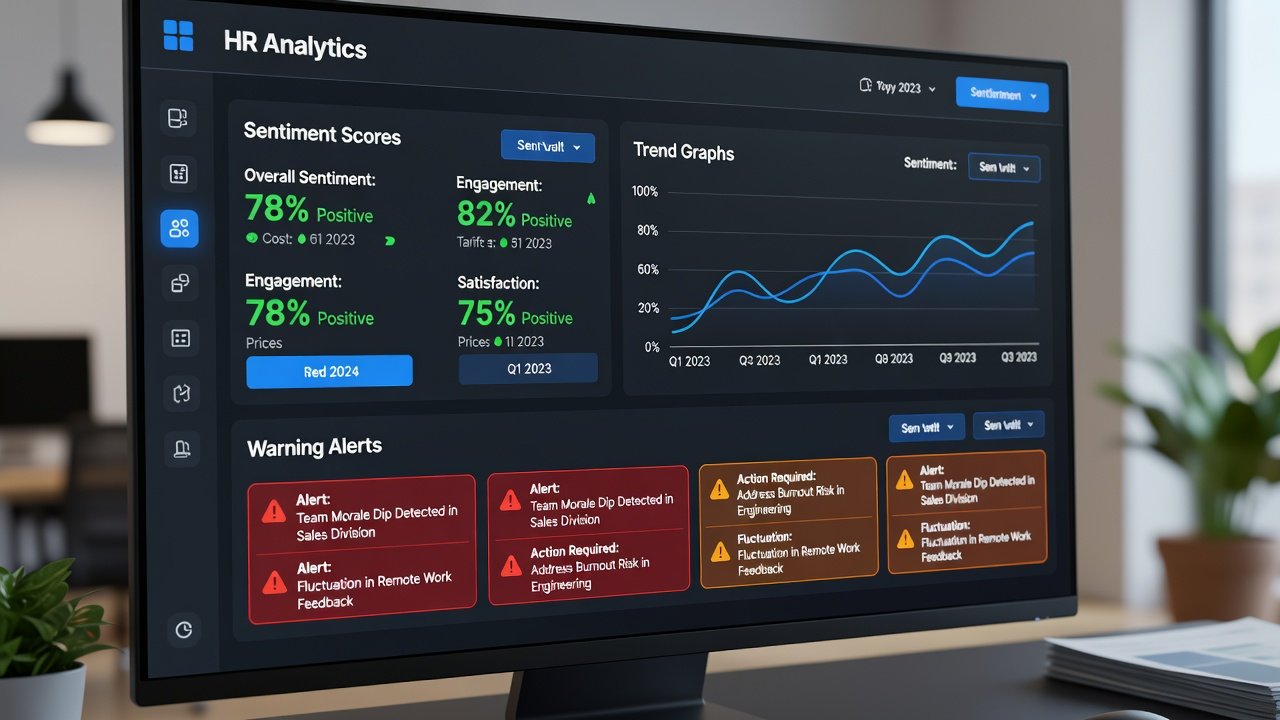
Results appear as sentiment scores and keyword clusters. A sudden drop in positive sentiment in a team might indicate burnout or management issues. Track metrics like sentiment velocity—the rate of change over weeks—to spot risks early. Visual heatmaps help identify departments or roles showing consistent negative trends that warrant immediate attention.
Real-world examples from mid-sized firms show how one company reduced voluntary turnover by 18% after acting on detected dissatisfaction in engineering teams through weekly sentiment reports. Another logistics firm noticed rising negativity around scheduling fairness and introduced flexible shift options, cutting attrition by 12 percent within six months. Interpretation should always involve human review to account for sarcasm or context that algorithms might miss.
Step-by-Step Implementation Guidance
Successful rollout requires careful planning and phased execution. Begin with a thorough assessment of available data sources and stakeholder buy-in.
- Assess current data sources and obtain necessary approvals from legal and leadership teams to ensure compliance and support.
- Select and pilot an ethical AI tool with a small team, measuring accuracy and user acceptance over four to six weeks.
- Train the model on your organization's communication style by feeding it historical anonymized data for improved relevance.
- Set up alerts for negative sentiment thresholds that trigger HR review without automatic punitive actions.
- Develop response protocols tied to HR policies, including escalation paths and manager training on handling insights sensitively.
- Measure outcomes quarterly and refine the process based on retention metrics and employee feedback about the system itself.
Real-World Examples from Mid-Sized Companies
A 400-employee tech firm used sentiment analysis on internal forums to detect isolation among remote workers, leading to targeted wellness programs and virtual team-building initiatives. Another manufacturing company applied it to safety feedback forms, improving response times and boosting retention in frontline roles by addressing concerns about equipment maintenance promptly. A third example involves a healthcare provider that combined sentiment data with exit interviews to redesign onboarding, resulting in a 15 percent improvement in first-year retention.
Comparisons of Top Tools
Evaluate tools based on accuracy, integration ease, and reporting depth. Popular choices include platforms emphasizing HR compliance versus general AI solutions. Review features like multilingual support and visualization options to match your needs. Some tools excel at real-time monitoring while others provide deeper historical trend analysis suitable for quarterly reviews.
Creating Action Plans from Insights
Translate findings into concrete steps: schedule one-on-ones for at-risk employees, adjust workloads, or enhance recognition programs. Involve managers with anonymized reports to maintain trust. Action plans should be documented and followed up with measurable goals, such as improved sentiment scores within 30 days of intervention.
Common Pitfalls and How to Avoid Them
Many organizations rush implementation without sufficient training or transparency, leading to employee distrust. Another frequent mistake is over-relying on automated scores without human context, which can misinterpret cultural nuances. To avoid these issues, conduct regular audits, involve employee representatives in tool selection, and communicate clearly about how data will be used.
Addressing Privacy Concerns in the FAQ
How do we ensure employee data privacy?
Use anonymized aggregation and obtain explicit consent. Tools should comply with standards like GDPR and offer opt-out options. Regular privacy impact assessments help maintain compliance as regulations evolve.
What about ROI measurement?
Track retention rates pre- and post-implementation, alongside engagement scores. Calculate cost savings from reduced hiring expenses and improved productivity metrics.
Is this better than traditional surveys?
It complements surveys by providing ongoing, passive insights that capture nuances surveys miss, creating a more holistic view of workforce sentiment.
Conclusion
Sentiment analysis empowers HR leaders to foster retention through proactive, evidence-based decisions. By following the steps outlined, organizations can build more responsive workplaces in 2026 and beyond. For further reading, explore resources from SHRM and Harvard Business Review.


No comments yet. Be the first!