 Jobboy

Introduction to Psychometric Testing in Modern Hiring
Psychometric testing has become a cornerstone of strategic talent acquisition. By measuring cognitive abilities, personality traits, and behavioral tendencies, these assessments help HR professionals make data-driven decisions that improve hiring accuracy and long-term employee retention. In 2026, organizations face increasing pressure to build resilient teams amid evolving workplace dynamics, making reliable selection tools more valuable than ever. Companies that integrate these evaluations report up to 25 percent lower turnover in the first year compared to those relying solely on interviews. This approach moves beyond surface-level qualifications to uncover deeper indicators of success, such as how a candidate handles stress or collaborates in teams.
Unlike traditional interviews that rely heavily on subjective impressions, psychometric evaluations provide standardized insights into how candidates are likely to perform in specific roles. This approach not only reduces costly mis-hires but also supports diversity by focusing on objective criteria rather than gut feelings. HR leaders who adopt these methods often find they can streamline processes while building stronger, more cohesive workforces.
Understanding the Main Types of Psychometric Assessments
Several categories of tests serve distinct purposes in recruitment. Personality assessments, such as those based on the Big Five model, evaluate traits like conscientiousness and emotional stability that correlate with job success across many positions. These tools help predict long-term engagement and cultural fit. Aptitude and cognitive ability tests measure problem-solving, numerical reasoning, and verbal skills essential for technical or analytical roles, often revealing potential that resumes alone cannot show.
Additional options include situational judgment tests that present realistic workplace scenarios and values-based inventories that assess cultural alignment. When combined thoughtfully, these tools create a multi-dimensional view of each candidate. For example, a sales position might pair a personality test with a situational judgment exercise to gauge both resilience and customer-handling skills.
Key Benefits of Using Psychometric Testing
Beyond basic screening, these assessments deliver measurable advantages. They enhance predictive accuracy for job performance, helping organizations avoid the high costs associated with poor hires. Teams also experience improved retention because new employees are better matched to their roles from day one. Furthermore, the data supports more equitable decisions, reducing reliance on unstructured interviews that can introduce bias.
Organizations report stronger team dynamics and faster onboarding when psychometric insights guide placement. This strategic edge becomes especially important in competitive talent markets where every hire counts.
Step-by-Step Guide to Rolling Out Psychometric Testing
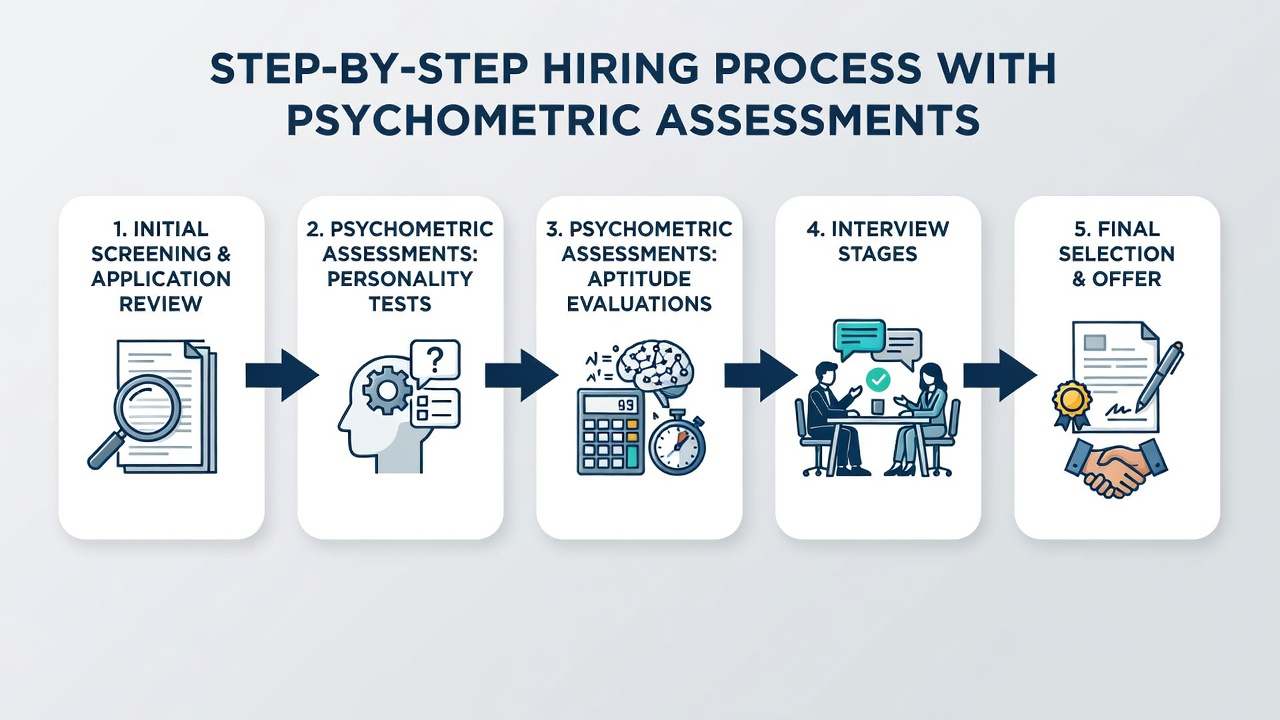
- Define role-specific competencies and select validated assessments aligned with those requirements. Start by analyzing job descriptions and consulting with team leads to identify must-have traits.
- Train hiring managers and recruiters on proper administration and ethical use of results. Workshops should cover score interpretation and confidentiality protocols.
- Integrate testing into the existing recruitment workflow at an appropriate stage, typically after initial screening but before final interviews. This timing prevents overwhelming candidates while maximizing relevance.
- Pilot the process with a small group of roles and gather feedback before full-scale adoption. Track metrics like candidate completion rates and manager satisfaction during this phase.
- Establish clear protocols for interpreting scores and combining them with other evaluation data. Create scorecards that weight assessments alongside experience and references.
- Monitor outcomes such as new-hire performance and retention rates to refine the approach over time. Schedule quarterly reviews to adjust benchmarks as roles evolve.
How Psychometric Testing Compares to Standard Interviews
Traditional interviews often suffer from bias and inconsistency, with research showing they predict job performance only modestly. Psychometric tests, by contrast, demonstrate stronger predictive validity when properly validated for the job in question. Combining both methods yields the best results: interviews explore experience and motivation while tests quantify underlying traits and abilities. For instance, an interview might reveal a candidate's past achievements, but a cognitive test can confirm their capacity to handle complex problem-solving required in the new role.
Companies that adopt this blended model frequently report higher quality of hire and lower early turnover. The structured nature of assessments also makes the process more defensible in legal reviews.
Real-World Company Examples
Global organizations across industries have documented success with psychometric testing. Technology firms use cognitive assessments to identify high-potential engineers who thrive in fast-paced environments. Retail leaders apply personality inventories to improve customer-service team stability, resulting in reduced absenteeism and higher satisfaction scores. In one case, a financial services company integrated situational judgment tests and saw a 30 percent drop in voluntary exits within the first six months. These examples illustrate how tailored implementation leads to measurable improvements in retention and productivity across sectors.
Mitigating Bias and Ensuring Fairness
Effective programs prioritize fairness by choosing assessments with strong evidence of validity across demographic groups. Regular audits of selection rates and ongoing validation studies help identify and address any unintended adverse impact. Transparency with candidates about how data is used also builds trust. Practical steps include using multiple assessment types to balance perspectives and providing accommodations for candidates with disabilities. Training on unconscious bias further strengthens the process, ensuring decisions remain objective.
Criteria for Selecting the Right Assessment Tools
When evaluating providers, HR teams should examine scientific validation studies, user experience for candidates, integration capabilities with applicant tracking systems, and support for compliance documentation. Scalability and reporting features matter for growing organizations. Look for platforms that offer customizable benchmarks and detailed analytics dashboards. Reading independent reviews and requesting demo data from similar-sized companies can guide the final choice.
Interpreting Results and Making Informed Decisions
Scores should never be used in isolation. Instead, combine them with interview feedback, reference checks, and work-sample exercises. Setting clear benchmarks in advance prevents over-reliance on any single metric and supports consistent decision-making. For example, a high conscientiousness score might outweigh a moderate aptitude result for a detail-oriented administrative role. HR professionals benefit from creating interpretation guides tailored to each position.
Legal Compliance Essentials
Employers must ensure assessments comply with employment laws regarding non-discrimination and data privacy. Consulting legal experts and reviewing guidelines from authoritative bodies helps maintain compliance while maximizing the value of testing programs. Key resources include the U.S. Equal Employment Opportunity Commission, the Society for Human Resource Management, and the U.S. Department of Labor. Regular documentation of validation efforts and adverse impact analyses protects organizations from potential challenges.
Measuring Success and Tracking Key Metrics
To evaluate effectiveness, track quality-of-hire scores, time-to-productivity, voluntary turnover within the first year, and candidate satisfaction with the selection process. Surveys sent 90 days post-hire provide valuable insights into role fit. Over time, these metrics reveal whether the testing program delivers the expected return on investment through improved retention and performance.
Frequently Asked Questions
How long does it take to implement psychometric testing?
Most organizations complete a full rollout within two to four months when following a structured plan that includes stakeholder alignment and pilot testing. Complex organizations with multiple locations may require additional time for customization.
Can small businesses benefit from these tools?
Yes. Many providers offer affordable, scalable solutions suitable for teams of all sizes, delivering similar improvements in hiring quality and retention. Cloud-based platforms make advanced assessments accessible without large upfront investments.
What metrics indicate success?
Track quality-of-hire scores, time-to-productivity, voluntary turnover within the first year, and candidate satisfaction with the selection process. Comparing pre- and post-implementation data highlights clear progress.
Are there risks of over-testing candidates?
Yes, but these can be avoided by limiting assessments to job-relevant measures and keeping the process concise. Clear communication about purpose and time commitment maintains positive candidate experience.
Conclusion
Psychometric testing, when implemented strategically, equips HR teams with powerful insights that lead to better hiring decisions and stronger retention outcomes. By following the steps outlined above and continuously refining the process, organizations position themselves for sustained success in talent acquisition throughout 2026 and beyond.


No comments yet. Be the first!