 Jobboy

Introduction
HR leaders face constant pressure to maintain steady talent pipelines amid fluctuating business needs and competitive labor markets. A well-structured recruitment marketing calendar provides the framework to anticipate hiring demands, synchronize campaigns across channels, and deliver consistent messaging that attracts qualified candidates year-round. In 2026, organizations that treat recruitment marketing as a continuous process rather than a reactive scramble will gain a significant edge in attracting top talent. This guide walks through practical steps to create and sustain such a calendar, focusing on alignment with seasonal peaks, employer branding integration, and performance tracking without duplicating standard recruiting tactics. By investing time upfront in planning, teams can reduce time-to-fill metrics and improve candidate quality across all roles.
Mapping Seasonal Hiring Peaks to Business Cycles
Begin by analyzing your organization's historical hiring data alongside industry trends and internal growth forecasts. Review the past three years of recruitment activity to identify patterns, such as increased needs in Q1 for retail or technology roles following annual budgeting cycles. Cross-reference these insights with economic indicators from sources like the U.S. Bureau of Labor Statistics. For example, sectors like healthcare often see spikes in late summer due to academic calendars, while manufacturing may peak in early fall to prepare for holiday production. Create a visual timeline that overlays business milestones—product launches, fiscal year starts, and expansion plans—with projected open roles. This mapping prevents last-minute scrambles and allows proactive content development. To implement this, gather data from your ATS reports, interview hiring managers about upcoming projects, and factor in external events like industry conferences. Document assumptions clearly so the calendar can be adjusted when forecasts change. A practical example involves a mid-sized tech firm that mapped Q3 engineering hires to product roadmap releases, resulting in 30% faster fills by pre-building candidate pools three months in advance.
Integrating Employer Branding Campaigns
Employer branding should run continuously rather than as isolated events. Align campaigns with calendar quarters by selecting themes that reinforce company values while addressing candidate pain points. For instance, dedicate Q2 to highlighting career growth opportunities through employee stories and skill-development spotlights. Ensure branding elements appear consistently across all touchpoints, from social media posts to email nurturing sequences. This approach builds familiarity and trust, making your organization top-of-mind when candidates are ready to explore new roles. Develop a brand messaging matrix that includes core values, unique selling points, and tone guidelines. Share this matrix with all team members involved in content creation to maintain consistency. Real-world application shows that companies refreshing their employer brand quarterly see higher engagement rates on career site visits compared to those running sporadic campaigns.
Coordinating Talent Acquisition Channels
Job boards, LinkedIn, Indeed, and niche industry sites require different cadences and content formats. Schedule evergreen job postings for always-on visibility while layering targeted campaigns during peak seasons. Social media channels benefit from a content mix: 40% career-related educational material, 30% behind-the-scenes culture content, and 30% direct job promotions. Coordinate these with email outreach and employee advocacy programs to amplify reach without increasing individual workload. Assign channel owners within the team and hold bi-weekly sync meetings to align efforts. For job boards, optimize postings with SEO keywords derived from job descriptions. On LinkedIn, use sponsored content tied to industry events. This coordinated strategy ensures no single channel becomes a bottleneck and maximizes overall pipeline inflow.
Quarterly Planning Templates
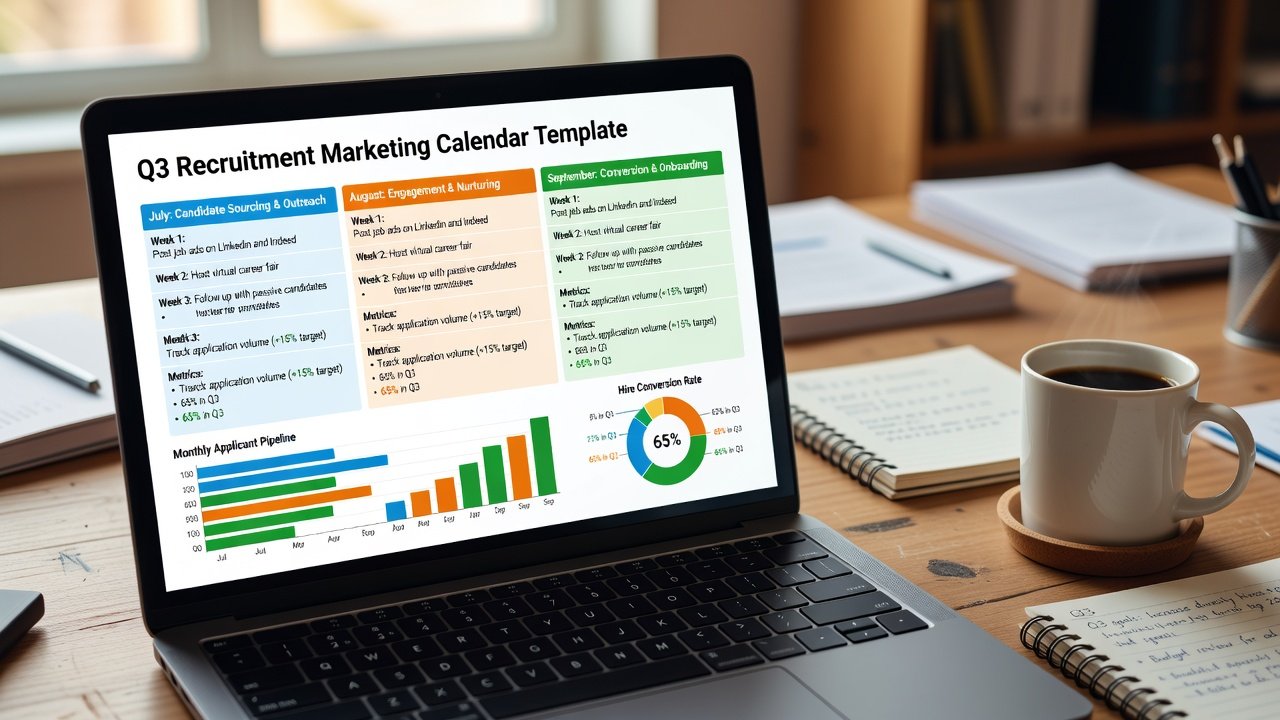
Use a simple quarterly template divided into four columns: Planning Objectives, Content Calendar, Channel Tactics, and Success Metrics. Populate each quarter with specific actions tied to your seasonal map. For Q1, focus on post-holiday retention and new graduate outreach by launching competency-focused webinars and attending virtual career fairs. Q2 emphasizes internal mobility and summer internship programs through targeted email series and social takeovers by current employees. In Q3, prepare for back-to-school hiring surges with targeted social campaigns highlighting flexible work options. Q4 highlights year-end achievements and 2027 opportunities through referral drives and success story videos. Review and adjust the template at the end of each quarter based on pipeline data. Include contingency rows for unexpected needs, such as sudden team expansions. This template approach turns vague intentions into actionable weekly tasks.
Content Themes Tied to Key Metrics
Link every content theme to measurable outcomes such as application volume, time-to-fill, and quality-of-hire scores. For example, a theme around “innovation at work” might aim to increase applications from mid-level engineers by 25% within 60 days. Track engagement rates on social posts and email open rates to refine themes iteratively. Develop a content calendar spreadsheet that tags each piece with its intended metric and responsible owner. This data-driven approach ensures marketing efforts directly support pipeline strength rather than serving as generic brand exercises. Incorporate A/B testing on subject lines and visuals to optimize performance continuously.
Measuring Pipeline Health
Establish monthly health checks using a dashboard that monitors key indicators: number of engaged prospects, stage conversion rates, and source effectiveness. Set thresholds that trigger calendar adjustments, such as a 15% drop in qualified applicants prompting an immediate content boost. Tools like Google Data Studio or built-in ATS analytics can visualize trends over time. Regular reviews help maintain momentum and reveal whether seasonal assumptions still hold true. Share dashboard summaries with leadership to secure ongoing support for recruitment marketing initiatives.
Incorporating Compliance Reminders and Competency-Focused Messaging
Embed compliance checkpoints directly into the calendar, such as EEOC guideline reviews before launching any public-facing campaign. Schedule these reminders quarterly to avoid oversights during busy periods. Reference resources from the U.S. Equal Employment Opportunity Commission when drafting materials. Competency-focused messaging should emphasize specific skills and behaviors required for roles rather than generic qualifications. Weave these details into job descriptions, social posts, and webinar topics to attract candidates who match organizational needs more precisely. Train content creators on inclusive language to further strengthen compliance and broaden appeal.
Common Pitfalls to Avoid
Many teams fail by overcommitting to too many channels without proper resourcing or by ignoring mid-year market shifts. Another frequent mistake is neglecting to involve hiring managers early in theme development, leading to misaligned expectations. Build in buffer time for approvals and always maintain a content repository for quick pivots.
Conclusion
A recruitment marketing calendar transforms reactive hiring into a proactive, strategic process. By mapping cycles, coordinating channels, and measuring outcomes consistently, HR teams can build resilient talent pipelines that support business goals throughout 2026 and beyond.
FAQs
How do I adjust the calendar mid-year?
Conduct a formal quarterly review meeting with stakeholders to compare actual hiring data against projections. Reallocate budget and content resources to underperforming areas while preserving core branding elements. Document all changes in a shared revision log for transparency.
Can small and medium-sized businesses scale this approach?
Yes. SMBs should start with a simplified six-month version focused on their two highest-volume hiring periods. Use free or low-cost tools for scheduling and limit channel activity to two primary platforms initially. Gradually expand as processes mature and results demonstrate value.
What tools help maintain the calendar effectively?
Project management platforms like Asana or Trello work well for task assignment, while shared spreadsheets handle metrics tracking. Integrate calendar reminders with your existing HRIS for seamless compliance alerts.

No comments yet. Be the first!