 Jobboy

Introduction to Internal Talent Marketplaces
In 2026, organizations face increasing pressure to retain top talent while fostering internal growth amid competitive labor markets and evolving employee expectations. An internal talent marketplace is a digital platform that connects employees with opportunities such as projects, roles, and skill-building experiences within the company. This approach shifts focus from external hiring to internal mobility, directly supporting retention strategies. By enabling employees to explore roles aligned with their skills and career goals, companies reduce turnover and build a more agile workforce that can adapt quickly to changing business needs.
Research from leading HR authorities shows that internal mobility programs can significantly improve engagement and reduce voluntary exits. Implementing such a system requires careful planning around technology, processes, and people. This guide provides a step-by-step approach tailored for 2026, including real-world examples from mid-sized firms that have successfully navigated these implementations.
Understanding the Core Benefits
Internal talent marketplaces drive employee mobility by making opportunities visible and accessible across departments and locations. Employees gain visibility into roles they might not otherwise know about, leading to higher satisfaction and a sense of ownership over their career paths. For retention, these platforms help address career stagnation, a common reason for exits, by offering personalized recommendations based on skills and interests. Companies also benefit from reduced recruitment costs and faster role fulfillment through internal candidates who already understand the company culture.
Alignment with broader business goals is essential. When talent marketplaces support strategic objectives like digital transformation or expansion into new markets, they deliver compounded value. Leaders should map marketplace features to key performance indicators from the outset to ensure ongoing relevance and executive buy-in.
Key Steps for Designing and Launching Your Platform
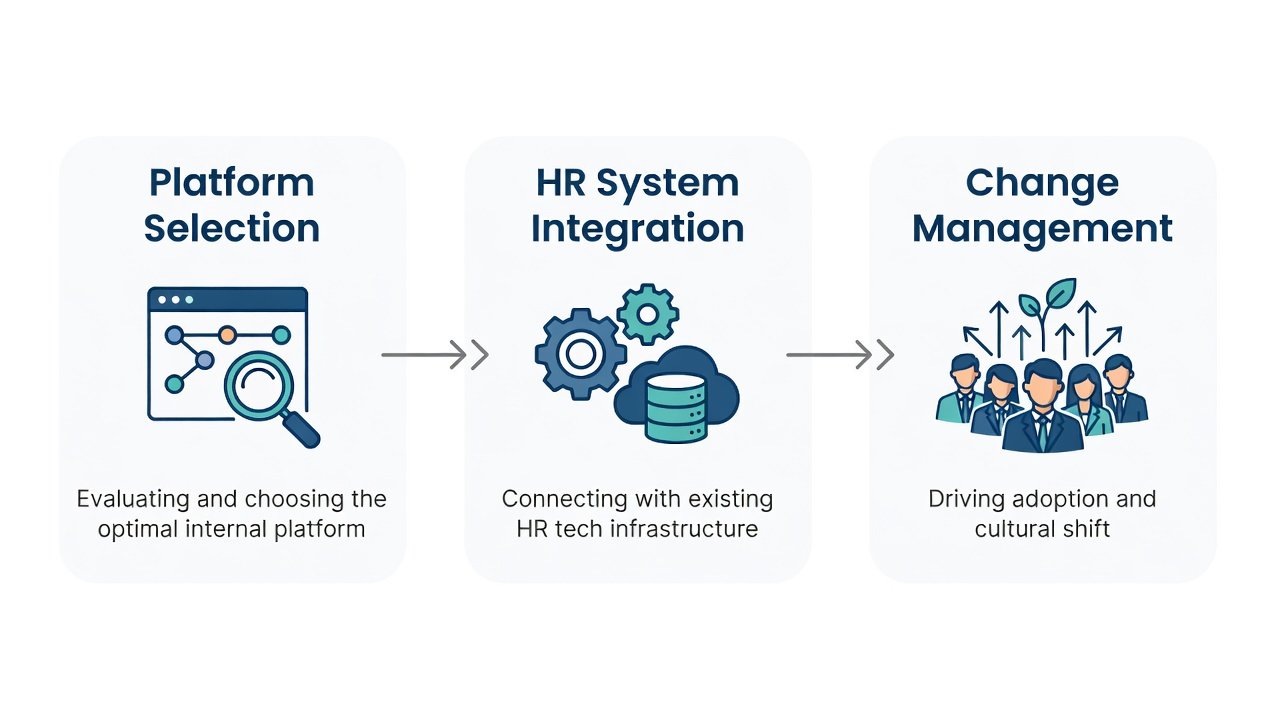
Step 1: Platform Selection
Choose a platform that integrates seamlessly with your tech stack and scales with growth. Evaluate vendors based on user experience, AI matching capabilities, and customization options. Mid-sized companies often start with solutions that offer modular features rather than enterprise-level complexity. Consider factors such as mobile accessibility, analytics dashboards, and vendor support for ongoing updates.
Step 2: Integration with Existing HR Systems
Successful rollouts depend on deep integration with HRIS, performance management, and learning platforms. This ensures real-time data flow for skills inventories and opportunity matching. Test integrations thoroughly to avoid data silos that could undermine adoption. Include API testing phases and pilot integrations with a small user group before full deployment.
Step 3: Change Management Tactics
Adoption hinges on cultural readiness. Develop a communication plan that highlights benefits for employees and managers. Provide training sessions and appoint internal champions to model usage. Address resistance by demonstrating quick wins, such as successful internal moves within the first quarter. Regular feedback loops and town halls can further embed the platform into daily workflows.
Society for Human Resource Management offers extensive resources on change management frameworks that can guide this phase.
Step 4: Pilot Testing and Iteration
Before company-wide launch, run a controlled pilot with one department or location. Gather user feedback on matching accuracy and interface usability, then iterate on features. This step reduces risk and builds early success stories that encourage broader participation.
Step 5: Ongoing Governance and Maintenance
Establish a cross-functional team to oversee platform performance, update opportunity listings, and refine algorithms based on usage data. Schedule quarterly reviews to align the marketplace with evolving business priorities.
Practical Examples of Successful Rollouts
A mid-sized technology firm with 1,200 employees launched an internal marketplace in early 2025. By integrating it with their existing performance tools, they achieved a 35% increase in internal mobility rates within six months. Managers reported higher team engagement as employees took on stretch projects visible through the platform. Another example comes from a healthcare provider that used the platform to redeploy staff during seasonal demands, improving retention by highlighting cross-department projects and reducing external hiring needs by nearly half.
A manufacturing company with 800 staff implemented a similar system focused on skill-based project matching. Within nine months, internal applications rose by 40%, and employee satisfaction scores climbed due to clearer career visibility. These cases underscore the importance of starting small with pilot groups before full rollout and continuously communicating value to all stakeholders.
Metrics for Tracking Success
Key metrics include internal mobility rates, time-to-fill for roles, employee engagement scores, and retention percentages. Track participation rates and match success to identify platform effectiveness. Regular dashboards help leaders spot trends and adjust strategies quickly. Additional indicators such as skill development completions and manager satisfaction with internal hires provide a fuller picture of impact.
Common Pitfalls to Avoid
- Underinvesting in change management, leading to low adoption and wasted technology investment.
- Selecting platforms without adequate HR system compatibility, which creates fragmented employee experiences.
- Ignoring manager involvement, which can create bottlenecks and resistance to releasing staff for new opportunities.
- Failing to communicate benefits clearly to employees, resulting in underutilization of the marketplace features.
- Overlooking data quality issues in initial skills profiles, which reduces the accuracy of AI-driven recommendations.
Alignment with Business Goals
Successful marketplaces are those explicitly tied to strategic priorities. For example, if a company aims to accelerate innovation, the platform should prioritize cross-functional project opportunities that foster creative collaboration. Regular alignment sessions between HR and business leaders ensure the marketplace evolves alongside company objectives rather than operating in isolation.
Legal Considerations
Ensure compliance with employment laws regarding opportunity access and data privacy. Platforms must handle employee information securely and avoid discriminatory matching algorithms. Consult legal experts during vendor selection to review terms and data policies. Transparent access rules and audit trails help demonstrate fairness in opportunity distribution.
U.S. Department of Labor provides guidelines on fair employment practices relevant to talent platforms, while Equal Employment Opportunity Commission resources can assist with compliance reviews.
Measuring ROI Through Retention Improvements
Calculate ROI by comparing pre- and post-implementation retention data alongside mobility metrics. Factor in savings from reduced external hiring and productivity gains from quicker internal placements. Over time, these improvements compound into measurable business impact. Track cost-per-hire reductions and correlate them with engagement survey improvements for a comprehensive view.
Harvard Business Review regularly publishes case studies on talent strategy ROI that can inform your measurement approach.
Conclusion
Internal talent marketplaces represent a powerful tool for organizations seeking sustainable growth through their existing workforce. By following structured implementation steps, learning from peer examples, and focusing on measurable outcomes, companies can achieve meaningful gains in mobility and retention throughout 2026 and beyond.
FAQ: Top Recruiter Questions on Scaling and Adoption
How do we scale the marketplace across multiple locations?
Begin with centralized governance while allowing regional customization. Use analytics to monitor adoption disparities and provide targeted support such as localized training materials or translated interfaces where needed.
What drives employee adoption?
Clear communication, visible leadership support, and incentives like recognition for internal moves are proven tactics. Highlighting success stories in company newsletters further encourages participation.
How long does full implementation typically take?
Most mid-sized organizations complete rollout in 4-6 months when following structured change management, though complex integrations may extend this timeline slightly.
How can we maintain momentum after launch?
Schedule regular feature updates, celebrate internal mobility wins publicly, and incorporate user suggestions to keep the platform dynamic and relevant.
What if managers resist releasing high performers?
Address this through policy guidelines that reward managers for supporting mobility and by demonstrating how internal moves ultimately strengthen the overall organization.

No comments yet. Be the first!