 Jobboy

Introduction: Why Internal Talent Marketplaces Matter in 2026
Internal talent marketplaces are transforming how mid-sized companies approach employee mobility and retention. By 2026, these platforms enable organizations to match employees with opportunities based on skills rather than traditional hierarchies. HR leaders are turning to these solutions to reduce turnover and foster internal growth amid competitive labor markets. Companies that implement these systems often see faster skill development and higher engagement because employees gain visibility into roles that align with their strengths and aspirations.
This guide provides step-by-step instructions for building an effective internal talent marketplace. It covers platform requirements, system integrations, AI-driven matching, success measurement, implementation phases, case studies, pitfalls, legal considerations, comparisons with old processes, and adoption FAQs. Mid-sized organizations, typically those with 200 to 2,000 employees, benefit most from these marketplaces because they often lack the resources of large enterprises yet face similar retention challenges.
Defining Platform Requirements for Your Organization
Start by assessing your company's size, industry, and current HR tech stack. Key requirements include a user-friendly interface, robust search functionality, and support for skill tagging. Mid-sized firms often need mobile accessibility and customizable workflows to match their unique structures. Consider features such as real-time notifications, role recommendation engines, and integration hooks for future scalability. Security features like role-based access control and audit logs are essential to protect sensitive employee data.
Prioritize features like opportunity posting, employee profiles with verified skills, and automated notifications. Ensure the platform scales as your headcount grows and supports data privacy standards from day one. Conduct workshops with department heads to identify must-have versus nice-to-have capabilities. This collaborative approach prevents scope creep during later phases and ensures the final product addresses actual business pain points.
Integrating with Existing ATS and HRIS Systems
Seamless integration is critical. Connect your new marketplace to the applicant tracking system (ATS) and human resources information system (HRIS) to sync employee data automatically. This avoids duplicate entries and ensures real-time updates on roles, skills, and performance. Without proper integration, data silos can form, leading to outdated profiles and missed opportunities.
Common tools include APIs from major HRIS providers. Test integrations in a sandbox environment first to identify compatibility issues. Successful setups reduce manual data entry by up to 70 percent, freeing HR teams for strategic work. Map data fields carefully during planning, and involve IT early to handle authentication protocols like SSO. Regular sync testing after launch helps maintain accuracy as employee records change.
Learn more about HR technology best practices at SHRM.
Setting Up Skill-Based Matching Algorithms
AI-driven recommendations form the core of modern marketplaces. Implement algorithms that analyze skills, experience, and career interests to suggest matches. In 2026, incorporate machine learning models that improve over time based on user feedback and outcomes. Start by defining skill taxonomies that reflect both technical abilities and soft skills relevant to your industry.
Begin with a simple rule-based system and evolve to predictive analytics. Include bias-detection features to promote equitable opportunities. Pilot the algorithm with a small department before full rollout. For example, a logistics company might weight safety certifications heavily when matching warehouse roles, while a marketing firm prioritizes creative portfolio examples. Monitor match quality through employee and manager ratings to refine the model continuously.
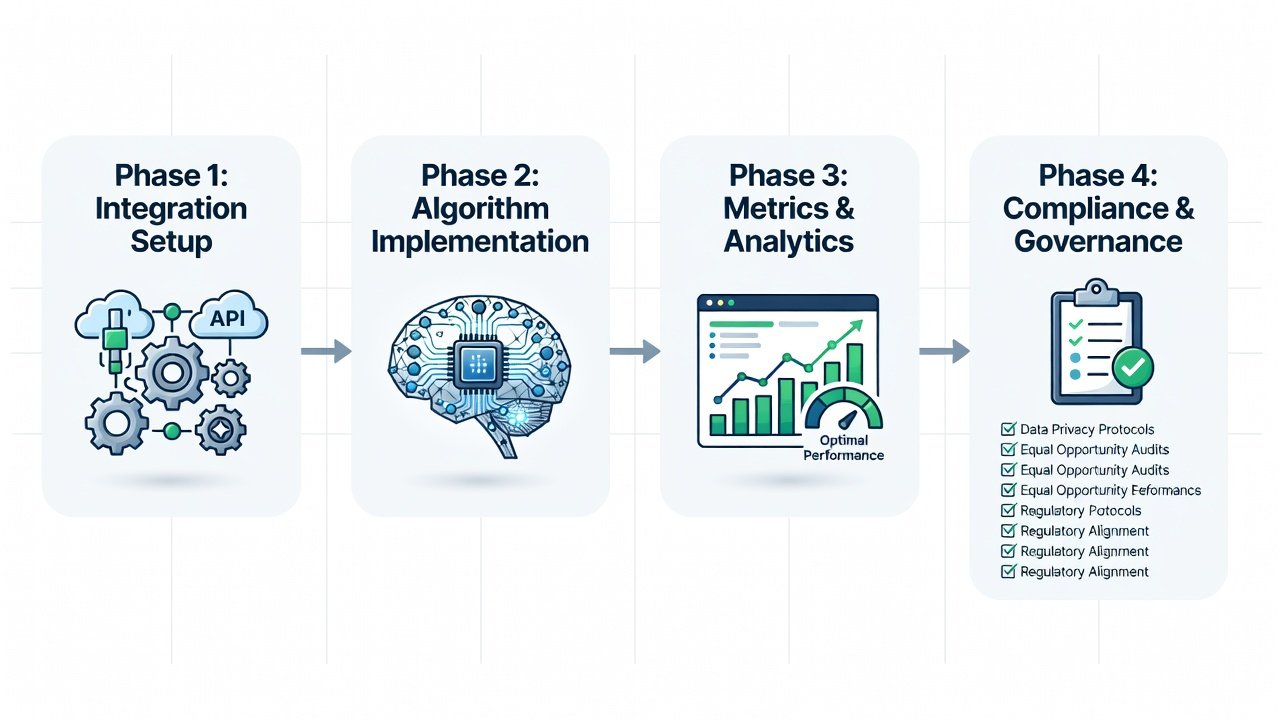
Measuring Success Through Mobility Rates and Retention Metrics
Track key performance indicators such as internal mobility rates, time-to-fill for internal roles, and employee retention percentages. Aim for a 15-20 percent increase in mobility within the first year. Retention metrics should show reduced voluntary turnover among active marketplace users. Additional useful measures include the percentage of roles filled internally, average time spent on skill development activities, and employee satisfaction scores related to career opportunities.
Use dashboards to visualize trends and correlate marketplace activity with business outcomes like productivity gains. Regular reporting helps secure ongoing executive support. Set baseline measurements before launch so improvements can be quantified accurately. Quarterly reviews allow teams to adjust strategies if certain metrics lag behind targets.
Step-by-Step Implementation Phases
- Phase 1: Discovery and Planning (Months 1-2) – Conduct stakeholder interviews, audit current processes, and define success criteria with input from employees, managers, and executives.
- Phase 2: Platform Selection and Customization (Months 3-4) – Choose or build the software, configure integrations, and test core features in a controlled environment.
- Phase 3: Pilot Testing (Months 5-6) – Launch with one business unit, gather detailed feedback through surveys and focus groups, and iterate on the user experience.
- Phase 4: Full Deployment and Training (Months 7-8) – Roll out company-wide with workshops, manager toolkits, and ongoing support resources.
- Phase 5: Optimization (Ongoing) – Refine algorithms based on performance data and measure results quarterly to drive continuous improvement.
Real-World SMB Case Studies
A mid-sized manufacturing firm with 800 employees implemented a marketplace in early 2026. Within six months, internal mobility rose 22 percent, and retention improved by 12 percent. The company credited clear communication and manager training for the success. Another technology services company used AI matching to fill 35 percent of open roles internally, cutting external hiring costs significantly while boosting employee engagement scores.
A third example comes from a healthcare services provider that focused on skill-based lateral moves. They reported a 25 percent reduction in time-to-fill for specialized positions and noted higher cross-department collaboration after the first year of use.
Common Pitfalls to Avoid
- Underestimating change management and employee communication, which can lead to low initial adoption.
- Ignoring data quality issues in existing HR systems that produce inaccurate skill profiles.
- Overcomplicating the user interface, leading to low adoption and frustration among non-technical staff.
- Failing to address manager resistance to losing team members through clear policies and incentives.
Legal Compliance Checklist
Ensure compliance with employment laws by reviewing data handling practices. Key steps include obtaining employee consent for skill data, auditing for discrimination risks, and documenting all matching decisions. Consult legal experts familiar with your jurisdiction. Reference guidelines from U.S. Department of Labor and EEOC for equal opportunity considerations.
Comparisons with Traditional Promotion Processes
Traditional promotions rely on manager nominations and annual reviews, often creating bottlenecks and perceptions of favoritism. Internal marketplaces democratize access, allowing employees to explore lateral moves and skill development opportunities proactively. This shift increases transparency and reduces favoritism while accelerating career progression. Companies using marketplaces typically report higher employee satisfaction with career paths compared to legacy systems.
FAQs on Employee Adoption Challenges
How do you encourage employees to participate?
Highlight success stories and tie marketplace use to performance goals. Offer incentives like skill development credits and public recognition for internal moves.
What if managers block internal moves?
Establish clear policies requiring managers to support mobility after a set period, backed by leadership commitment and balanced scorecard metrics.
Is training required for effective use?
Yes, provide short video modules and live sessions to build comfort with the platform and explain how algorithms generate recommendations.
Conclusion
Building an internal talent marketplace in 2026 positions mid-sized companies for stronger retention and agility. By following these structured steps, HR leaders can deliver measurable improvements in employee satisfaction and operational efficiency while staying ahead of evolving workforce expectations.

No comments yet. Be the first!