 Jobboy

Introduction to Psychometric Testing in Modern Recruiting
In 2026, recruiters face increasing pressure to make data-driven hiring decisions that minimize bias while maximizing long-term employee success. Psychometric testing has emerged as a powerful tool to enhance accuracy beyond traditional interviews. These validated assessments measure cognitive abilities, personality traits, and behavioral tendencies to predict job performance effectively. Organizations across industries are turning to these methods to address the limitations of resumes and unstructured conversations, which often fail to reveal how a candidate will truly perform under pressure or collaborate with teams.
By incorporating psychometric evaluations early in the process, organizations can achieve better candidate-job alignment and reduce costly turnover. This guide explores implementation strategies, test selection, workflow integration, result interpretation, and real-world applications in tech and finance sectors. It also provides actionable frameworks for measuring success and navigating legal landscapes, ensuring your hiring practices remain both effective and compliant.
Understanding Psychometric Assessments: Types and Benefits
Psychometric tests fall into several categories, primarily personality assessments and cognitive ability tests. Personality tests, such as those based on the Big Five model, evaluate traits like conscientiousness, extraversion, and emotional stability. Cognitive assessments measure problem-solving, numerical reasoning, verbal comprehension, and logical thinking. Additional types include situational judgment tests that simulate workplace scenarios and integrity assessments focused on ethical behavior.
Compared to unstructured interviews, which often rely on subjective impressions, psychometric tools provide objective data. They can improve prediction of job success when used correctly. SHRM resources highlight how these methods complement resumes and references for a holistic view. Benefits extend beyond accuracy: reduced time-to-hire, improved diversity through bias mitigation, and stronger team cohesion. Companies report higher engagement levels among hires selected with these tools, as they better match role demands and company culture.
Selecting the Right Test Types for Your Needs
Choosing appropriate assessments starts with thorough job analysis. Identify core competencies required for success, then match tests accordingly. For roles requiring innovation and client interaction, prioritize personality tests; for analytical or technical positions, focus on cognitive evaluations. Ensure tests are validated for reliability, cultural fairness, and predictive validity to avoid adverse impact on protected groups.
Popular options include the Myers-Briggs Type Indicator for team dynamics and the Watson-Glaser Critical Thinking Appraisal for decision-making roles. Consider combining multiple assessments for comprehensive insights. Always select providers with strong psychometric credentials, ongoing norming updates, and compliance with international standards. Pilot testing on current high performers can help validate choices before organization-wide rollout.
Integrating Psychometric Tests into Existing Workflows
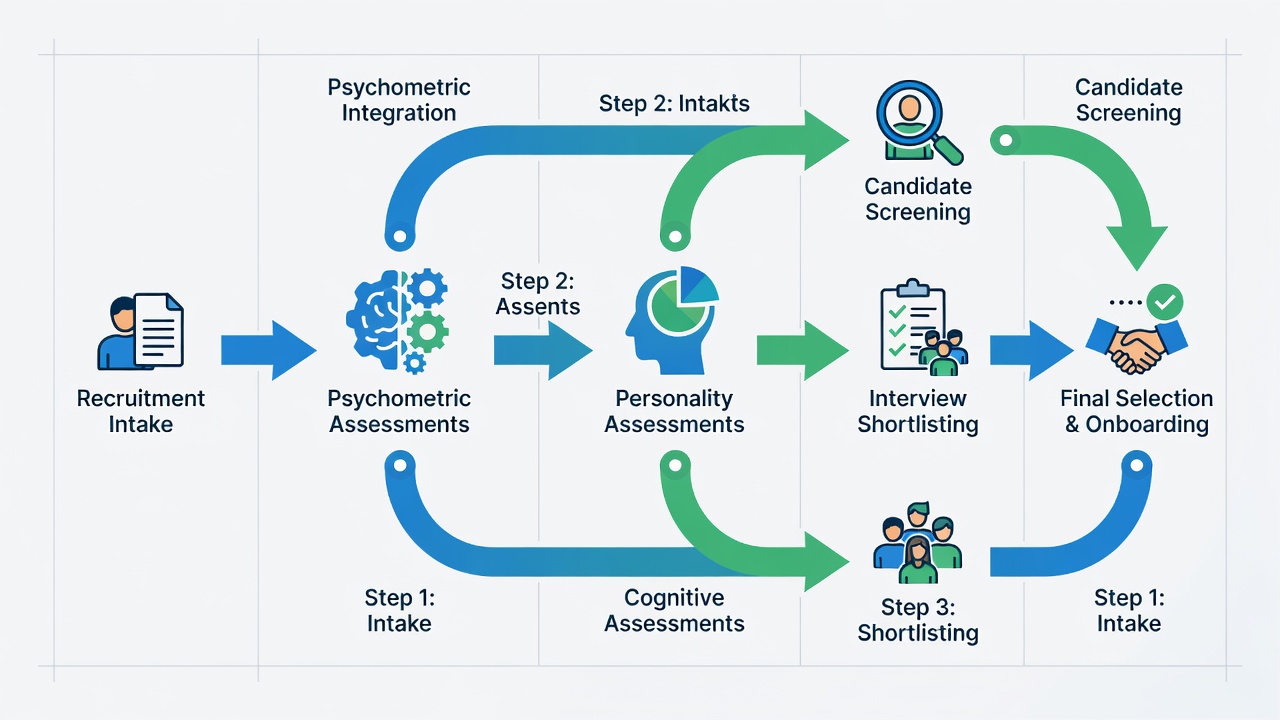
Successful integration begins with stakeholder buy-in from HR, hiring managers, and leadership. Map the assessment stage after initial screening but before final interviews to maintain candidate engagement. Use applicant tracking systems that support seamless test administration, automated scoring, and secure data storage. Communicate clearly with candidates about the purpose and timeline to build trust and reduce anxiety.
Train recruiters on ethical use, data privacy protocols, and interpretation guidelines. Pilot the process with a small team or department to refine timing, question formats, and feedback mechanisms. This ensures minimal disruption while building internal efficiency. Monitor for technical issues and gather feedback from participants to iterate quickly.
Interpreting Results Effectively for Hiring Decisions
Results should be combined with other data points rather than used in isolation. Look for score patterns that align with job requirements, such as high resilience scores for high-pressure sales roles or strong analytical profiles for data science positions. Provide constructive feedback to candidates to maintain positive employer branding and encourage future applications.
Establish clear benchmarks based on top performers in your organization. Regular calibration sessions with hiring teams help standardize interpretation and reduce individual biases. Document decision rationales to support transparency and defend choices if challenged. Over time, refine benchmarks using performance data from new hires to improve predictive power.
Practical Steps for Rollout in Your Organization
- Conduct a needs assessment to identify pain points in current hiring, such as high turnover or inconsistent performance.
- Research and select validated test providers with 2026-compliant features, including mobile accessibility and multilingual support.
- Develop candidate communication templates explaining the process, benefits, and confidentiality measures.
- Integrate results review into interview debriefs and create scoring rubrics that weight assessments appropriately.
- Measure initial outcomes after 3-6 months, tracking metrics like quality of hire and retention, then adjust accordingly.
- Scale gradually across departments while maintaining ongoing training and compliance audits.
Real-World Examples from Tech and Finance Sectors
In the tech industry, companies like Google have long used cognitive assessments to filter for problem-solving aptitude, leading to higher retention in engineering teams. Finance firms apply personality tests to evaluate risk tolerance and ethical decision-making, reducing compliance issues in trading desks. A mid-sized fintech startup recently integrated situational judgment tests and saw a 25% improvement in new-hire productivity within the first quarter. These examples demonstrate how sector-specific tailoring yields measurable improvements in hire quality and team performance when paired with thoughtful implementation.
Comparing Psychometric Testing with Traditional Interviews
Traditional interviews excel at assessing cultural fit and communication but suffer from interviewer bias and low predictive validity. Psychometric testing adds quantifiable metrics, creating a balanced approach. Hybrid models—combining structured interviews with targeted assessments—often deliver the highest accuracy. Recruiters should view psychometrics as a complement rather than replacement, using interview time to explore results and probe deeper into motivations.
Potential Pitfalls and How to Avoid Them
- Over-reliance on a single test without contextual data, which can lead to incomplete evaluations.
- Ignoring candidate anxiety, which can skew results; mitigate by offering practice tests and clear instructions.
- Failing to update assessments for evolving job roles in fast-changing industries.
- Neglecting legal compliance, leading to discrimination claims or regulatory scrutiny.
- Poor communication that damages candidate experience and employer reputation.
Mitigate these by using multiple data sources, conducting regular audits, and investing in continuous education for hiring teams.
FAQ: Legal Considerations and ROI Measurement
What legal factors should recruiters consider?
Ensure assessments comply with equal employment opportunity laws and are job-related. The EEOC guidelines emphasize validation and non-discrimination. Consult legal experts before full deployment and document validation studies to demonstrate fairness.
How can organizations measure ROI?
Track metrics like time-to-hire, retention rates after one year, performance scores of assessed hires, and diversity improvements. Compare pre- and post-implementation data for clear ROI insights. APA research supports these evaluation methods and provides frameworks for longitudinal studies.
Are there privacy concerns with storing test data?
Yes, follow data protection regulations such as GDPR or CCPA. Use encrypted storage and limit access to trained personnel only. Obtain explicit consent and provide candidates with data access rights.
Conclusion
Psychometric testing offers a proven pathway to more accurate recruiting in 2026. By thoughtfully selecting, integrating, and interpreting assessments, organizations can reduce bias, improve fit, and achieve stronger business outcomes. Start with a structured pilot to unlock these benefits while continuously refining based on real performance data.


No comments yet. Be the first!