 Jobboy
Introduction: Why Recruitment Funnel Optimization Matters in 2026
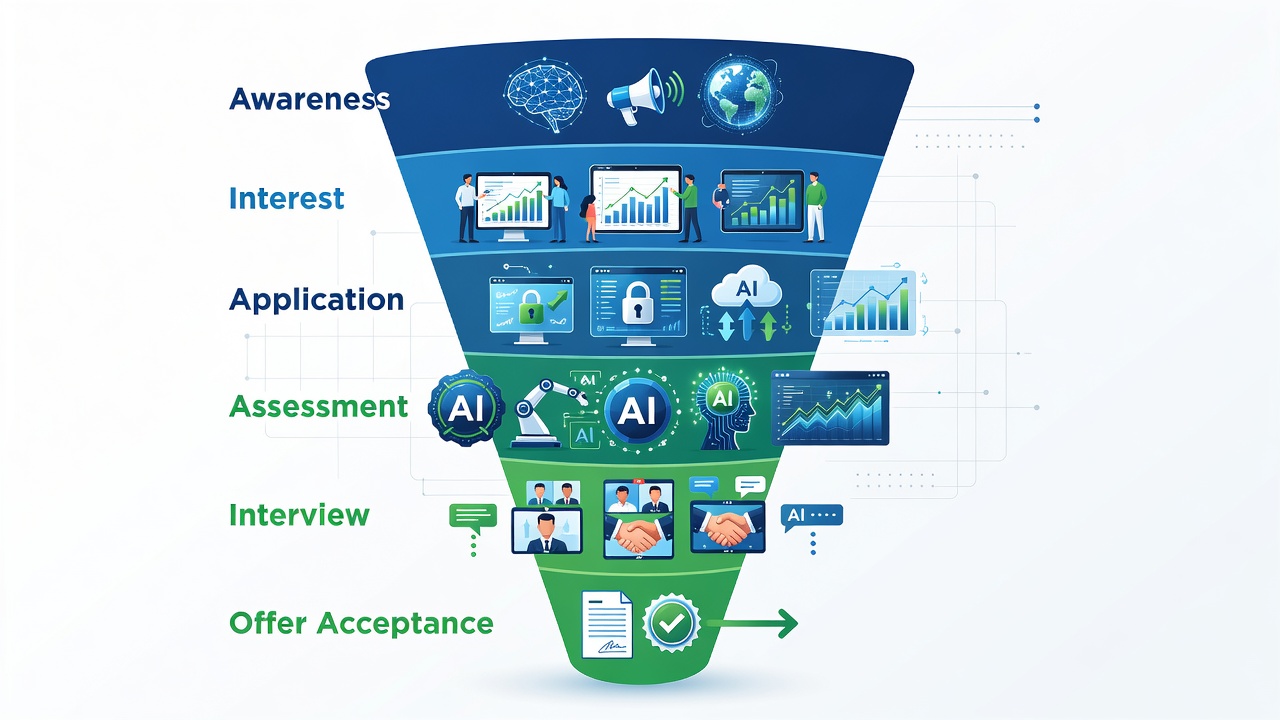
In today's competitive talent market, companies that optimize their recruitment funnel see faster time-to-hire and higher quality candidates. The recruitment funnel spans awareness, interest, application, screening, interviewing, and offer acceptance. Bottlenecks at any stage can lead to lost talent. This guide explores practical strategies for mid-sized companies to improve efficiency through automation, testing, and aligned workflows. By focusing on data-driven tweaks, organizations can convert more applicants into hires while reducing costs associated with prolonged vacancies.
Understanding the Stages of the Modern Recruitment Funnel
Every recruitment funnel begins with employer branding to create awareness. From there, potential candidates move through interest generation via job postings, applications, initial screening, interviews, and finally offer acceptance. Data shows that optimizing each touchpoint can increase conversion by 30-50%. Common issues include lengthy application forms causing drop-offs and delayed interview scheduling. Breaking down the funnel allows recruiters to pinpoint where candidates disengage and apply targeted fixes.
Awareness and Interest Generation
Start by building a strong employer brand on career pages and social channels. Use targeted content to attract passive candidates. Mid-sized firms like those in tech services have reported success by sharing employee stories that highlight work culture. Consider integrating multimedia elements such as videos and testimonials to boost engagement rates early in the funnel.
Application and Screening
Simplify application processes to under five minutes. Implement AI-powered screening tools to filter resumes quickly, reducing manual review time. This stage often sees the highest drop-off rates, so ensuring mobile optimization and clear instructions is critical for maintaining candidate interest.
Identifying and Fixing Common Bottlenecks
Application drop-offs often occur due to complex forms or mobile incompatibility. Interview delays stem from uncoordinated calendars. Address these by auditing each stage with analytics tools. For example, track where candidates abandon the process and redesign those steps. Additional bottlenecks include poor communication during screening and lack of feedback loops after interviews, which can damage employer reputation.
- Reduce form fields to essentials only and test for usability
- Enable mobile-friendly applications with progressive loading
- Automate interview scheduling with calendar integrations
- Provide clear status updates to candidates at every stage
- Train hiring managers on timely decision-making protocols
Leveraging Automation Tools for Efficiency
Automation streamlines repetitive tasks across the funnel. Applicant tracking systems (ATS) integrated with AI can handle initial outreach and scheduling. Tools like these free recruiters to focus on high-value interactions. Real-world examples from logistics companies show a 40% reduction in time-to-hire after implementing such platforms. To get started, evaluate your current tech stack for compatibility and prioritize integrations that support end-to-end tracking.
One practical step-by-step guide includes: First, map your current funnel using flowcharts. Second, select tools that integrate with existing HR software. Third, train your team through hands-on workshops. Fourth, monitor KPIs like response rates and iterate based on findings. Fifth, scale successful automations to other roles.
A/B Testing Job Postings for Better Conversion
Test variations of job descriptions, titles, and calls-to-action. Measure which versions yield higher application rates. Use platforms that support split testing to compare results. Companies in retail have improved click-through rates by 25% through iterative testing of posting language. Focus tests on elements like salary transparency language or required skills lists to refine messaging that resonates with target audiences.
Aligning Team Workflows for Faster Decisions
Cross-functional alignment between HR, hiring managers, and leadership speeds up approvals. Establish clear SLAs for feedback loops. Weekly sync meetings and shared dashboards prevent delays. This alignment also involves creating standardized rubrics for evaluating candidates to minimize subjective biases and accelerate consensus.
Data-Driven Tweaks for Improved Conversion Rates
Beyond basic fixes, incorporate predictive analytics to forecast candidate success. Review historical data to identify patterns in successful hires and adjust sourcing channels accordingly. For instance, if LinkedIn referrals convert better, allocate more resources there while monitoring performance metrics continuously.
Manual vs Tech-Supported Funnels: A Comparison
Manual processes rely on spreadsheets and email chains, leading to errors and slower responses. Tech-supported funnels use data analytics for predictive insights and automated nudges. The result is higher efficiency and better candidate experience. Mid-sized manufacturers adopting tech report 35% fewer unfilled positions. Transitioning involves phased rollouts to minimize disruption while building internal buy-in.

Real-World Examples and Implementation Guides
Consider a 200-employee software firm that reduced drop-offs by redesigning its funnel with automated reminders. Step-by-step: Audit current metrics, pilot automation on one role, scale based on results. Another example from healthcare shows A/B testing improved offer acceptance rates significantly. Implementation often starts with leadership commitment and includes regular reviews to ensure sustained improvements.
Common Mistakes to Avoid in Funnel Optimization
Many organizations overlook candidate experience, leading to negative reviews that deter future applicants. Avoid over-automation that removes the human touch during interviews. Another pitfall is failing to update job postings based on test results, which wastes optimization efforts. Always document changes and measure impacts before full rollout.
Enhancing Candidate Experience Throughout the Funnel
Personalized communications and transparent timelines build trust. Incorporate feedback surveys at key stages to gather insights for continuous improvement. This approach not only boosts conversion but also strengthens long-term employer branding.
Future Trends Shaping Recruitment in 2026
Emerging technologies like advanced AI matching and virtual reality assessments are gaining traction. Staying informed through resources such as SHRM helps professionals adapt strategies proactively. Additionally, U.S. Department of Labor guidelines provide foundational compliance frameworks for evolving practices.
Measuring ROI and Key Metrics
Track time-to-hire, cost-per-hire, quality-of-hire, and candidate satisfaction scores. ROI becomes clear when comparing pre- and post-optimization performance. Use dashboards for ongoing monitoring and tie metrics back to business outcomes like reduced turnover.
FAQ on Recruitment Funnel Optimization
How do I measure funnel effectiveness?
Use conversion rates at each stage and tools like Google Analytics integrated with your ATS for detailed funnel visualization.
What automation tools are essential?
Start with an ATS featuring AI screening and scheduling capabilities, then layer in analytics platforms for deeper insights.
How long does optimization typically take?
Most mid-sized companies see initial improvements within 4-6 weeks of implementation, with full maturity in three to six months.
Can small teams benefit from these strategies?
Yes, even teams of five or fewer can start with free or low-commitment tools and scale as results prove value.
Conclusion
Optimizing the recruitment funnel requires ongoing attention but delivers substantial efficiency gains. By addressing bottlenecks, embracing automation, testing content, and aligning teams, organizations position themselves for success in 2026's talent landscape. Begin with a full funnel audit today to identify quick wins and build momentum for lasting improvements.


No comments yet. Be the first!