 Jobboy

Introduction: Why Job Offers Fail in a Competitive 2026 Market
In today's dynamic talent landscape, even strong candidates frequently decline offers due to generic packages or unclear value propositions. Crafting irresistible job offers requires moving beyond basic salary figures to holistic experiences that align with modern employee expectations. This approach not only minimizes declines but also positions your organization as an employer of choice. As the job market evolves with new technologies and shifting priorities, recruiters must adopt sophisticated techniques to stand out. Understanding the reasons behind declines starts with recognizing that candidates today evaluate offers on multiple dimensions including financial security, professional development, and personal well-being.
Leading research from the Bureau of Labor Statistics highlights shifting workforce priorities, emphasizing flexibility and growth over traditional perks alone. Companies that fail to adapt risk losing top talent to competitors who offer more comprehensive packages. In this article, we explore proven methods to create offers that resonate deeply with candidates in 2026.
Understanding Candidate Expectations in 2026
Before crafting an offer, it is essential to understand what drives candidate decisions. Surveys and industry reports indicate that professionals seek roles that support long-term career ambitions while accommodating personal lives. Factors such as remote work options, mental health resources, and inclusive company cultures have risen in importance. Recruiters should conduct thorough needs assessments during the interview process to gather insights into individual motivations. This proactive step allows for tailored offers that address specific concerns rather than relying on assumptions.
Key Elements of Modern Job Offers
Personalized Compensation Packages
Generic salary structures no longer suffice. Tailor compensation by analyzing candidate backgrounds, location preferences, and family needs. Include base pay adjustments, equity options, and performance bonuses customized through pre-offer conversations. For example, a software engineer relocating with a family might receive enhanced relocation support and education stipends for dependents. Real-world examples show companies like tech giants using data-driven tools to create unique packages that reflect individual contributions. Practical tips include using compensation benchmarking software to ensure competitiveness while adding unique elements like student loan repayment assistance or wellness accounts that demonstrate genuine care for employee welfare.
Clear Career Progression Paths
Outline transparent advancement opportunities with milestones, mentorship programs, and skill development resources. Candidates seek long-term vision; detail promotion timelines and internal mobility options to reduce uncertainty. Provide visual career ladders in offer materials and pair new hires with mentors from day one. This element builds confidence that the role is not a dead end but a stepping stone to greater responsibilities and rewards.
Work-Life Balance Perks
Integrate flexible schedules, unlimited PTO policies, wellness stipends, and remote work support. These elements address burnout concerns prevalent in 2026, fostering loyalty from day one. Consider offering parental leave extensions or volunteer time off to appeal to values-driven candidates. Companies that prioritize these perks often see higher engagement and retention rates as employees feel supported in balancing professional and personal demands.
Traditional vs. Modern Offer Structures: A Comparison
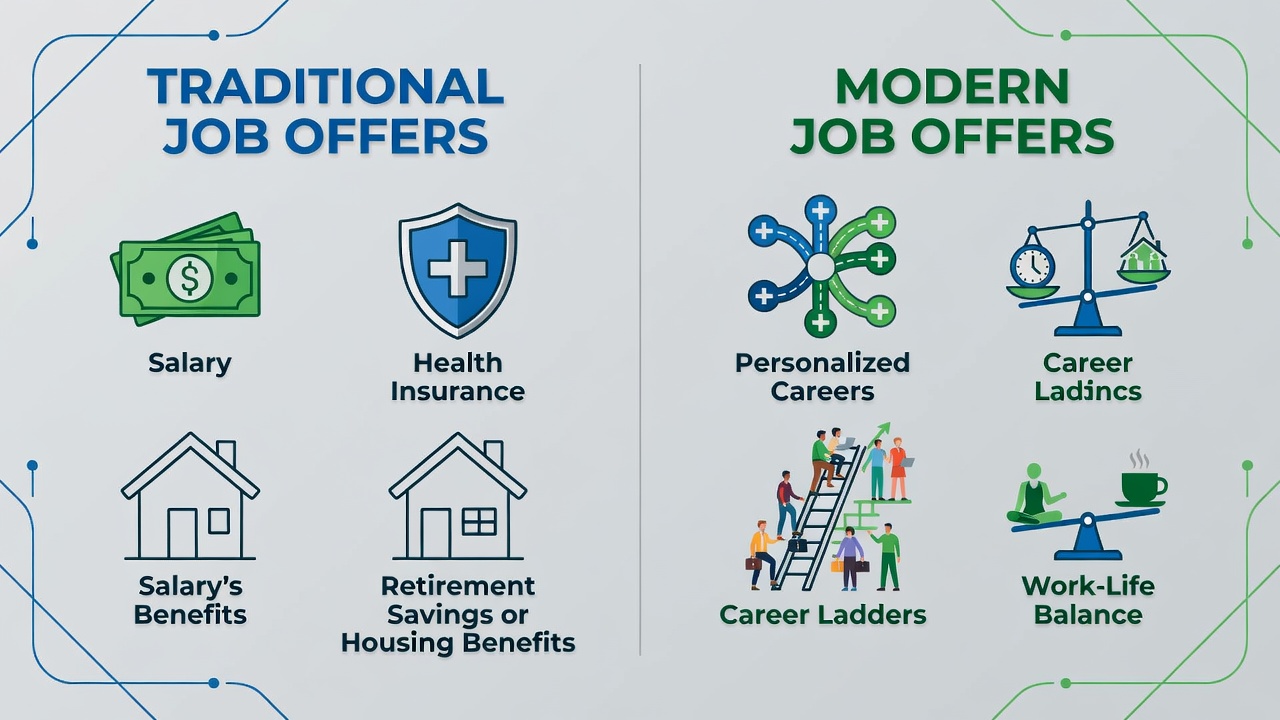
Traditional offers focus primarily on salary and basic benefits, often resulting in higher decline rates. Modern structures blend financial incentives with experiential elements like sabbaticals and learning budgets. For instance, leading firms now incorporate AI-driven personalization to predict candidate preferences, contrasting sharply with one-size-fits-all templates from prior decades. A traditional offer might list salary, health insurance, and a 401k match, while a modern one adds equity vesting schedules, professional development allowances, and mental health days. The shift improves acceptance because it addresses holistic needs rather than isolated financial aspects.
Step-by-Step Guide to Negotiating and Presenting Offers
Effective offer presentation involves careful preparation and delivery. Follow these detailed steps for optimal results:
- Research candidate priorities via initial interviews and surveys to build a foundation of understanding.
- Build a customized offer document highlighting all elements with clear visuals and explanations.
- Present verbally first in a dedicated meeting, allowing time for questions and immediate clarifications.
- Incorporate feedback loops for quick adjustments based on candidate responses.
- Follow up with onboarding previews to maintain momentum and excitement about joining the team.
- Use digital tools for electronic signatures while providing printed summaries for reference.
- Schedule a 30-day check-in post-acceptance to ensure the offer continues to meet expectations.
This methodical process, drawn from best practices at organizations referenced by the U.S. Department of Labor, improves acceptance significantly. Always prepare contingency offers in case initial terms require negotiation.
Real-World Examples from Leading Companies
Tech leaders demonstrate success by offering hybrid equity grants tied to retention milestones. Retail giants have adopted wellness integrations that include mental health days, resulting in lower turnover. For instance, a major consulting firm revamped its offers to include personalized learning stipends, leading to a noticeable increase in acceptance among mid-career professionals. These cases illustrate how modern offers outperform legacy approaches by creating emotional connections alongside financial ones.
Measuring Success and Iterating on Offers
Track key metrics such as offer acceptance rates, time to fill, and candidate satisfaction scores. Use this data to refine future strategies. Implement post-offer surveys to capture feedback even from those who decline, turning rejections into learning opportunities. Regular reviews ensure your approach remains aligned with market trends throughout 2026.
Common Pitfalls and FAQs on Offer Creation
What causes most offer declines?
Common issues include uncompetitive total rewards, vague growth paths, and insufficient flexibility. Addressing these upfront prevents most rejections by demonstrating thorough candidate research.
How can companies measure offer effectiveness?
Track acceptance rates and candidate feedback surveys post-presentation to refine future offers iteratively and build a data-backed hiring process.
Are there legal considerations in 2026?
Ensure compliance with evolving labor laws around equity disclosures and remote work policies to avoid disputes, consulting resources from the Equal Employment Opportunity Commission for guidance.
How should counteroffers from candidates be handled?
Evaluate counteroffers thoughtfully, focusing on whether adjustments align with budget and role value while maintaining consistency across similar positions.
Conclusion
By prioritizing personalization, transparency, and holistic benefits, recruiters can craft offers that resonate deeply and minimize declines. Implementing these strategies positions teams for sustained success in attracting top talent throughout 2026 and beyond. Continuous improvement based on real feedback will keep your offers ahead of the curve in an ever-changing employment landscape.

No comments yet. Be the first!