 Jobboy

Introduction to Internal Talent Marketplaces in 2026
Internal talent marketplaces have evolved from basic job boards into strategic platforms that connect employees with opportunities while embedding structured career pathing. In 2026, HR teams use these systems to visualize career ladders, leverage AI for skill matching, and reduce external hiring costs. This approach directly supports retention by showing employees clear progression routes within the organization. Companies that invest in these marketplaces see improved engagement because workers gain visibility into future roles rather than feeling stuck in their current positions.
Research from industry leaders shows that companies with strong internal mobility programs experience lower turnover rates. By focusing on career pathing, organizations create transparent pathways that align individual goals with business needs. This guide explores platform features, implementation strategies, and measurement tactics that help mid-sized companies succeed in a competitive talent landscape.
Key Platform Features for Career Pathing
Modern internal talent marketplaces include interactive career ladders that map roles across departments. Employees can explore lateral moves, promotions, and skill requirements in real time. AI-driven matching analyzes current skills against open roles or future positions, recommending personalized development plans. Integration with existing HRIS systems ensures seamless data flow. For example, performance reviews and learning records automatically update employee profiles, enabling accurate matching without manual entry.
Advanced platforms also offer scenario planning tools that let HR simulate how different career moves affect team structures and skill distribution. Search functionality allows employees to filter opportunities by location, department, or required competencies, making exploration intuitive and efficient.
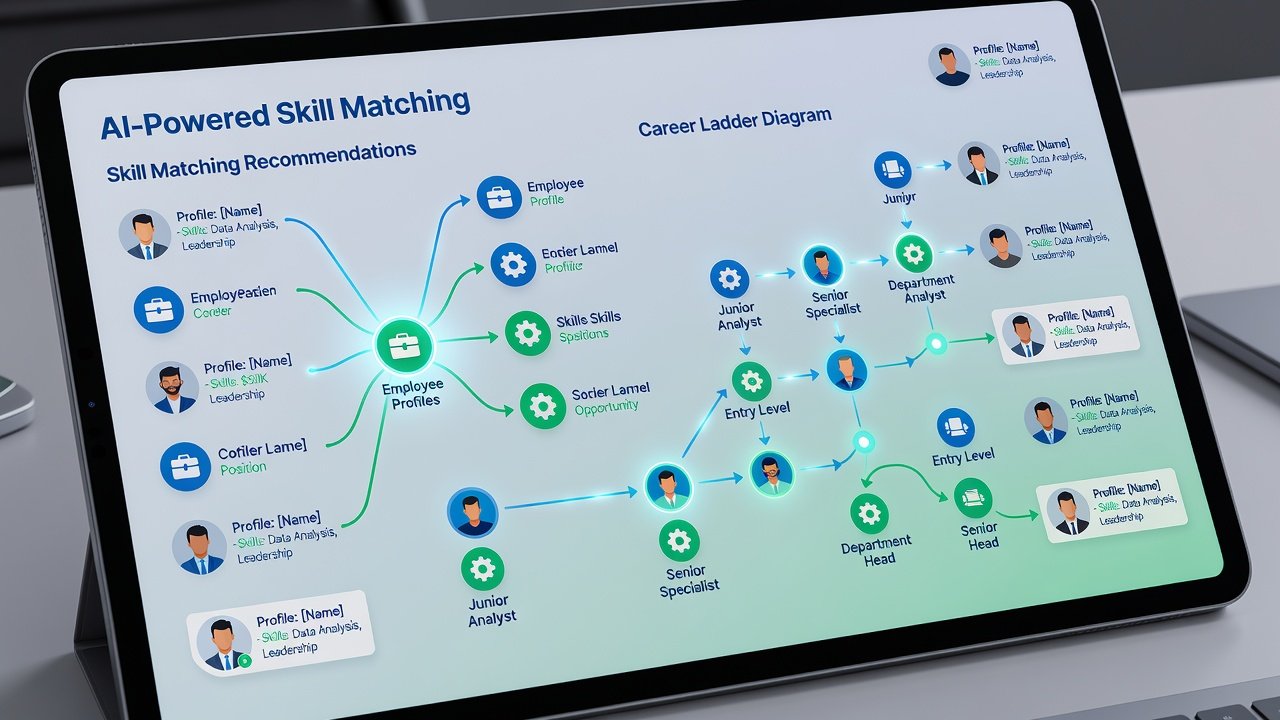
Visualizing Career Ladders Effectively
Platforms like those from leading vendors offer drag-and-drop interfaces for building custom ladders. HR can define competencies for each level, helping employees understand what it takes to advance. This transparency builds trust and encourages proactive career management. Visual elements such as heat maps highlight high-demand skills and emerging roles, guiding both employees and leaders in development discussions.
AI-Driven Skill Matching and Its Impact
AI algorithms scan employee data to identify hidden skills and suggest matches. In 2026, these tools incorporate predictive analytics to forecast role evolution based on market trends. This reduces skill gaps and supports strategic workforce planning. HR teams report higher engagement when recommendations feel relevant. The technology also flags employees at risk of leaving due to limited internal options, allowing timely interventions.
Practical examples include matching a marketing specialist with data analytics projects based on past project experience, even if the employee has not formally listed analytics as a skill. Bias mitigation features ensure recommendations remain fair across demographics, which is critical for maintaining equity in mobility programs.
Integration with HRIS Systems
Successful implementations connect marketplaces directly to HRIS platforms for real-time updates. Data on tenure, certifications, and mobility history flows automatically. This setup minimizes errors and supports compliance reporting. Change management is essential during integration. Start with pilot departments to refine workflows before full rollout. Common integration challenges include legacy data formats and varying access permissions, which require dedicated IT and HR collaboration to resolve.
Benefits of Career Pathing for Employee Retention
Career pathing within talent marketplaces reduces voluntary turnover by demonstrating that the organization invests in long-term growth. Employees who see multiple pathways are more likely to stay and contribute. This strategy also improves diversity in leadership pipelines because structured visibility counters informal sponsorship networks. Mid-sized companies particularly benefit as they often compete with larger firms for talent but can offer more personalized development through these tools.
Change Management Tactics for Adoption
Effective change management includes executive sponsorship and clear communication about benefits. Train managers to discuss career paths in regular check-ins. Address concerns early by sharing success metrics from pilot groups. Provide manager toolkits with talking points and examples. Recognize early adopters publicly to build momentum. Regular feedback sessions help surface issues such as perceived favoritism in matching algorithms, allowing quick adjustments.
- Communicate the vision through town halls and internal newsletters.
- Provide manager toolkits with talking points and examples.
- Recognize early adopters publicly to build momentum.
- Establish a cross-functional steering committee to oversee rollout.
- Schedule quarterly reviews to refine features based on usage data.
Measuring Mobility Metrics for Success
Track key indicators such as internal fill rates, time-to-promotion, and employee satisfaction scores. Compare pre- and post-implementation data to quantify retention gains. Use dashboards within the marketplace to monitor progress continuously. Additional metrics include the percentage of employees who update their profiles monthly and the number of skill development plans created. Regular reviews help refine the system. For instance, if lateral moves increase but promotions lag, adjust ladder visibility or skill development resources.
Real-World Case Studies from Mid-Sized Companies
A mid-sized tech firm implemented an internal marketplace with career pathing and saw a 25% increase in retention within one year. Employees used the platform to identify cross-functional opportunities, leading to higher satisfaction. Another manufacturing company integrated AI matching with its HRIS, resulting in faster skill gap closure and reduced reliance on external recruiters. In both cases, leadership attributed success to combining technology with manager training and transparent communication about how recommendations are generated.
Step-by-Step Implementation Checklist
- Audit current HRIS data quality and completeness.
- Select a platform with strong career visualization tools.
- Define career ladders with input from department heads.
- Configure AI matching rules and test for bias.
- Train HR staff and managers on new processes.
- Launch a pilot and gather feedback.
- Roll out company-wide with ongoing support.
- Establish ongoing measurement and iteration cycles.
Common Pitfalls to Avoid
Many organizations fail by launching without sufficient manager buy-in. Another common issue is poor data hygiene, which leads to inaccurate recommendations. Overlooking employee concerns about fairness in AI matching can also hinder adoption. Avoid rushing integration; phased approaches yield better long-term results. Additionally, neglecting to communicate privacy protections can create unnecessary resistance among privacy-conscious employees.
Future Trends Shaping Talent Marketplaces in 2026
Emerging capabilities include integration with external learning platforms for seamless skill acquisition and the use of generative AI to draft personalized career plans. Organizations are also exploring blockchain-based credential verification to streamline skill validation across internal and external experiences. Staying ahead of these trends ensures the marketplace remains a competitive advantage rather than a static tool.
FAQ: Addressing Employee Adoption Concerns
Will this replace promotions based on tenure?
No. Career pathing complements existing processes by adding transparency and skill-based options alongside traditional factors.
How private is my skill data?
Platforms comply with data privacy standards, and employees control visibility settings for their profiles.
What if I want to stay in my current role?
The system supports lateral exploration without pressure to move. Many use it for skill development planning only.
Can managers override AI recommendations?
Yes, managers retain final decision authority and can incorporate contextual knowledge that algorithms may miss.
Conclusion
Internal talent marketplaces combined with structured career pathing offer HR leaders a powerful retention strategy in 2026. By focusing on features like AI matching and HRIS integration, while managing change thoughtfully, organizations can create environments where employees see and seize growth opportunities. Start with clear metrics and employee-centric design to maximize impact.
For more insights, explore resources at SHRM, U.S. Department of Labor, and World Health Organization workplace resources.

No comments yet. Be the first!