 Jobboy

Introduction
Internal talent marketplaces are reshaping how forward-thinking organizations approach workforce planning and employee development in 2026. These platforms connect employees with internal opportunities such as projects, roles, and skill-building assignments, reducing reliance on external hiring while boosting engagement. HR leaders must now demonstrate tangible returns on investment to secure ongoing executive support and scale these initiatives successfully across departments and geographies. This comprehensive guide equips professionals with proven methods to define success metrics, leverage tracking tools, integrate systems seamlessly, and apply change management strategies that drive adoption.
By emphasizing data-driven approaches, organizations can align talent marketplace efforts with strategic business objectives like agility and cost efficiency. Real-world applications show that companies prioritizing measurement achieve higher mobility and retention while shortening hiring cycles. The following sections provide actionable frameworks, detailed examples, and practical advice to help leaders navigate implementation hurdles and sustain momentum long term.
Defining Key Success Metrics
Establishing clear metrics forms the foundation of any successful internal talent marketplace strategy. Internal mobility rates serve as a primary indicator, calculated by dividing the number of roles filled internally by total open positions over a given period. For instance, a technology firm might target a 30 percent mobility rate after launching its platform, tracking progress through quarterly audits. Retention lift measures the percentage decrease in voluntary turnover among active marketplace users compared to non-users, often revealing improvements of 10 to 20 percent in mature programs.
Time-to-fill tracks the average days required to match and place employees in new opportunities, with leading organizations reducing this from 45 days to under 25 days. Complementary metrics include employee engagement scores gathered via pulse surveys, skill utilization percentages derived from performance data, and overall cost-per-hire reductions. These indicators together paint a complete picture of marketplace effectiveness and help identify areas needing refinement.
Tools for Tracking and Reporting
Robust tracking relies on integrated analytics tools that pull data directly from the talent marketplace. Popular platforms offer customizable dashboards displaying real-time mobility trends, retention correlations, and time-to-fill benchmarks. HR teams can configure automated alerts when metrics fall below targets, enabling rapid intervention. For deeper insights, advanced reporting features allow segmentation by department, tenure, or location, highlighting patterns such as higher engagement in remote teams.
Leaders benefit from establishing monthly data reviews alongside annual strategic assessments. Combining marketplace analytics with broader HRIS insights ensures alignment with company-wide goals. External resources like those available at SHRM provide additional guidance on selecting and configuring these tools effectively.
Integration Best Practices with ATS and HRIS
Successful integration with applicant tracking systems and human resource information systems requires careful planning to avoid data silos. Begin by auditing current data structures and defining clear mapping rules for employee profiles, skills inventories, and job requisitions. API-based connections enable automated synchronization, minimizing errors and freeing HR staff for higher-value tasks. Pilot integrations in one business unit first, measuring data accuracy and user feedback before expanding.
Common challenges include legacy system compatibility and privacy compliance. Address these by implementing role-based permissions and conducting regular security audits. Documentation of all integration points supports troubleshooting and future upgrades. Organizations that invest in middleware solutions often see smoother rollouts and higher data reliability across the enterprise.
Additional best practices are outlined by workforce authorities at DOL.
Change Management Tactics for Adoption
Driving widespread adoption demands a structured change management approach. Start with a communication plan that articulates benefits for both employees and managers, using town halls, email campaigns, and intranet articles. Hands-on training workshops demonstrate platform features and address usability concerns directly. Executive sponsorship plays a critical role by modeling participation and tying marketplace activity to leadership expectations.
Incentive structures, such as recognition programs for frequent users, accelerate early momentum. Feedback mechanisms like monthly surveys allow quick adjustments to pain points. Case examples from manufacturing companies show that phased rollouts combined with manager coaching yield adoption rates exceeding 70 percent within six months. Sustained effort in these areas prevents the common pitfall of initial enthusiasm fading after launch.
AI Matching Optimizations
Artificial intelligence powers precise opportunity matching by evaluating skills, experience, career goals, and even learning preferences. To optimize performance, organizations should periodically review algorithm outputs against actual placement success rates. Incorporating user feedback loops refines recommendations, while expanding skill taxonomies ensures broader coverage of emerging competencies like data analytics or sustainability practices.
Regular bias audits maintain fairness across demographics. Teams that actively tune their AI models report 15 to 25 percent improvements in match acceptance rates, leading to faster internal mobility and higher satisfaction scores.
Real-World Benchmarks and Examples
Industry benchmarks indicate that mature internal talent marketplaces deliver 25 to 40 percent increases in internal mobility alongside retention gains of 12 to 18 percent. A multinational retailer, for example, reduced external hiring costs substantially by filling 35 percent of managerial roles internally within the first year. Another healthcare provider shortened average time-to-fill from 42 days to 19 days through targeted AI enhancements and manager training.
These examples underscore the importance of starting with realistic targets and iterating based on measured results. Benchmarking against peers helps contextualize performance and set ambitious yet achievable goals for 2026.
Step-by-Step ROI Calculation Framework
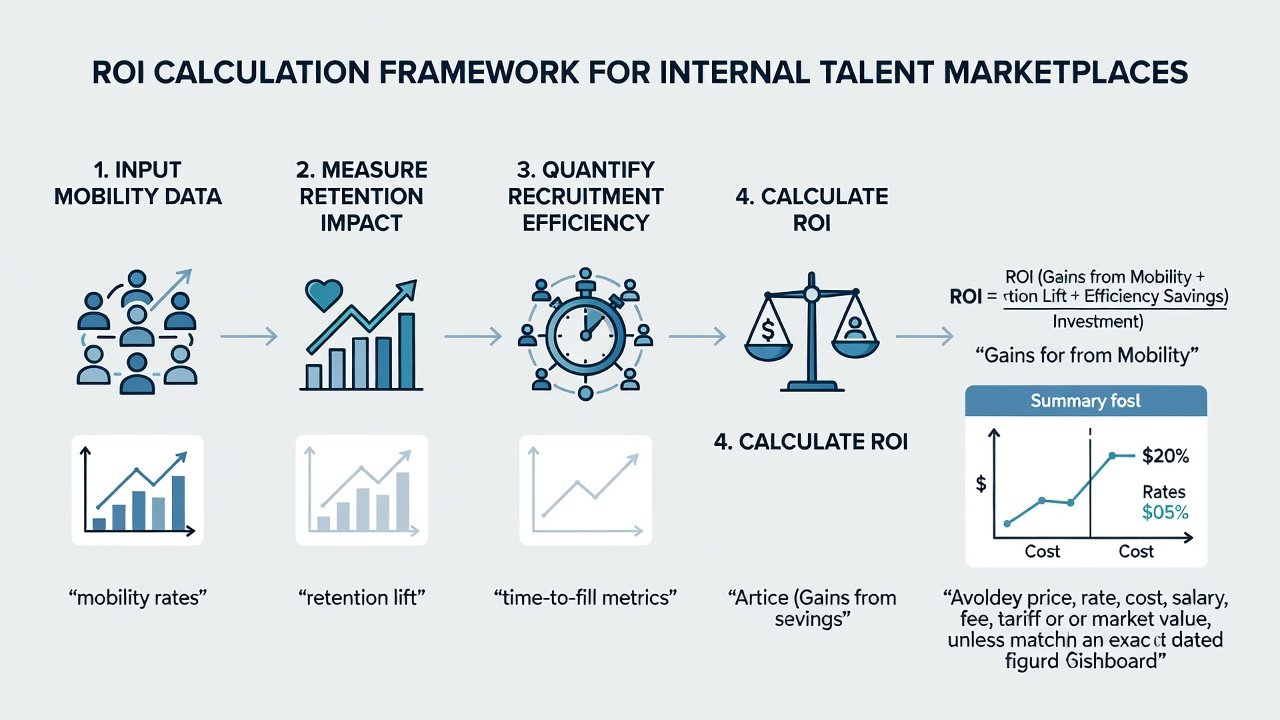
A structured ROI framework transforms raw data into compelling business cases. Step one involves capturing baseline metrics for mobility, retention, and time-to-fill at least three months before launch. Step two requires ongoing tracking of changes post-implementation, using control groups where possible to isolate marketplace effects. Step three assigns financial values, such as calculating savings from avoided external recruitment fees or productivity gains from faster placements.
Step four subtracts all associated costs, including platform licensing, training, and maintenance. Step five computes the ROI ratio and models future scenarios based on scaling assumptions. Regular application of this framework, reviewed quarterly, supports informed decisions about resource allocation and feature expansions. Detailed templates and examples help standardize the process across teams.
Overcoming Common Scaling Hurdles
Scaling often encounters obstacles like uneven adoption or integration friction. Solutions include targeted manager training to embed marketplace use into performance discussions and phased geographic expansions that respect local workflows. Data privacy concerns are mitigated through transparent policies and compliance certifications. Low engagement can be countered by gamification elements and clear career-path visualizations that demonstrate personal benefits.
FAQs on Common Scaling Hurdles
- How do we handle data privacy concerns? Implement role-based access controls and comply with regulations like GDPR through regular compliance reviews and employee consent processes.
- What if adoption remains low? Enhance communication with success stories, simplify the user interface based on feedback, and tie participation to performance goals and recognition programs.
- How to integrate with legacy systems? Use middleware solutions for compatibility and prioritize high-impact data fields during initial setup while planning gradual migrations.
- Can small teams benefit equally? Yes, by focusing on core metrics and lightweight integrations, smaller organizations often achieve faster ROI due to simpler change management needs.
Sustaining Long-Term Adoption
Long-term success requires embedding the marketplace into daily operations and culture. Continuous training updates, leadership accountability, and periodic platform enhancements based on analytics keep engagement high. Aligning marketplace outcomes with annual business planning ensures ongoing relevance and investment.
Conclusion
Internal talent marketplaces deliver substantial value when supported by rigorous measurement, thoughtful integration, and proactive scaling tactics. Applying the metrics, frameworks, and best practices detailed in this guide enables HR leaders to build compelling ROI cases and foster lasting adoption. In 2026 and beyond, data-driven optimization will remain essential for maintaining alignment with evolving business and workforce priorities, ultimately driving greater organizational resilience and employee fulfillment.

No comments yet. Be the first!