 Jobboy

Introduction: Why Neuroscience Matters for Career Planning in 2026
Career planning has traditionally relied on intuition and generic advice, but recent advances in neuroscience offer evidence-based methods to make smarter decisions. By understanding how the brain processes choices, forms habits, and adapts to change, professionals can navigate job changes, upskilling, and setbacks more effectively. This approach ties directly into achieving growth, securing promotions, and strengthening networking strategies.
Research shows that cognitive biases often derail career moves, while neuroplasticity enables continuous learning. Professionals who apply these insights report higher satisfaction and faster advancement. In this guide, we explore practical tactics backed by brain science, complete with real-world examples and comparisons to traditional methods. The brain's reward system, centered in the nucleus accumbens, responds positively to incremental progress, making small daily actions more sustainable than annual overhauls.
Overcoming Cognitive Biases in Job Changes
Many career decisions fall victim to biases like confirmation bias or loss aversion. Confirmation bias leads individuals to seek only information that supports staying in a role, while loss aversion makes them overvalue current stability. Neuroscience reveals these patterns stem from the amygdala's threat response overriding the prefrontal cortex's rational analysis. This can result in prolonged dissatisfaction or missed opportunities for advancement.
To counter this, implement a structured decision framework. First, list all pros and cons without judgment. Then, seek disconfirming evidence by consulting mentors or reviewing industry data. A marketing executive at a tech firm used this method in 2025 to switch roles, identifying overlooked opportunities in emerging AI fields and landing a promotion within six months. Another example involves a project manager who overcame status quo bias by conducting monthly scenario planning sessions, ultimately transitioning to a leadership position at a different company.
Practical Steps to Debias Career Decisions
- Conduct a weekly "bias audit" by journaling assumptions about your current path and challenging them with data from sources like NIH research summaries.
- Use pre-mortem exercises: imagine why a job change might fail and plan mitigations based on potential neural stress responses.
- Consult diverse networks to challenge echo-chamber thinking and activate broader prefrontal engagement.
- Track emotional reactions during decision points to identify amygdala triggers and pause before acting.
- Review past decisions quarterly to build pattern recognition and reduce future bias impact.
Leveraging Neuroplasticity for Upskilling
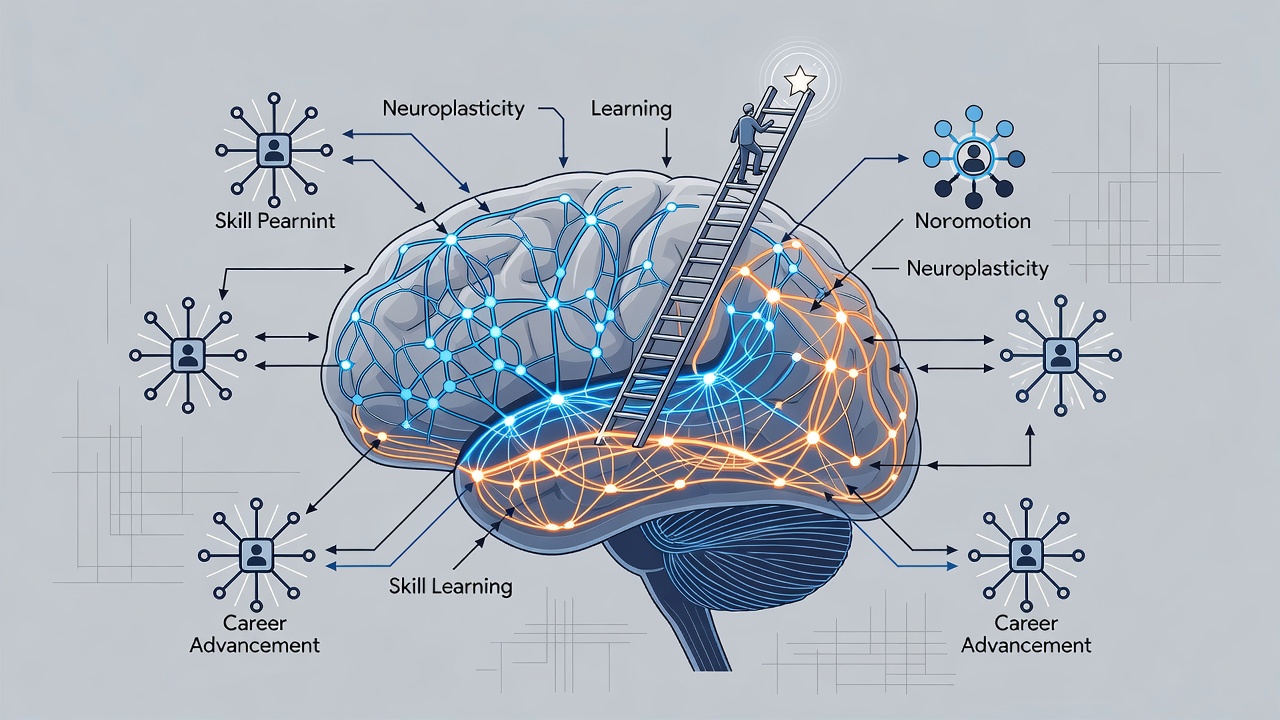
Neuroplasticity allows the brain to rewire itself through deliberate practice. This principle is key for upskilling in 2026's evolving job market. Instead of passive learning like watching videos, focus on spaced repetition and active recall to strengthen neural pathways. Studies from cognitive neuroscience demonstrate that consistent, focused effort over time creates stronger synaptic connections than cramming information.
Compare this to traditional methods: conventional training often involves one-time workshops with low retention, whereas brain-science approaches emphasize consistent micro-habits. For example, dedicate 25 minutes daily to new skills using the Pomodoro technique combined with reflection journals. A software engineer applied this to master data analytics, earning a promotion by demonstrating measurable project impacts. Similarly, a human resources professional used spaced repetition apps to learn leadership frameworks, leading to a successful internal move to a director role.
Building Resilience Against Professional Setbacks
Setbacks trigger stress responses that impair decision-making. Neuroscience highlights the role of the hippocampus in reframing experiences. Building resilience involves mindfulness practices that reduce amygdala reactivity and foster growth mindsets. Chronic stress can shrink the prefrontal cortex, making long-term planning harder, but targeted interventions reverse this effect.
Practical tactics include daily gratitude exercises and visualization of successful outcomes. Professionals who practice these report faster recovery from rejections. One sales leader recovered from a missed promotion by reframing it as data for targeted networking, ultimately advancing within a year. Incorporate breathing techniques from established protocols to lower cortisol levels during high-pressure periods like performance reviews.
Traditional vs. Brain-Science Career Methods: A Comparison
Traditional career planning emphasizes linear goal-setting and annual reviews. Brain-science methods prioritize iterative feedback loops and habit stacking. The latter yields better results because it aligns with how the brain forms long-term behaviors. For networking, traditional events feel draining, while neuroscience-informed strategies focus on meaningful, low-pressure connections that activate reward centers. Traditional approaches may ignore emotional regulation, leading to burnout, whereas brain-based tactics integrate recovery periods to sustain motivation.
Integrating Tactics for Growth, Promotions, and Networking
Combine these elements into a weekly routine: audit biases on Monday, practice skill-building midweek, and build resilience through reflection on Fridays. Real-world examples demonstrate accelerated promotions when professionals tie upskilling directly to visible business outcomes. For networking, apply neuroplasticity by rehearsing conversations in low-stakes settings to build confidence circuits. This leads to stronger professional relationships and more organic growth opportunities over time.
Habit Formation Strategies for Sustained Career Progress
Forming new career habits requires understanding the brain's cue-routine-reward loop. Start with tiny habits, such as reviewing one industry article each morning, to build momentum. Stack these onto existing routines like your commute or coffee break. Track progress visually to engage the brain's reward pathways. Over months, these compound into significant advantages, such as improved visibility for promotions or expanded networks. Avoid common pitfalls like attempting too many changes at once, which overwhelms working memory capacity.
FAQ: Common Implementation Challenges
How long does it take to see results from these tactics?
Most professionals notice improved clarity within 4-6 weeks of consistent application, with measurable career moves occurring in 3-6 months. Individual variation depends on starting point and adherence to micro-habits.
Can these methods work alongside traditional career advice?
Yes. Neuroscience tactics enhance rather than replace tools like resume reviews or mentorship programs by improving how you process and act on that advice. They provide the mental framework for better execution.
What if I struggle with consistency due to a busy schedule?
Start with 10-minute daily sessions. Neuroplasticity responds to small, repeated efforts, making integration into existing routines feasible. Use environmental cues to trigger actions automatically.
How do I measure progress in applying these neuroscience principles?
Keep a simple journal noting decision quality, skill retention rates, and emotional responses to setbacks. Review monthly to adjust approaches based on what strengthens your neural pathways most effectively.
Conclusion
By grounding career planning in neuroscience, you equip yourself with tools for clearer decisions, faster skill acquisition, and stronger emotional resilience. These evidence-based tactics position you for sustained growth and success in 2026 and beyond. Begin today by auditing one bias in your current path and committing to one small upskilling habit.


No comments yet. Be the first!