 Jobboy

Introduction
Switching careers in 2026 presents unique opportunities and challenges, particularly when it comes to discussing compensation. Professionals moving into new industries or roles often worry about undervaluing their experience, but with careful preparation, they can secure offers that reflect their full potential. This comprehensive guide focuses on researching transferable skills using current market insights, calculating value across different sectors, and mastering the art of negotiation for both salary and benefits. By understanding these elements, career changers can approach interviews with confidence and avoid common mistakes like underbidding or failing to consider total compensation packages.
The process begins long before the interview stage. It involves self-assessment, external research, and practice with real-world scenarios. Whether you are moving from education to corporate training or from retail management to supply chain operations, the principles remain consistent. Emphasizing your unique background while aligning it with the target role's needs helps build a compelling case for higher compensation.
Researching Transferable Skills and Market Value
Identifying transferable skills is the foundation of successful salary negotiation for career changers. Start by listing your core competencies such as communication, problem-solving, team leadership, and technical proficiencies that apply universally. For instance, a former teacher might highlight curriculum development as project management experience when targeting corporate learning and development positions. Document specific achievements with metrics where possible, even if they come from a different context.
To calculate market value across sectors, consult reliable government resources and industry reports. The U.S. Bureau of Labor Statistics offers detailed occupational outlooks that help compare compensation trends in emerging fields versus established ones. Cross-reference this with data from the U.S. Department of Labor to understand regional variations and growth projections. Focus on roles that value your background rather than exact title matches. This research reveals where your skills command premium pay, such as in technology-driven industries versus more traditional sectors.
Practical steps include creating a skills matrix that maps past responsibilities to new job descriptions. Reach out to professionals in your target field through networking platforms for informal insights. This qualitative data complements official statistics and provides a realistic picture of current demand.
Determining How Much to Ask For During Interviews
Once you have researched market value, determine your target compensation range before any conversation begins. Base this on your minimum acceptable figure plus a buffer for negotiation. Prepare to discuss total rewards rather than focusing solely on base pay. In practice, this means evaluating how your experience accelerates the company's goals, such as improving efficiency or driving innovation.
Real-world examples illustrate the impact. A marketing specialist transitioning into data analytics successfully negotiated by framing campaign performance tracking as analytical expertise, resulting in an offer that exceeded initial expectations. Another case involved a healthcare administrator moving to fintech, where emphasizing regulatory compliance knowledge led to a benefits package that included enhanced professional development opportunities.
During interviews, respond to compensation questions by redirecting to value. State your researched range confidently while expressing enthusiasm for the role. Avoid disclosing previous salary figures if possible, as many regions now restrict such inquiries.
Negotiating Benefits and Total Compensation Packages
Salary represents only one component of compensation. Career changers should evaluate and negotiate elements like flexible scheduling, health and wellness programs, retirement contributions, and equity options. These additions often provide greater long-term value, especially when base pay adjustments are limited by company budgets.
Approach negotiations holistically. After receiving an initial offer, take time to review all components before responding. Prepare counterpoints that tie your skills directly to business outcomes. For example, highlight how your cross-industry perspective can reduce onboarding time or introduce fresh strategies.
Step-by-Step Negotiation Scripts
Use these structured scripts as templates, adapting them to your situation:
- Opening the discussion: "I am thrilled about the opportunity to contribute my background in [specific skill] to this team. Based on my market research, I am targeting a total compensation package between [lower range] and [higher range], which includes base salary along with professional growth support."
- Addressing initial offers: "Thank you for the proposal. To align with the responsibilities outlined, I would like to explore adjustments in the base compensation and perhaps additional resources for continued learning."
- Handling objections: "I appreciate the constraints. Could we consider alternatives such as performance-based incentives or enhanced leave policies to create a mutually beneficial arrangement?"
- Closing the conversation: "With these modifications in place, I am excited to accept and begin contributing immediately."
Practice these scripts aloud to ensure they sound natural. Record yourself and refine the delivery for clarity and confidence.
Comparisons of Average Compensation by Industry
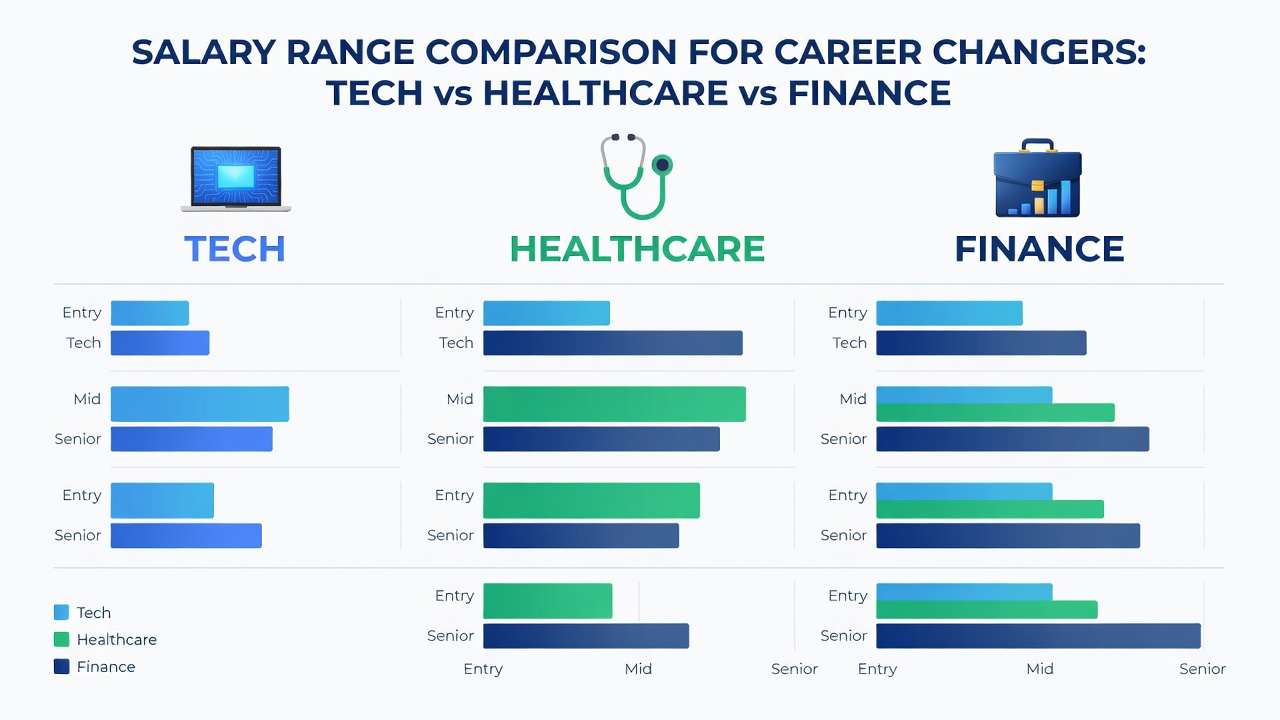
Compensation structures differ significantly across sectors in 2026. Technology and finance fields frequently emphasize variable pay components such as bonuses and stock options, while healthcare and education prioritize stability through comprehensive benefits. Career changers should compare not only headline figures but also factors like work-life balance and advancement speed. For example, moving into consulting might offer higher immediate rewards but demand more travel compared to internal corporate roles.
Assess your priorities: do you value rapid skill development or predictable hours? This evaluation guides which industries to target and how aggressively to negotiate.
Real-World Examples of Successful Transitions
Consider a project coordinator who shifted from nonprofit work to software implementation. By quantifying stakeholder management successes, the individual secured a role with expanded responsibilities and a stronger benefits structure. Similarly, an engineer moving into product management leveraged technical depth to negotiate a package including mentorship allowances. These cases demonstrate that persistence and preparation pay off when supported by clear evidence of value.
Handling Common Concerns in Salary Discussions
Many career changers worry about salary history questions. A strong response focuses forward: "My prior compensation reflected a different industry context. I am now seeking opportunities that match my current market positioning and the unique contributions I bring."
Another frequent concern involves limited direct experience. Counter this by preparing stories that connect past wins to the new role's challenges. Prepare questions for the employer as well, such as inquiring about growth paths and performance metrics, to demonstrate engagement.
Conclusion
Salary negotiation for career changers in 2026 requires thorough preparation, strategic research, and practiced communication. By mapping transferable skills, understanding market dynamics across sectors, and approaching total compensation thoughtfully, professionals can achieve rewarding transitions. Apply these tactics consistently, and you will position yourself for offers that truly reflect your worth while building a strong foundation in your new field.

No comments yet. Be the first!