 Jobboy

Understanding Pay Equity Audits in 2026
Pay equity audits have become an essential tool for employees seeking transparency and fairness in compensation. In 2026, workers are increasingly empowered to review their own pay structures rather than waiting for employer-led reviews. These audits allow individuals to compare their earnings against market standards, internal peers, and total rewards packages. By focusing on salary negotiation and total compensation, employees can uncover hidden disparities and take actionable steps toward equitable outcomes.
Legal Frameworks Protecting Employees
Understanding the legal landscape is the foundation of any effective pay equity effort. Federal laws such as the Equal Pay Act and Title VII of the Civil Rights Act prohibit discrimination in compensation. The EEOC continues to enforce these protections, providing guidance on how to file complaints when disparities appear tied to protected characteristics. Additionally, the Department of Labor offers resources on wage transparency and compliance expectations that many states have strengthened in recent years. Employees should also review state-specific pay equity statutes, which often require employers to justify pay differences with legitimate business reasons.
Steps to Perform a Personal Pay Equity Self-Audit
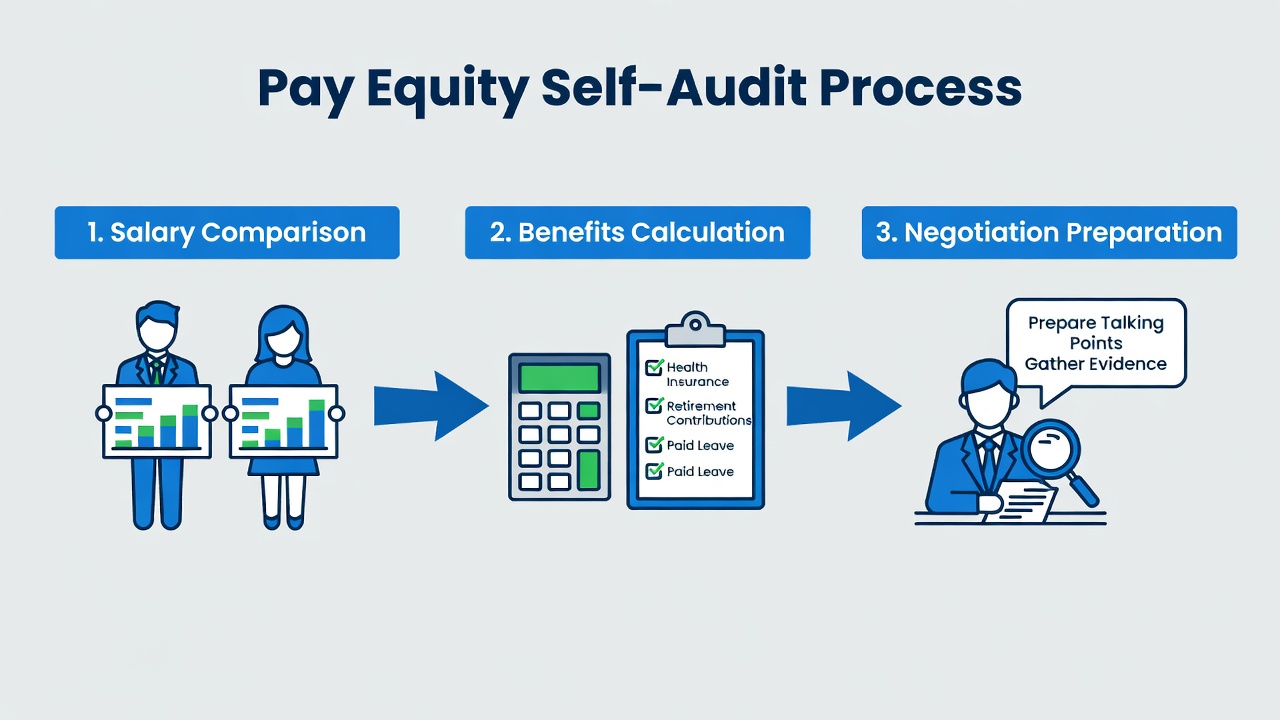
Conducting your own audit requires organization and reliable data sources. Begin by gathering your complete compensation history, including base salary, bonuses, commissions, and equity grants. Next, research comparable roles using reputable salary databases and government statistics. Document your education, experience, performance ratings, and responsibilities to create a clear benchmark. Then calculate total compensation by assigning monetary values to benefits such as health insurance, retirement contributions, and flexible work arrangements. Finally, analyze results for patterns and prepare a summary report for potential discussions with management.
- Gather all pay stubs, offer letters, and benefits summaries from the past three years.
- Use public data tools to identify median salaries for your role, location, and experience level.
- Compare internal job postings or colleague data where legally accessible.
- Adjust for variables like tenure and performance to isolate unexplained gaps.
- Record findings with dates and sources for credibility.
Calculating Your Personal Pay Gap with Examples
Calculating a personal pay gap involves subtracting your total compensation from the median market rate for similar positions. For example, a mid-level project manager in a major city might discover their package is 14 percent below the median after factoring in all benefits. Another case involves a data analyst who compared remote versus in-office roles and found that location adjustments were not applied consistently. Always express gaps as percentages and absolute dollar amounts to make the data easy to present. Track these calculations over time to show trends rather than isolated snapshots.
Leveraging Benefits Data in Your Audit
Benefits often represent 30 percent or more of total compensation, so they must be included in any thorough review. List each benefit with its approximate annual value, such as employer 401(k) matches, health premium contributions, and professional development allowances. Compare these line items against industry standards to reveal whether your package is competitive. Employees in hybrid roles should also evaluate the financial impact of commuting stipends or home office reimbursements that some companies provide.
Industry Comparisons for Context
Pay structures vary significantly across sectors. Technology and finance frequently offer higher base salaries plus equity, while education and nonprofit organizations emphasize pension plans and generous leave policies. Manufacturing roles may include overtime premiums and shift differentials, whereas healthcare positions often feature tuition reimbursement and certification bonuses. Use data from the Bureau of Labor Statistics to place your compensation in the proper industry context before drawing conclusions.
Preparing Negotiation Scripts Based on Audit Findings
Once your audit is complete, translate findings into clear, professional language. A strong opening statement might read: "After reviewing current market data and my contributions over the past year, I have identified an opportunity to align my total compensation with established benchmarks." Follow with specific evidence, proposed adjustments, and a collaborative tone. Prepare for common objections by having backup data ready and alternative solutions such as phased raises or additional benefits. Practice the conversation to maintain confidence and focus on mutual value.
Common Mistakes to Avoid During Pay Equity Reviews
- Relying solely on base salary without considering total rewards.
- Using outdated or non-comparable salary data sources.
- Approaching negotiations emotionally instead of with documented facts.
- Ignoring company-specific policies on compensation transparency.
- Failing to follow up in writing after verbal discussions.
Real-World Case Examples
A senior marketing coordinator discovered through a self-audit that colleagues with similar tenure received higher equity grants. After presenting a detailed comparison during her annual review, she successfully negotiated an adjustment that included both salary and stock options. In another situation, a logistics supervisor identified inconsistent overtime calculations across shifts and worked with HR to standardize the policy, benefiting the entire team. These examples demonstrate how individual audits can lead to both personal gains and broader workplace improvements.
FAQs on Requesting Employer Pay Equity Audits
- How do I request an audit from my employer? Submit a written request to human resources that references company policy or applicable transparency laws, and keep a copy for your records.
- What should I do if my employer declines the request? Consult resources from the Bureau of Labor Statistics and consider speaking with an employment attorney about next steps under federal or state law.
- Can I discuss my audit findings with coworkers? Group conversations are protected in many jurisdictions when focused on wages, but always verify current legal guidelines before proceeding.
- How often should I repeat a personal pay equity audit? Experts recommend conducting a review at least annually or whenever you receive a new offer, promotion, or significant change in role responsibilities.
Conclusion
Performing a personal pay equity audit in 2026 gives employees greater control over their financial future. By following structured steps, analyzing total compensation, and preparing evidence-based negotiation strategies, individuals can address disparities effectively. Use the frameworks and examples in this guide to advocate for fair pay and contribute to more equitable workplaces.


No comments yet. Be the first!