 Jobboy

Introduction to 2027 Compensation Trends
As the workforce evolves rapidly, professionals and organizations must understand 2027 compensation trends to remain competitive. This beginner-friendly guide delves deeply into emerging salary patterns across major industries while emphasizing total compensation and benefits. Economic shifts, including inflation adjustments and global trade realignments, combined with technological advancements like artificial intelligence and automation, are set to redefine average salary levels and pay raise expectations. Total compensation now encompasses base pay, bonuses, equity, health benefits, retirement contributions, and lifestyle perks, creating a more holistic view of employee value.
By 2027, companies will increasingly compete for talent by offering customized packages rather than one-size-fits-all salaries. Individuals who proactively build strategies around these changes will secure stronger long-term financial outcomes. This article provides practical steps, comparison data, real-world examples, and answers to common questions to help readers prepare effectively.
Key Influences Shaping Future Pay
Several macroeconomic and technological forces will drive compensation changes. Economic indicators such as labor shortages in specialized fields and fluctuating interest rates directly affect how much organizations allocate to payroll. Meanwhile, technology continues to automate routine tasks, elevating the premium on creative problem-solving and digital literacy skills.
Industries experiencing digital transformation will see accelerated adjustments in pay structures. For instance, roles involving data analysis or machine learning oversight may command higher total compensation due to scarcity of qualified candidates. Conversely, sectors with high automation potential might stabilize or reduce base salary growth while enhancing benefits to retain staff. Understanding these influences allows workers to anticipate shifts rather than react to them.
Projected Industry Salary Trends
Forecasting requires careful examination of sector data. The table below compares projected outlooks for base salary growth, benefits emphasis, and non-salary perks in 2027 across key industries.
| Industry | Base Salary Growth Outlook | Emphasis on Benefits | Non-Salary Perks Focus |
|---|---|---|---|
| Technology | Moderate to high | High (equity, wellness) | Flexible work, learning stipends |
| Healthcare | Steady | Very high (insurance, retirement) | Shift differentials, mental health support |
| Finance | Variable | High (bonuses, profit sharing) | Professional development, sabbaticals |
| Manufacturing | Low to moderate | Moderate | Safety incentives, upskilling programs |
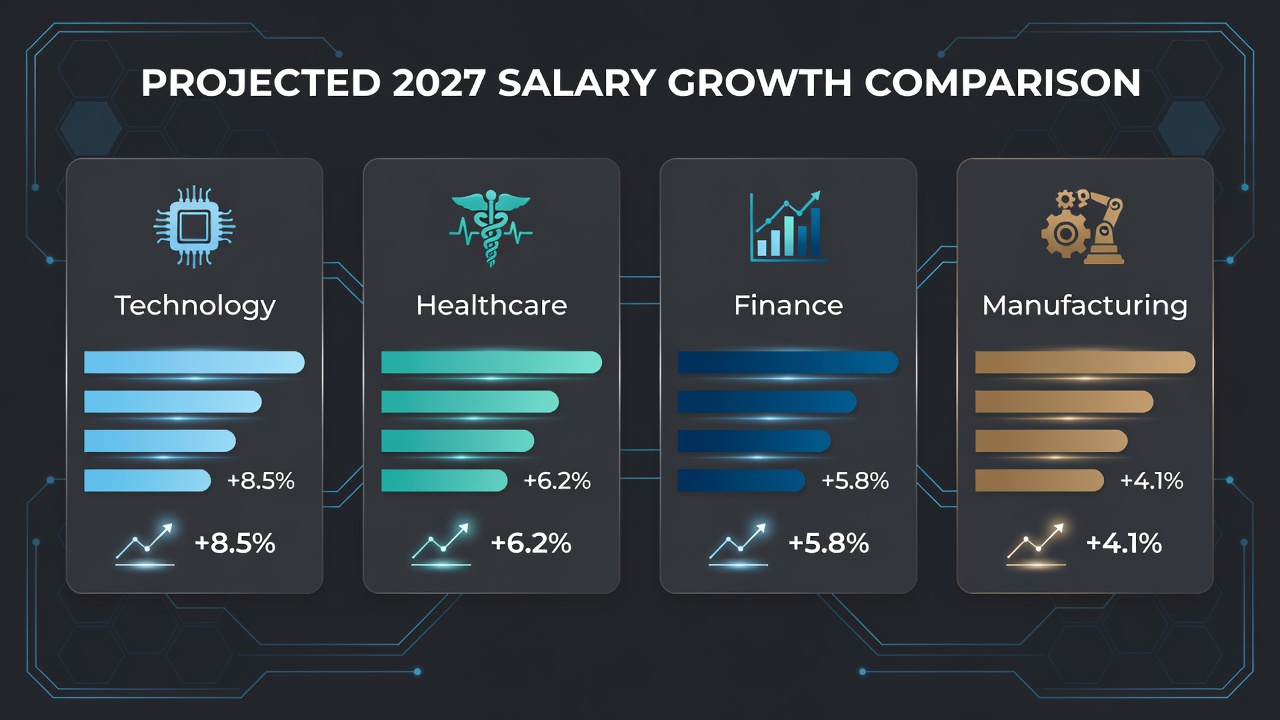
Technology leads in flexible arrangements, while healthcare prioritizes robust insurance coverage. Manufacturing may lag in salary growth but compensates through targeted training initiatives that improve long-term employability.
How Economic Shifts Influence Average Salary Levels
Economic volatility affects salary benchmarks differently by region and role. Supply chain disruptions can increase demand for logistics expertise, pushing average compensation upward in related fields. Professionals should monitor reports from trusted sources to gauge timing for career moves or renegotiations.
Inflationary pressures may lead employers to favor variable pay components such as performance bonuses over fixed salary increases, affecting overall predictability of earnings.
Technology's Role in Pay Raise Expectations
Advancements in AI and remote tools are reshaping expectations around raises. Employees demonstrating proficiency with emerging platforms often receive accelerated reviews. Organizations may tie annual increases to measurable skill acquisitions rather than years of service alone.
This shift rewards continuous learners and encourages workers to document contributions that leverage technology for business outcomes.
Determining What to Ask for in Offers
Negotiating effectively in 2027 demands preparation. Research market data thoroughly and evaluate offers through the lens of total compensation rather than base pay alone. Practical steps include:
- Aligning personal expertise with high-demand skills influenced by automation and digital tools.
- Requesting transparent breakdowns of benefits, equity vesting schedules, and bonus eligibility criteria.
- Timing discussions around company fiscal planning cycles or after delivering major project results.
- Preparing multiple scenarios that prioritize different elements such as remote flexibility versus higher retirement matching.
For example, a marketing specialist might request additional professional development funds instead of a modest base increase, recognizing the long-term career acceleration this provides.
Evaluating Non-Salary Perks and Benefits
Non-salary elements frequently determine overall satisfaction and financial security. Comprehensive health plans, generous parental leave, and mental wellness resources can equal thousands in annual value. In 2027, expect expanded offerings around personalized learning budgets and hybrid work stipends that support home office setups.
Compare competing offers by assigning realistic monetary equivalents to each perk. This approach reveals which package delivers superior total compensation even when base salaries appear similar.
Building a Future-Focused Compensation Strategy
Creating a resilient plan involves consistent action. Follow these expanded steps for success:
- Perform yearly compensation audits comparing your package against industry standards from authoritative references.
- Invest deliberately in skill development targeting AI integration and data fluency to stay ahead of market demands.
- Initiate proactive conversations with managers about long-term incentive programs and career progression pathways.
- Track economic indicators regularly through resources like the U.S. Bureau of Labor Statistics.
- Review total rewards programs annually, adjusting for life changes such as family growth or relocation needs.
- Build a personal network of mentors who can share negotiation experiences from recent transitions.
Real-World Examples of Proactive Planning
A mid-level data analyst began upskilling in generative AI applications during 2025. By 2027, this preparation enabled a move to a role offering enhanced equity grants and wellness allowances, illustrating the payoff of forward planning. Similarly, HR leaders at innovative firms have introduced skill-based raise systems that reward demonstrated technology adoption, resulting in higher retention rates.
Mistakes to Avoid in Compensation Planning
Common pitfalls include overemphasizing base salary while ignoring benefits value, neglecting to update negotiation materials with recent achievements, and failing to consider tax implications of different compensation structures. Avoiding these errors preserves both immediate gains and future flexibility.
Frequently Asked Questions
How can I adapt my negotiation tactics now for 2027 gains?
Focus on building a visible record of impact, especially in technology-enhanced processes, and maintain updated market research to support requests confidently.
What role will total compensation play in future offers?
Total compensation will serve as the central evaluation framework, with benefits and equity often outweighing base salary differences in candidate decisions.
Are there specific industries to target for better pay raises?
Technology and healthcare continue to demonstrate stronger potential due to talent shortages and ongoing digital integration needs.
How should remote workers factor perks into negotiations?
Remote employees should emphasize home office support, flexible scheduling, and virtual wellness programs as core components of total compensation discussions.
Conclusion
Navigating 2027 compensation trends requires a comprehensive perspective that balances salary expectations with evolving benefits and strategic perks. Staying informed through sources such as SHRM and maintaining adaptable strategies will empower professionals to achieve sustainable financial growth amid economic and technological change.


No comments yet. Be the first!