 Jobboy

Introduction: Why Skills-Based Pay Matters in 2026
The job market continues to evolve rapidly, with organizations increasingly valuing demonstrable abilities over traditional job titles. In 2026, skills-based compensation empowers employees and job seekers to negotiate pay based on the value they deliver rather than their role label. This approach helps bridge gaps in industries facing talent shortages while allowing individuals to unlock higher earnings through targeted skill development. Traditional systems often tie compensation strictly to job titles and years of experience, which can undervalue transferable expertise and create barriers for career changers or high performers in non-linear paths.
By contrast, skills-based models reward metrics like project outcomes, certifications, and quantifiable impact. This guide provides step-by-step frameworks, real-world examples, and practical tools to help you quantify your abilities and negotiate confidently. Whether you are a job seeker preparing for interviews or an employee seeking an internal raise, understanding this shift positions you for greater financial and professional growth.
Understanding the Shift from Titles to Skills
Many companies now use skills taxonomies to define roles and compensation bands. This reduces bias in hiring and promotions while aligning pay with business needs. For example, a software engineer might earn more by demonstrating advanced machine learning skills than by holding a senior title alone. The transition reflects broader economic trends where rapid technological change makes static titles less relevant than adaptable competencies.
Research from major labor organizations shows that skills-focused approaches improve retention and mobility. Employees who highlight ROI through specific competencies often secure higher total compensation packages compared to peers relying solely on title history. This model also benefits employers by enabling more precise talent allocation and reducing turnover costs associated with mismatched roles.
Mapping In-Demand Skills to Salary Data
Start by identifying high-value skills in your field. Use public resources such as the Bureau of Labor Statistics to benchmark occupational data against emerging competencies. Cross-reference with industry reports from the World Economic Forum for future-oriented skills like AI ethics or data governance.
Create a simple matrix: list your skills, rate proficiency on a 1-5 scale, and match each to salary ranges from reliable market data. Tools like skill assessment templates (downloadable spreadsheets with weighted scoring) help organize this information systematically. Break the process into actionable steps: first audit your current abilities through self-assessment and peer feedback; second, research demand via job postings and professional networks; third, prioritize three to five skills with the highest market premium. Update this map quarterly to stay aligned with evolving trends.
Building a Skills Portfolio with Metrics
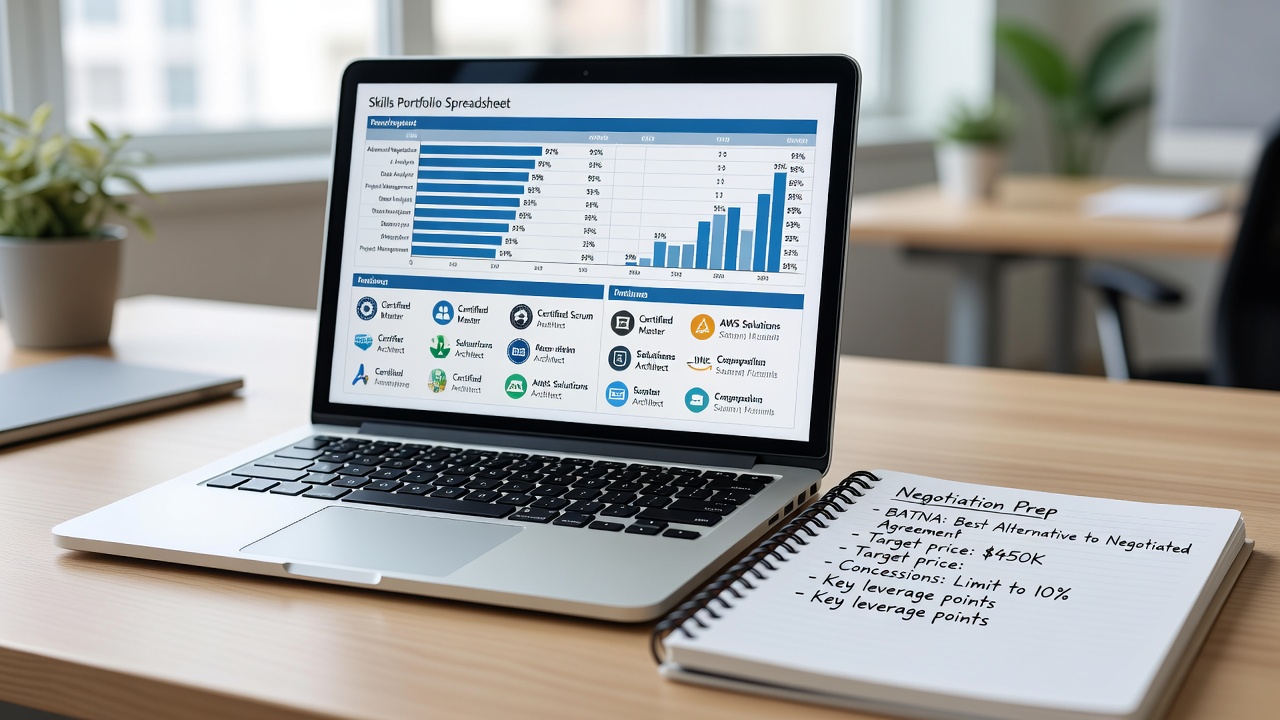
A compelling portfolio goes beyond a resume. Document achievements with hard numbers: "Led a cross-functional team that reduced processing time by 35%, generating $450K in annual savings." Include certifications, peer endorsements, and project case studies. Organize the portfolio into clear sections covering technical proficiencies, leadership capabilities, and industry-specific knowledge. Attach evidence such as performance reviews, project deliverables, or third-party validations.
Practical tips include maintaining a living document that you refresh after each major project. Use visual elements like charts showing skill progression over time. Store everything in a secure, shareable cloud folder for quick access during salary discussions or job applications. This evidence-based approach transforms vague claims into persuasive narratives that resonate with decision-makers.
Preparing Negotiation Scripts That Highlight ROI
Effective scripts focus on value delivered rather than personal needs. Example opening: "Based on my demonstrated expertise in cloud architecture, which delivered a 40% efficiency gain in our last deployment, I propose a compensation adjustment aligned with market benchmarks for these specialized skills." Follow up with specific data points and be ready to discuss alternative forms of compensation such as bonuses or professional development opportunities.
Practice with a colleague and prepare responses to common objections. Always tie requests to business outcomes and have fallback options ready, such as professional development stipends or flexible work arrangements that enhance total rewards. Develop three versions of your script: one for initial conversations, one for pushback scenarios, and one for finalizing agreements. Role-play different outcomes to build confidence and adaptability.
Comparing Traditional vs Skills-Focused Offers Across Industries
In tech and finance, skills-based offers frequently include equity tied to demonstrated expertise. Healthcare and manufacturing reward specialized certifications more heavily. Compare offers using a total compensation calculator that factors base pay, bonuses, benefits, and remote work flexibility. Government and education sectors are gradually adopting hybrid models that blend title seniority with skill verification processes.
- Traditional: Relies on title hierarchies and tenure
- Skills-focused: Prioritizes verifiable impact and adaptability
- Hybrid models: Blend both for balanced equity and retention
- Emerging trend: Skills-based bonuses layered on top of existing structures
Evaluate each offer across five dimensions: base salary, variable pay, benefits value, career growth potential, and work-life balance elements. This holistic view prevents over-focusing on one number while missing larger opportunities.
Practical Tools and Templates for Implementation
Leverage free and low-cost resources to operationalize your strategy. Skill assessment templates can be created in spreadsheets with columns for skill name, proficiency level, supporting evidence, and market value estimate. Market benchmarking tactics include reviewing aggregated data from authoritative sources and participating in industry salary surveys. The Society for Human Resource Management offers guidelines on compensation best practices that many organizations follow. Combine these with personal tracking apps to monitor progress toward compensation goals.
Common Pitfalls to Avoid
Many professionals undervalue soft skills or fail to update portfolios regularly. Another mistake is negotiating only base salary instead of exploring total rewards like performance bonuses or learning budgets. Always research company compensation philosophy beforehand to tailor your approach. Avoid overgeneralizing skills without context-specific examples, and never present data without sources or measurable outcomes. Finally, do not rush negotiations without practicing delivery, as poor communication can undermine even strong evidence.
Real-World Examples of Successful Pivots
A marketing manager transitioned to a skills-based role by showcasing data analytics proficiency, resulting in a 25% pay increase and remote flexibility. An HR professional leveraged project management certifications to move into talent strategy, bypassing traditional title barriers. In another case, a mid-level analyst in logistics used advanced supply-chain modeling skills to negotiate a cross-departmental promotion with elevated compensation. These stories illustrate how consistent documentation and strategic framing convert abilities into tangible rewards.
FAQ: Equity Concerns and Remote Work Implications
How does skills-based pay address equity?
It reduces title bias and focuses on measurable contributions, promoting fairer compensation across demographics and career paths.
What about remote workers?
Skills-based models often favor location-agnostic pay when value is clearly quantified, though some firms still adjust for geography or cost-of-living factors.
Are there tools for benchmarking?
Yes, leverage free government datasets and professional association resources for ongoing market comparisons.
Can skills-based pay help during economic downturns?
Yes, by emphasizing versatile, high-impact abilities, individuals remain competitive even when title-based budgets tighten.
How do I handle equity concerns in negotiations?
Frame discussions around transparent metrics and business results rather than personal circumstances to maintain professionalism and focus.
Conclusion
Embracing skills-based compensation in 2026 positions you for greater earning potential and career resilience. By mapping skills, building evidence-based portfolios, and negotiating with clear ROI language, you move beyond titles to true value recognition. Start implementing these frameworks today to maximize your opportunities and build a sustainable path forward.


No comments yet. Be the first!