 Jobboy

Introduction to Phantom Equity in Private Firms
Phantom equity has emerged as a powerful tool for private companies seeking to align employee incentives without diluting ownership. In 2026, negotiation tactics have evolved to address complex valuation challenges, shifting tax landscapes, and competitive talent markets in tech and finance sectors. This guide explores proven strategies for executives and HR leaders to structure these plans effectively. Private firms often turn to phantom equity because it provides the upside of stock ownership while avoiding the administrative burdens of issuing real shares. Employees receive cash payments based on the appreciation of a hypothetical equity stake, making it an attractive retention mechanism in fast-growing but illiquid environments.
Understanding Phantom Stock and Profit-Sharing Plans
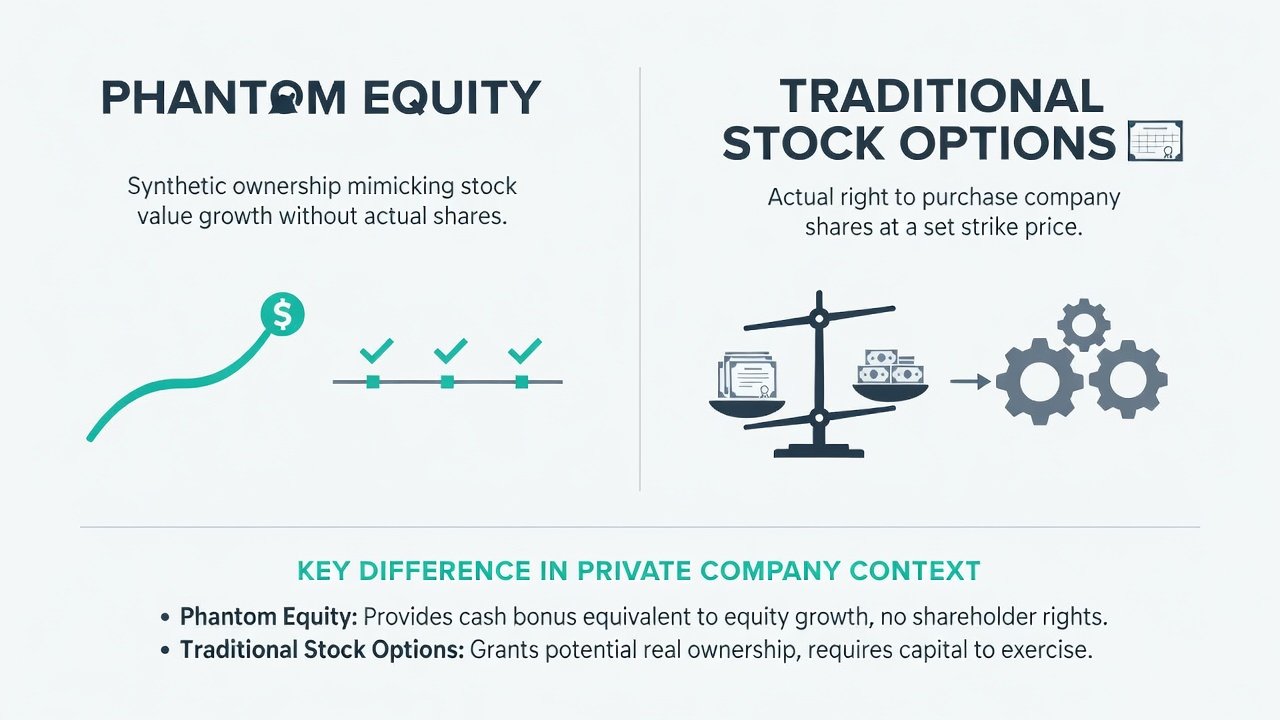
Phantom stock grants employees the economic benefits of equity without actual shares. Profit-sharing variants tie payouts directly to company performance metrics. These plans are especially useful in private firms where liquidity events are unpredictable. Phantom arrangements typically mirror the value of actual shares through a contractual agreement that pays out the difference between a grant-date value and a future valuation. Profit-sharing plans, by contrast, distribute a percentage of profits above a threshold, offering more immediate but variable rewards. Both structures help companies compete for talent without giving up control.
Key Differences from Traditional Equity
Unlike public equity, phantom plans avoid SEC registration hurdles while offering similar upside. A comparison table highlights:
| Aspect | Phantom Equity | Public Equity |
|---|---|---|
| Ownership Dilution | None | Possible |
| Liquidity | Event-triggered | Immediate trading |
| Valuation | Internal appraisals | Market-driven |
| Tax Timing | At payout | At sale or dividend |
| Employee Risk | Company-specific | Market volatility |
Valuation Methods for 2026
Accurate valuation underpins fair negotiations. Common approaches include discounted cash flow models and comparable company analysis, often benchmarked against recent private market transactions. In tech sectors, revenue multiples remain popular while finance firms frequently rely on earnings before interest, taxes, depreciation, and amortization metrics. Parties should agree upfront on an independent appraiser to reduce disputes. Annual revaluations are common to reflect business growth or market shifts.
Tax Implications and Compliance
Tax treatment remains a critical negotiation point. Payouts are typically taxed as ordinary income upon vesting or distribution. Consult official guidance from IRS resources for the latest rules. International firms should also review cross-border implications via SEC filings. Employers must withhold taxes at distribution, and employees should plan for potential alternative minimum tax exposure in certain structures. Proper documentation prevents recharacterization risks that could trigger unexpected liabilities.
Vesting Schedules and Risk Factors
Standard schedules span four years with a one-year cliff. Risk factors include company performance volatility and change-of-control events. Real examples from tech startups show accelerated vesting clauses protecting against acquisitions. In finance, firms often include forfeiture provisions if employees join competitors. Employees should negotiate for partial acceleration on termination without cause and clear definitions of what constitutes a qualifying liquidity event.
Step-by-Step Negotiation Scripts
Effective scripts begin with research into company performance and peer benchmarks. Script one: "Given our growth trajectory and my contributions to the recent product launch, how can we structure phantom equity to reflect sustained value creation?" Script two: "I propose an independent third-party appraisal every twelve months to ensure fairness." Script three: "Can we include a 25 percent acceleration clause upon a change of control?" Script four: "How does this integrate with my total compensation package including base salary and bonus?" These conversations should occur during offer stages or annual reviews with supporting data on personal impact.
Total Compensation Impact Calculations
Phantom equity should be modeled as part of overall pay. Calculate the potential payout by projecting company valuation growth over the vesting period and multiplying by the phantom share percentage. Factor in tax rates at ordinary income levels and discount for illiquidity. Compare the net present value against immediate cash alternatives. In practice, this modeling helps employees decide whether to accept a lower base salary in exchange for larger phantom grants.
Common Pitfalls to Avoid
- Overly aggressive payout caps that demotivate high performers during strong years
- Ignoring forfeiture clauses in terminations without cause
- Underestimating tax withholding timing and cash flow needs at distribution
- Failing to define valuation methodology clearly in the plan document
- Overlooking non-compete enforceability across different states
Leveraging Phantom Equity in Pay Raise Discussions
Frame phantom grants as part of holistic compensation to strengthen raise requests. Tie proposals to performance benchmarks for stronger leverage. Present a side-by-side comparison showing how phantom value offsets a modest base increase. Highlight retention value to the company and reference industry retention data to justify the ask.
Real-World Examples from Tech and Finance Sectors
A Series B tech startup granted phantom units equal to 0.5 percent of fully diluted value with four-year vesting. Upon acquisition two years later, employees received payouts tied to the exit multiple. In finance, a private equity firm used profit-sharing phantom plans linked to fund performance, distributing amounts only after investors achieved preferred returns. These cases demonstrate the importance of aligning payout triggers with business milestones.
FAQs on Legal Considerations and Benchmarks
What are the primary legal risks?
Ensure plans comply with ERISA and state securities laws. Review Department of Labor guidelines for fiduciary duties. Plans must avoid creating unintended partnership interests or violating securities exemptions.
How do benchmarks vary by experience level?
Entry-level roles often receive smaller percentages of company value, mid-level managers target meaningful but moderate grants, and senior leaders negotiate larger stakes with performance multipliers. Benchmarks also differ by industry, with tech favoring growth-linked metrics and finance emphasizing profitability hurdles.
Are there restrictions on who can participate?
Most private firms limit participation to key employees and executives to maintain plan qualification under certain exemptions. Broad-based plans require additional compliance steps.
Conclusion
Effective 2026 phantom equity negotiations require balancing incentives, risks, and compliance. By applying these tactics, private firms can attract top talent while preserving ownership structure. Thorough preparation, clear documentation, and ongoing communication ensure these plans deliver intended motivational benefits over the long term.

No comments yet. Be the first!