 Jobboy

Introduction
Navigating salary history questions during job interviews remains a critical skill for job seekers in 2026. Candidates often face pressure to disclose past pay while trying to avoid lowball offers that undervalue their experience. This comprehensive guide explores effective strategies under current regulations and norms, empowering you to respond professionally, stay compliant, and keep negotiations focused on your future contributions. Whether you are a recent graduate or an experienced professional, understanding how to handle these inquiries can significantly impact your long-term earning trajectory.
Understanding 2026 Regulations on Salary History
Salary history bans are designed to reduce pay inequities that arise when employers base new offers on previous compensation rather than the value a candidate brings to the role. These laws typically prevent employers from asking about or relying on salary history during the hiring process. In 2026, many jurisdictions continue to enforce or expand these protections, reflecting a broader societal push toward transparency and fairness. Familiarizing yourself with the legal landscape helps you recognize when a question may be inappropriate and how to respond without risking compliance issues or appearing uncooperative.
Employers in covered areas must structure interviews around skills, achievements, and role-specific expectations instead of historical data. This shift benefits job seekers by leveling the playing field, especially for those who may have been underpaid in prior roles due to bias or market conditions at the time.
State-Specific Ban Overviews
Salary history inquiry restrictions differ across states and localities, so it is essential to research the rules that apply to your situation. Many bans cover private employers and extend to remote positions based on the employee’s work location rather than the company headquarters. Key jurisdictions with active prohibitions include California, New York, Illinois, Washington, and several others such as Massachusetts, New Jersey, and Oregon. Some cities like New York City and Philadelphia maintain their own stricter ordinances that supplement state law.
These regulations often include exceptions for voluntary disclosures or certain public sector roles, but the general trend favors protecting applicants. Before any interview, review official summaries from authoritative sources such as the National Conference of State Legislatures or the U.S. Department of Labor. Understanding these nuances allows you to confidently redirect conversations and recognize when an employer may be testing boundaries.
Step-by-Step Preparation Tips
Thorough preparation transforms potentially awkward salary discussions into opportunities to showcase your value. Begin by researching compensation benchmarks for the target role, industry, and geographic area using reliable data from the Bureau of Labor Statistics. Next, analyze the job description to identify the core competencies the employer seeks and prepare specific examples of how your background aligns with those needs.
Develop a clear personal salary range based on your experience level, cost of living considerations, and total compensation factors such as benefits and bonuses. Practice delivering responses aloud, focusing on calm, professional tone and body language. Review application forms in advance for any salary-related fields and decide whether to leave them blank or note legal restrictions. Finally, prepare thoughtful questions about the role’s responsibilities and growth opportunities to steer the dialogue productively.
Scripted Example Answers
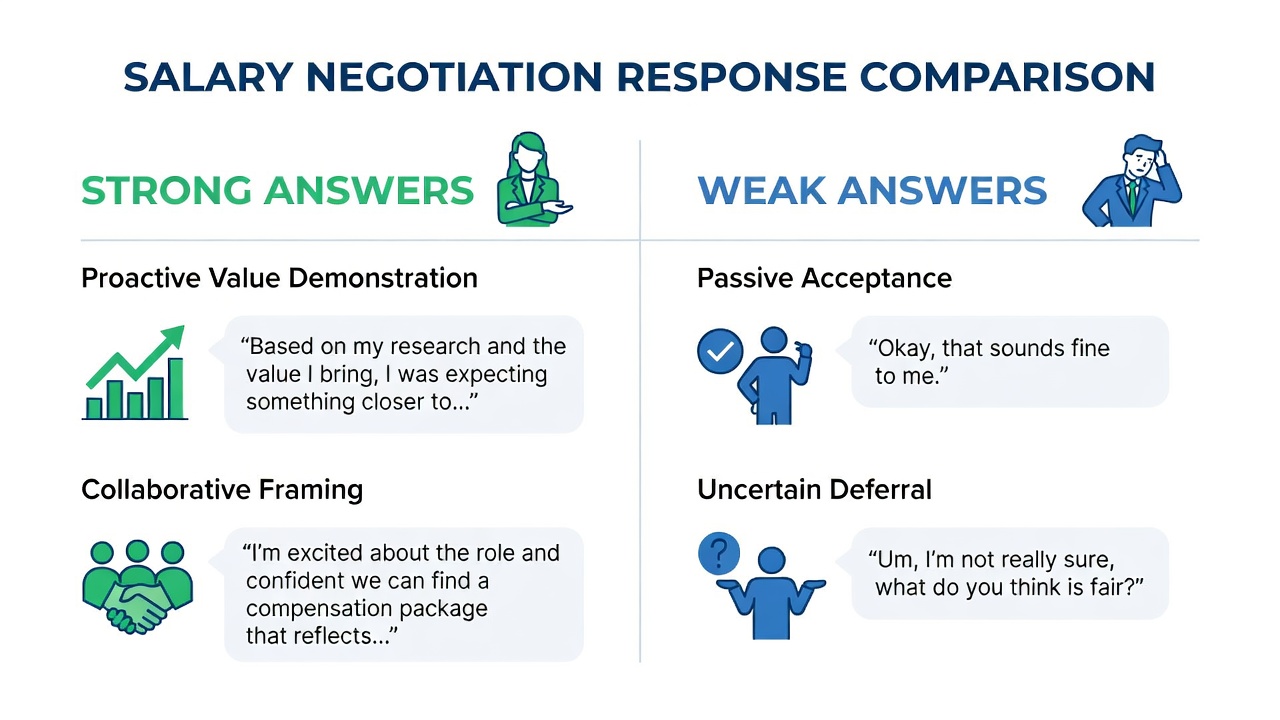
Having ready scripts helps you maintain composure and professionalism. Consider these scenarios and sample replies that emphasize forward-looking expectations rather than past figures.
| Scenario | Weak Response | Strong Response |
|---|---|---|
| Direct inquiry about previous pay | "I made a certain amount at my last job based on what they offered at the time." | "I prefer to focus on the value I can bring to this position. Based on my research and experience, my target compensation aligns with the market range for similar roles." |
| Follow-up request for exact numbers | "They paid me X dollars annually plus a small bonus." | "I appreciate the question. To keep our discussion centered on this opportunity, could you share the salary band established for the role?" |
| Application form field requesting history | Providing detailed past figures without context | Leaving the field blank or adding a note such as "Salary history not required under applicable local regulations." |
These strong responses demonstrate confidence while inviting the employer to discuss the current opening.
When to Redirect to Expectations
Redirecting the conversation is often the most strategic move when salary history arises. A well-timed pivot keeps momentum positive and signals that you value mutual transparency. Phrases such as "I am happy to discuss compensation expectations for this role once we have covered the key responsibilities" allow you to regain control gracefully. Practice several variations so the redirection feels natural rather than evasive.
Red Flags to Watch for in Application Forms
Even with bans in place, some online applications still include salary history prompts. Watch for mandatory fields, questions phrased as "What was your most recent total compensation?", or optional sections that appear later in the process. If a form requires an answer to proceed, consider entering "N/A – per local regulations" or contacting the recruiter directly beforehand. Documenting these instances can also help you evaluate whether the company culture respects legal boundaries.
Common Mistakes to Avoid
Many candidates inadvertently weaken their position by volunteering salary details too early or becoming defensive. Other frequent errors include failing to research market rates, accepting the first offer without counter-discussion, or neglecting to consider total compensation beyond base pay. Avoiding these pitfalls requires consistent practice and a mindset focused on long-term career growth rather than immediate acceptance.
Short FAQ on Follow-Up Negotiations
What should I do if an employer insists on salary history despite a ban?
Politely reference the applicable regulation and restate your interest in the role’s compensation package. Most compliant organizations will respect the boundary.
How can I negotiate effectively after sharing expectations?
Emphasize quantifiable achievements from your career and request time to review the complete offer, including benefits and professional development opportunities.
Is it appropriate to ask about benefits early in the process?
Yes, framing the question around total compensation helps both parties assess fit without focusing solely on base salary.
What if the offer comes in below my researched range?
Prepare a respectful counteroffer supported by market data and your specific qualifications, and be ready to walk away if the gap cannot be bridged.
Should I disclose salary history voluntarily to build rapport?
Generally no, as it can anchor negotiations at a lower level. Focus instead on the value you offer the prospective employer.
Conclusion
Mastering responses to salary history questions in 2026 protects your earning potential while demonstrating professionalism. By preparing thoroughly, using scripted redirects, recognizing red flags, and understanding the regulatory environment, you can navigate interviews with confidence. Apply these strategies consistently to secure offers that truly reflect your skills and contributions.

No comments yet. Be the first!