 Jobboy

Why Soft Skills Are Essential for 2026 Job Success
In today's competitive job market, automated screening tools and AI-driven applicant tracking systems filter thousands of applications before a human ever sees them. Soft skills have emerged as the differentiator that helps candidates stand out. Employers increasingly value qualities like adaptability and emotional intelligence because these traits enable teams to thrive amid rapid technological change and economic shifts. According to recent reports from the World Economic Forum, soft skills will account for a growing share of the skills most in demand by 2026. The rise of remote work, hybrid models, and global teams has made interpersonal abilities more critical than ever, as technical tasks can often be automated while human connection cannot.
This guide walks beginners through identifying, developing, and presenting the soft skills that win job offers. You will find practical resume rewrites, interview storytelling frameworks, step-by-step exercises, and a clear comparison of hard versus soft skill emphasis. By the end, you will have actionable templates ready to apply immediately to your job search.
Top In-Demand Soft Skills for 2026
Recruiters consistently highlight several soft skills that transcend specific roles. These include adaptability, collaboration, communication, problem-solving, and emotional intelligence. Adaptability means quickly adjusting to new tools, processes, or team structures in volatile markets. Collaboration involves working effectively across departments and time zones, often in virtual settings. Strong communication ensures ideas are conveyed clearly in both written and verbal formats, reducing misunderstandings in diverse teams. Emotional intelligence helps navigate workplace conflicts and build trust, while problem-solving drives innovation when faced with ambiguous challenges.
Each skill carries real weight in hiring decisions. For example, adaptability is prized because industries evolve rapidly with AI integration. Collaboration stands out in matrixed organizations where cross-functional work is the norm. These skills are not innate for everyone but can be cultivated through deliberate practice and reflection.
Identifying Your Own Soft Skills
Begin by reflecting on past experiences. Review performance reviews, feedback from colleagues, or personal projects. Ask yourself questions like: How did I handle last-minute changes? What role did I play in group successes? This self-assessment forms the foundation for authentic storytelling in applications.
Mapping Skills to Real Job Seeker Scenarios
Consider a marketing coordinator applying for a remote role. Highlighting adaptability shows readiness to learn new analytics platforms quickly. A software engineer might emphasize collaboration when describing cross-functional projects with designers and product managers. An entry-level teacher could map emotional intelligence to managing classroom dynamics under pressure. Mapping these skills to your target job description increases ATS compatibility and recruiter interest while demonstrating genuine fit.
Hard Skills vs Soft Skills: Comparison Table
| Aspect | Hard Skills Emphasis | Soft Skills Emphasis |
|---|---|---|
| Measurability | Certifications, software proficiency, degrees | Behavioral examples, impact stories, peer feedback |
| Screening Stage | ATS keyword matching | Human review and cultural fit assessment |
| Longevity | Can become outdated quickly | Transferable across roles and industries |
| Example Bullet | Managed CRM database with 5,000 contacts | Led cross-team collaboration that increased project delivery speed by 30% |
| Development Path | Courses, certifications, on-the-job training | Mentorship, deliberate practice, feedback loops |
Balance both types of skills, but lean into soft skills when your hard skills are similar to other applicants. Many hiring managers note that soft skills often predict long-term success more reliably.
Practical Examples: Weaving Soft Skills Into Applications
Transform generic resume bullets into compelling statements. Original: "Worked on team projects." Rewritten: "Collaborated with a five-person cross-functional team to launch a product update, improving user retention by 22%." This version demonstrates collaboration and quantifiable impact. Another rewrite example: Change "Handled customer inquiries" to "Applied emotional intelligence to de-escalate complex client concerns, resulting in a 95% satisfaction rating."
For cover letters, open with a sentence that ties a soft skill directly to the company's needs. Example: "My proven adaptability in fast-paced environments aligns with your team's recent expansion into new markets." Use the body paragraphs to expand with one specific story per skill. On LinkedIn, update your headline and about section to include phrases such as "Adaptable problem-solver driving collaborative growth."
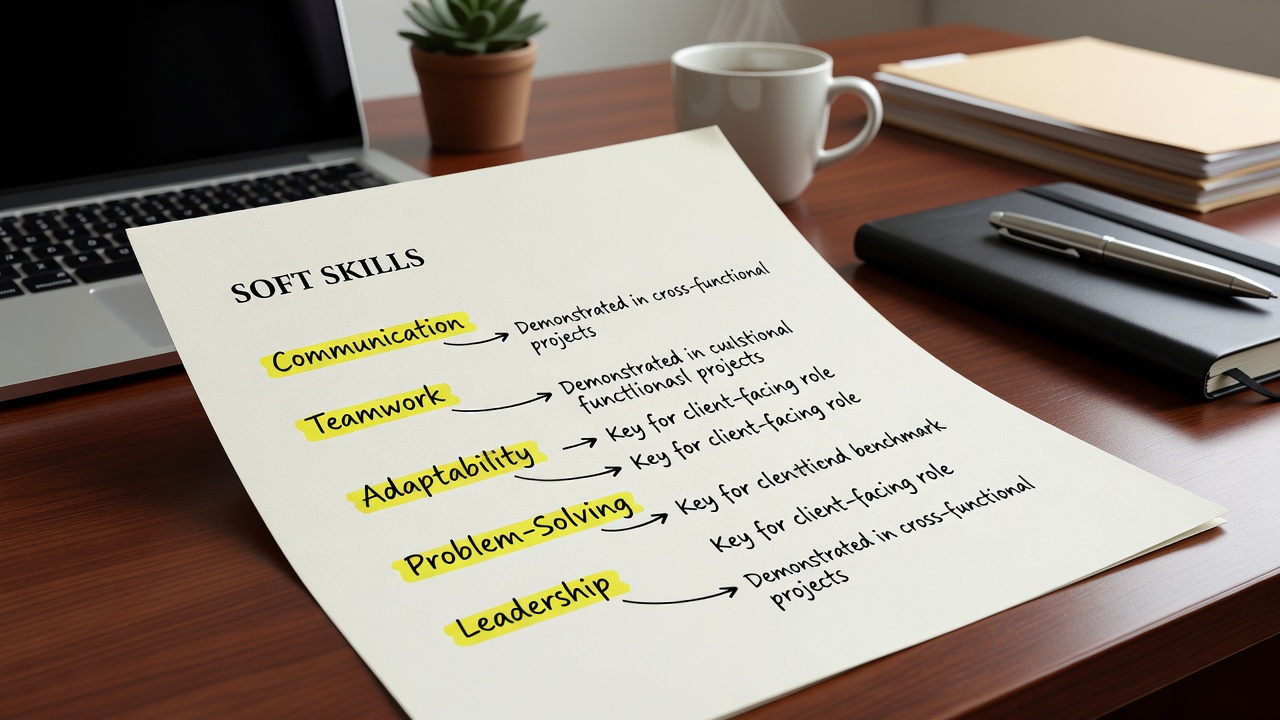
Interview Storytelling: STAR Method for Soft Skills
Use the STAR method (Situation, Task, Action, Result) to share soft skill examples. Situation: Describe the context, such as a sudden team restructure. Task: Explain your responsibility, like maintaining project momentum. Action: Detail the steps you took using the soft skill, including listening actively and proposing solutions. Result: Share the outcome with metrics when possible, such as completing the project two weeks early. Practice three stories focused on adaptability, collaboration, and problem-solving before each interview. Record yourself and refine for clarity and confidence.
Step-by-Step Exercises to Build and Showcase Soft Skills
- Review three recent job descriptions and list the soft skills mentioned most often, noting frequency and context.
- Rewrite five resume bullets to include one soft skill and a measurable result, then seek peer feedback.
- Record a two-minute video answering "Tell me about a time you adapted to change" and review for natural delivery.
- Seek feedback from a mentor or peer on your collaboration examples using specific questions about impact.
- Update your LinkedIn profile summary to feature two soft skills with short proof points backed by achievements.
- Conduct a mock interview with a friend focusing solely on behavioral questions about emotional intelligence.
- Journal weekly about workplace or project interactions to identify patterns in your soft skill usage.
- Volunteer for a cross-functional task at work or in a community group to practice collaboration in real time.
Common Mistakes to Avoid When Highlighting Soft Skills
- Listing skills without evidence, such as simply writing "team player" without examples.
- Overemphasizing soft skills at the expense of required hard skills in technical roles.
- Using vague language instead of specific situations and results in interviews.
- Ignoring cultural fit signals that employers evaluate through soft skill demonstrations.
Frequently Asked Questions
How do I prove soft skills without direct experience?
Use volunteer work, academic projects, or personal challenges. For instance, organizing a community event demonstrates collaboration and leadership even without paid employment history.
Can soft skills outweigh hard skills in 2026?
Yes, especially in roles where technical requirements are similar across candidates. Employers prioritize cultural fit and growth potential as technology changes quickly.
Should I list soft skills in a dedicated resume section?
Integrate them into achievement bullets rather than a separate list. This approach feels more credible and results-oriented to recruiters.
What if my industry values hard skills more?
Even in technical fields, soft skills differentiate finalists. Pair them with your expertise to show well-rounded capability.
How long does it take to develop noticeable soft skills?
Consistent practice over three to six months typically yields visible improvements in feedback and self-awareness.
Conclusion
Mastering soft skills positions you ahead of automated filters and equally qualified competitors. Start by identifying your strongest traits, rewriting your application materials, and practicing interview stories. Consistent effort in these areas leads to more interviews and stronger job offers in 2026. Begin with one exercise today and build momentum from there.


No comments yet. Be the first!