 Jobboy

2026 Competitor Analysis for Smarter Job Hunting
In a rapidly evolving employment landscape, simply searching for open positions and submitting generic applications falls short of what it takes to stand out. Forward-thinking professionals now leverage competitor analysis by closely examining job listings and company postings from industry rivals. This strategic approach turns publicly available data into actionable intelligence that sharpens your targeting, highlights in-demand skills, and helps you close personal gaps before applying. Rather than reacting to postings, you proactively align your profile with what leading organizations actually seek.
Why Competitor Analysis Matters in 2026
The 2026 job market rewards precision. Economic shifts, technological advancements, and changing workplace priorities mean that skill requirements update frequently. By studying competitor postings, you gain early visibility into emerging trends such as specific software proficiencies or hybrid work expectations. This method moves beyond basic keyword matching to reveal nuanced language patterns, preferred qualifications, and even company culture signals embedded in descriptions. Job seekers who adopt this tactic often see higher response rates because their materials speak directly to the needs expressed by target employers.
Identifying Key Industry Players
Begin your analysis by building a focused list of relevant organizations. Direct competitors are companies that hire for nearly identical roles in your sector, while indirect competitors operate in adjacent spaces that may value overlapping expertise. Start with a core group of five to eight firms by reviewing industry reports and professional directories. Use LinkedIn to explore company pages, employee networks, and recent hiring activity. Supplement this with searches on established job platforms to confirm which organizations post frequently. Document each company’s size, location preferences, and typical career progression paths to prioritize those most aligned with your goals.
Step-by-Step Tools for Monitoring Postings
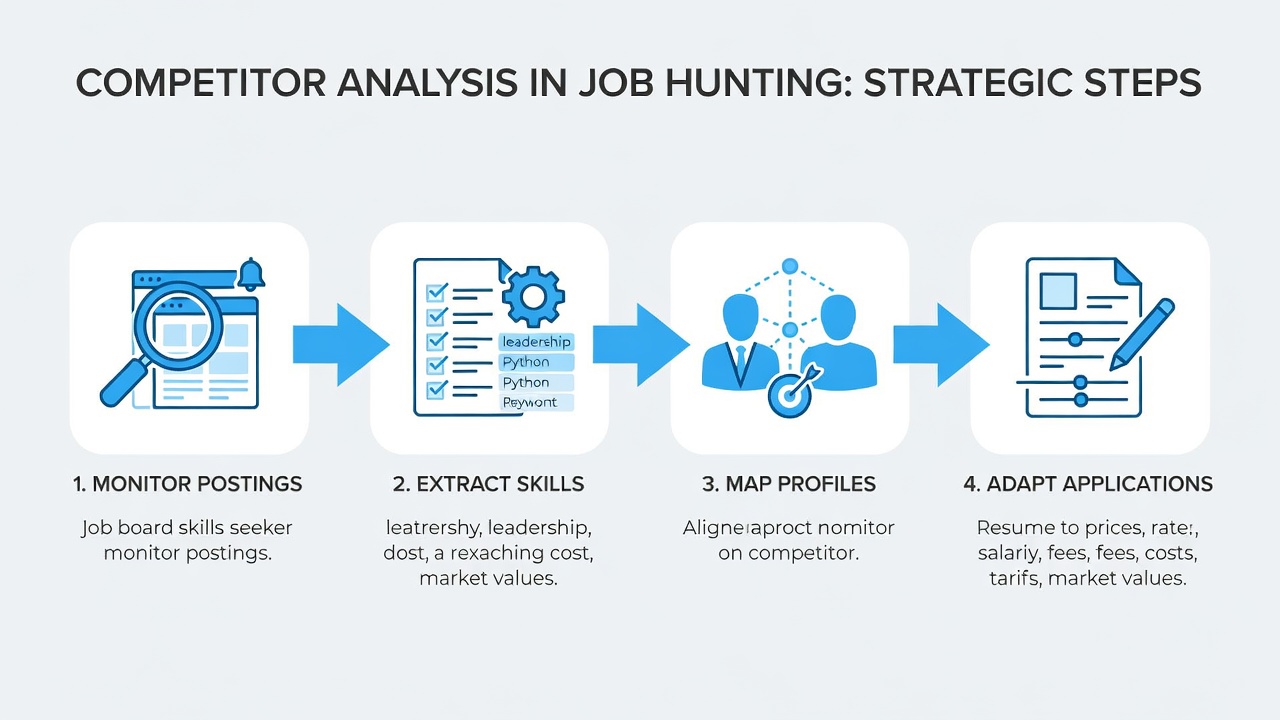
Consistent monitoring forms the foundation of effective analysis. Set up saved searches and email alerts on major job boards so new listings reach you immediately. Combine this with RSS feeds from company career pages and aggregator sites for comprehensive coverage. Review postings weekly, focusing on the most recent 30 to 60 days to capture current priorities rather than outdated requirements. Organize findings in a simple spreadsheet that tracks job title, required skills, responsibilities, and salary indicators where available. This systematic approach prevents information overload while surfacing recurring themes across multiple employers.
Extracting Skills and Trends from Listings
Once you collect postings, dissect them methodically. Categorize hard skills such as programming languages, data analysis tools, or project management methodologies, noting how often each appears. Pay equal attention to soft skills like cross-functional collaboration or adaptability mentioned in responsibilities sections. Look for patterns in preferred experience levels and any emphasis on certifications or continuous learning. Over time, these extractions reveal industry-wide shifts, allowing you to anticipate what will matter most in upcoming quarters rather than chasing yesterday’s demands.
Mapping Insights Against Your Profile for Gaps
After extraction, perform a side-by-side comparison with your current resume, LinkedIn profile, and cover letter templates. Highlight areas where your experience directly matches high-frequency requirements and flag clear gaps in skills or terminology. For instance, if multiple competitors stress familiarity with a particular analytics platform, consider targeted online courses or volunteer projects to build demonstrable evidence. Update your professional materials to incorporate the exact phrasing and priorities seen in the listings, ensuring your narrative resonates immediately with recruiters scanning for alignment.
Real-World Examples of Adapting Applications
Consider a mid-level software engineer targeting fintech companies. After reviewing competitor postings, they noticed repeated mentions of regulatory compliance knowledge alongside core coding skills. They revised their resume bullet points to quantify past work on secure transaction systems and added a brief certification note, resulting in more interview requests within weeks. In another case, a human resources specialist observed that indirect competitors in healthcare emphasized diversity program management. By weaving relevant achievements into their application materials using similar language, they successfully pivoted into a new sector while leveraging transferable experience.
Comparing Direct vs Indirect Competitors
Direct competitors provide the tightest benchmarks for your exact role and salary expectations. Their listings tend to share highly specific technical requirements and cultural cues. Indirect competitors, however, expose opportunities in neighboring fields where your background may transfer more readily than you assume. Weigh both categories: allocate the majority of your application energy to direct matches while keeping a smaller portion open for indirect roles that could accelerate long-term growth. This balanced view prevents tunnel vision while still concentrating efforts on the highest-probability targets.
Common Mistakes to Avoid
Many job seekers over-analyze without taking action, spending weeks collecting data but failing to update applications. Others copy language verbatim without personalizing achievements, which can appear inauthentic. Avoid neglecting indirect competitors entirely, as they often surface innovative skill combinations. Finally, never rely on a single snapshot of postings; continuous monitoring ensures your strategy evolves alongside market conditions.
Ethical Data Use: FAQ
- Is analyzing public job postings considered ethical? Yes. These listings are intentionally shared by companies to attract candidates, making them legitimate sources of market intelligence when used responsibly.
- How should I handle privacy concerns? Focus exclusively on aggregated trends from public postings and avoid referencing any non-public employee data or internal documents.
- Can competitors detect my research? Professional use of publicly available information is standard business practice. Maintain transparency in your applications without misrepresenting your qualifications.
- What limits should I set on frequency? Monitor regularly but apply insights promptly rather than stockpiling data indefinitely.
Conclusion
Competitor analysis elevates job hunting from a numbers game into a targeted, intelligence-driven process. By consistently identifying key players, monitoring postings with structured tools, extracting actionable skills, mapping gaps, and adapting materials accordingly, you position yourself for faster and more relevant opportunities in the 2026 market. Begin today by selecting your top three competitors, setting up monitoring alerts, and reviewing their latest listings to generate immediate refinements for your next applications.


No comments yet. Be the first!