 Jobboy

Introduction
In 2026, sustainability has become a core differentiator in employer branding. Candidates, especially Millennials and Gen Z, increasingly seek employers whose values align with their own on environmental, social, and governance (ESG) issues. This how-to guide provides recruiters and HR leaders with practical strategies to embed sustainability into branding efforts, moving beyond generic perks to authentic impact that attracts top talent. Search intent for this topic centers on actionable ways to stand out in competitive hiring markets. Companies that integrate ESG authentically report stronger engagement and lower turnover. Below we explore alignment tactics, measurement methods, examples, frameworks, and comparisons in depth.
The modern job seeker evaluates more than compensation packages. They examine how organizations address climate change, social equity, and ethical governance. By 2026, integrating these elements into employer branding is essential for differentiation. Recruiters must evolve from traditional tactics like highlighting flexible work to showcasing tangible sustainability commitments that resonate on a deeper level.
Why Sustainability Matters for Employer Branding in 2026
Traditional branding focuses on salary, benefits, and culture. However, values-driven talent now prioritizes purpose. Research from the World Economic Forum highlights that purpose-led organizations outperform peers in talent retention. In 2026, integrating sustainability signals long-term thinking and ethical leadership. This shift is driven by generational changes in the workforce, where younger professionals actively research corporate responsibility records before applying.
Key benefits include expanded talent pools, enhanced employer reputation, and resilience against greenwashing accusations. Companies ignoring this trend risk losing candidates to competitors with stronger ESG narratives. Furthermore, sustainability-focused branding can improve internal morale, leading to higher productivity as employees feel connected to meaningful missions. Organizations that fail to adapt may face reputational damage amplified by social media and review platforms.
Aligning ESG Goals with Job Postings
Start by weaving ESG language into job descriptions. Instead of generic sustainability mentions, specify measurable commitments such as carbon reduction targets or diversity hiring goals. Use precise terms like "contribute to our net-zero roadmap by 2030" to demonstrate credibility. This alignment ensures that every candidate touchpoint reinforces the company's values from the first interaction.
Best practices include:
- Highlighting specific initiatives in the company overview section, such as partnerships with environmental nonprofits or community investment programs
- Listing sustainability-related responsibilities for relevant roles, including metrics for success like reduced waste or improved supply chain ethics
- Using inclusive language that appeals to diverse candidates and reflects social governance priorities
- Linking to annual ESG reports for transparency, allowing applicants to review progress independently
This approach helps filter for values-aligned applicants early in the funnel. For technical roles, incorporate ESG elements into required skills, such as experience with sustainable design principles. In leadership positions, emphasize oversight of diversity initiatives or environmental compliance. Tailoring content this way creates consistency across departments and strengthens the overall employer narrative.
Measuring Impact on Talent Acquisition Metrics
Track quantifiable outcomes to validate efforts. Relevant metrics include application rates from values-driven candidates, time-to-hire improvements, employee retention linked to purpose, and engagement scores from sustainability surveys. Advanced analytics can segment applicants by their stated motivations during the application process, revealing direct correlations between ESG messaging and candidate quality.
Tools like applicant tracking systems integrated with ESG dashboards allow real-time monitoring. Compare pre- and post-implementation data to demonstrate ROI. For instance, firms reporting higher application volumes after ESG-focused campaigns often see significant lifts in qualified leads. Additional measurements might encompass social media engagement on sustainability posts, employee Net Promoter Scores tied to purpose, and long-term retention rates among hires influenced by ESG branding. Regular audits of these metrics help refine strategies and justify continued investment to leadership teams.
Real-World Company Examples
Patagonia stands out for embedding environmental activism into every aspect of its employer brand, from job postings emphasizing climate action to internal volunteer programs. This has helped the company maintain low turnover and attract passionate talent who actively participate in advocacy efforts. Their approach includes transparent reporting on environmental impacts, which candidates frequently cite as a deciding factor.
Unilever incorporates its Sustainable Living Plan into recruitment, showcasing how roles contribute to global goals. The result is a pipeline of purpose-oriented professionals who drive innovation across product development and operations. Detailed case studies from Unilever reveal improved diversity in hiring after emphasizing social equity components of their ESG strategy.
Tech firms like Salesforce link ESG performance to employee resource groups, fostering communities around sustainability that enhance both branding and retention. These groups organize events and workshops that double as talent attraction tools through public visibility. Additional examples include IKEA, which highlights circular economy principles in job postings, and Danone, which connects employee roles directly to health and sustainability outcomes, resulting in stronger candidate loyalty metrics.
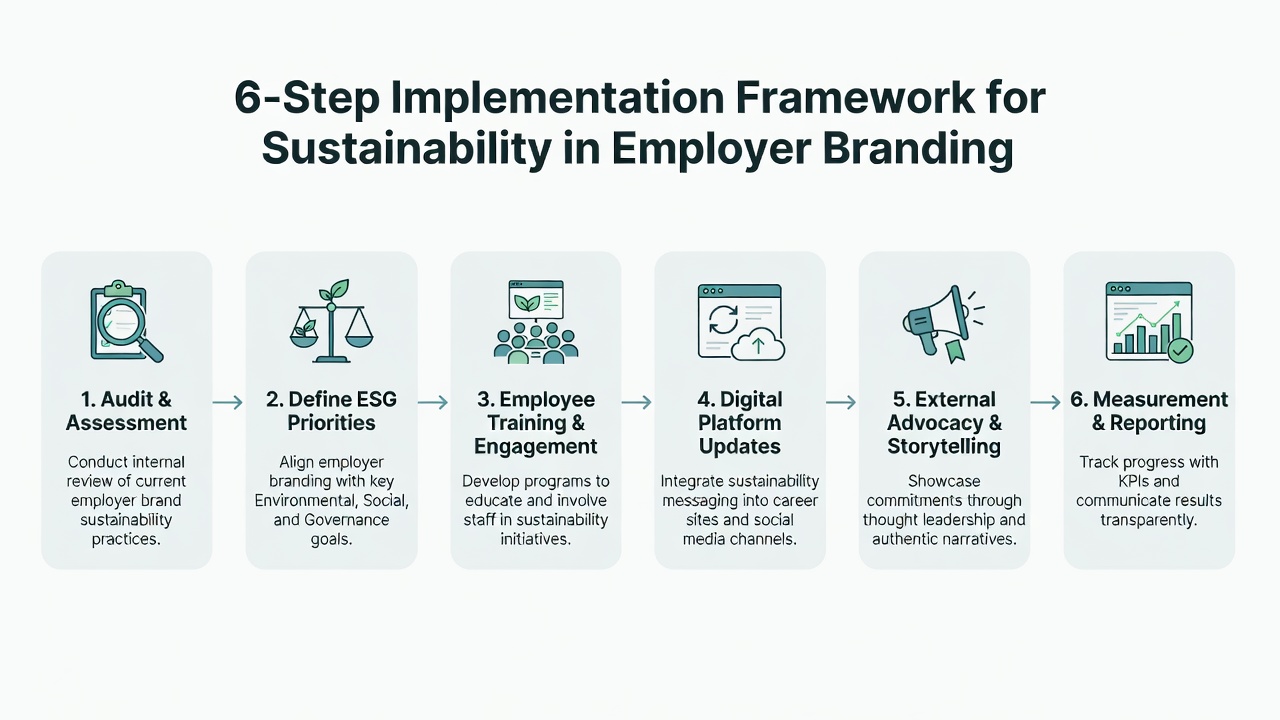
Step-by-Step Implementation Framework
Follow this structured approach for successful integration:
- Audit current branding: Review all touchpoints for ESG gaps and opportunities, including career websites, interview scripts, and onboarding materials. Involve cross-functional teams to gather comprehensive insights.
- Define material issues: Identify ESG priorities most relevant to your industry and workforce through stakeholder consultations and materiality assessments.
- Train recruiters and leaders: Equip teams to communicate sustainability authentically during interviews, using role-playing scenarios and updated talking points to handle candidate questions effectively.
- Update digital assets: Refresh career pages, social media, and postings with ESG content, ensuring consistency in tone and visuals across platforms.
- Launch employee advocacy: Encourage staff to share sustainability stories on LinkedIn and internal platforms, providing guidelines and incentives to amplify reach organically.
- Measure and iterate: Use data to refine strategies quarterly, incorporating feedback loops from new hires and rejected candidates alike.
Each step builds momentum while maintaining authenticity. Challenges such as resistance from legacy teams can be addressed through pilot programs that demonstrate early wins.
Traditional vs. Sustainability-Focused Branding Outcomes
Traditional approaches emphasize compensation and flexibility, yielding short-term applications but higher churn among purpose-seekers. Sustainability-focused branding delivers deeper loyalty, stronger Glassdoor ratings, and access to niche talent pools. Companies adopting the latter often report improved diversity in hires and faster scaling of mission-critical teams. Side-by-side comparisons show that ESG-integrated brands achieve better long-term engagement, with candidates more likely to refer others and remain committed during organizational changes.
FAQ: Addressing Common Concerns
How can small budgets support sustainability branding?
Focus on low-cost actions like transparent storytelling, employee-led initiatives, and partnerships with nonprofits. Authenticity matters more than expensive campaigns, and organic social sharing can achieve substantial reach without large media spends.
What if our sustainability efforts feel inauthentic?
Start with honest assessments and third-party certifications. Avoid exaggeration; candidates value progress over perfection. Regular reporting builds trust over time and mitigates skepticism through verifiable data.
Does this apply to all industries?
Yes, though emphasis varies. Manufacturing may highlight emissions reductions, while services focus on social impact and governance. Every sector has relevant ESG angles that can be tailored to attract aligned professionals.
How do we handle potential greenwashing accusations?
Invest in third-party audits and public dashboards that track progress transparently. Responding promptly and factually to concerns strengthens credibility and turns potential criticism into opportunities for improvement.
Conclusion
Integrating sustainability into employer branding in 2026 is no longer optional for organizations seeking to attract and retain values-driven talent. By aligning ESG goals, measuring outcomes, learning from leaders, and following clear frameworks, recruiters can create compelling, differentiated employer brands. Begin with an audit today to position your organization as a purpose-driven employer of choice and build lasting competitive advantage in the talent market.


No comments yet. Be the first!