 Jobboy

Introduction: Why Mentorship Programs Matter for Retention in 2026
Employee retention remains a top priority for HR leaders as organizations face ongoing talent competition in a dynamic job market. Structured mentorship programs integrate directly into onboarding and development efforts, helping companies lower turnover while strengthening engagement and loyalty. Research from sources like Gallup consistently shows that employees with mentors report higher satisfaction and longer tenure. This guide provides a complete roadmap for launching effective programs tailored to 2026 workforce needs, including remote and hybrid models that have become standard.
Beyond basic guidance, these programs address the full employee lifecycle by connecting new hires with experienced colleagues who can navigate company culture, skill gaps, and career progression. In an era where talent acquisition costs continue to rise, retaining existing staff through mentorship delivers strong returns on investment through reduced recruiting expenses and preserved institutional knowledge.
Key Benefits Backed by Data
Organizations that implement formal mentorship see measurable gains in retention rates. Mentored employees are more likely to stay because they receive personalized guidance on career paths, skill development, and workplace navigation. These programs also support diversity initiatives by pairing junior talent with experienced leaders from varied backgrounds. Additional advantages include faster onboarding, improved knowledge transfer, and stronger company culture that attracts top performers during talent acquisition cycles.
Studies indicate mentored employees demonstrate higher engagement scores and are significantly more likely to be promoted within two years. The ripple effects extend to team productivity as mentors refine their own leadership abilities while supporting mentees. When tied to broader retention strategies, mentorship creates a supportive ecosystem that reduces voluntary exits and builds a reputation as an employer of choice.
Formal vs. Informal Mentorship Models
Formal programs feature structured matching, defined goals, and scheduled check-ins, making them scalable and measurable across departments. Informal models rely on organic relationships, which can feel authentic but often lack consistency and accountability. For retention-focused efforts, formal structures outperform informal ones by ensuring every participant receives equal opportunity and progress is tracked systematically. Many successful companies blend both approaches, starting with formal onboarding mentorship before encouraging ongoing informal connections that evolve naturally over time.
The choice between models depends on company size and resources. Formal programs work best when leadership wants clear ROI data, while informal options suit highly collaborative cultures. Hybrid versions allow flexibility without sacrificing structure, ensuring programs adapt to changing workforce dynamics in 2026.
Step-by-Step Rollout Checklist
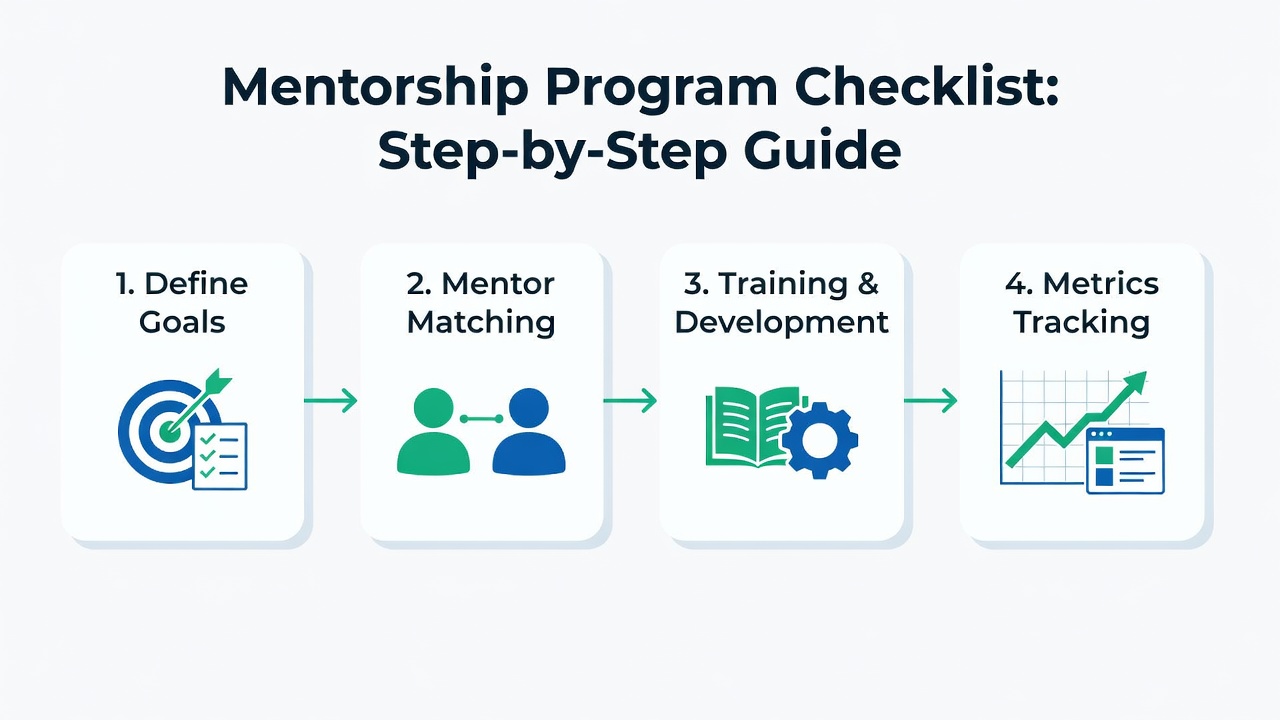
Follow this practical checklist to launch your program successfully:
- Define clear program goals aligned with retention and talent acquisition objectives.
- Secure executive sponsorship to allocate resources and demonstrate commitment.
- Develop mentor selection criteria and application processes.
- Create matching algorithms based on skills, career goals, and department needs.
- Establish timelines, meeting cadences, and milestone reviews.
- Build training resources for both mentors and mentees.
- Set up measurement systems for key metrics.
- Pilot the program with a small cohort before full rollout.
- Iterate based on feedback and results.
Each step requires careful planning. For instance, goal definition should involve input from department heads to ensure alignment with business priorities. Executive sponsorship often determines long-term funding and visibility, while pilot programs help identify issues early and build internal advocates.
Selecting and Training Effective Mentors
Choose mentors who demonstrate strong communication, empathy, and leadership experience rather than focusing solely on tenure. Look beyond seniority to include high-performing mid-level employees who understand current challenges faced by newer staff. Provide comprehensive training on active listening, goal-setting frameworks, and bias awareness to ensure consistent delivery of value. This preparation prevents mismatched expectations and equips mentors to handle sensitive career discussions effectively.
Realistic time commitments should be outlined upfront, typically one to two hours per month per mentee. Companies often create mentor handbooks with templates for first meetings, progress tracking, and feedback collection. Including peer support groups for mentors allows them to share best practices and troubleshoot challenges together.
Measuring Success: Retention Rates and Other Metrics
Track retention rates as the primary KPI, comparing mentored employees against non-participants over six- and twelve-month periods. Additional metrics include engagement survey scores, internal promotion rates, time-to-productivity for new hires, and mentee satisfaction ratings. Use pulse surveys at 30, 90, and 180 days to capture qualitative insights on relationship quality and perceived support. Tools and frameworks from SHRM can help standardize these measurements across teams and provide benchmarking data.
Advanced programs incorporate predictive analytics to identify at-risk employees early and adjust pairings accordingly. Regular reporting to leadership keeps the initiative visible and secures continued support. When metrics show improvement, share success stories internally to encourage broader participation.
Real-World Company Examples
Tech firms like Google have long used structured mentorship to support new hires, resulting in stronger retention and faster ramp-up times. Manufacturing companies pair experienced operators with recent graduates to accelerate skill transfer and reduce errors on the production floor. Professional services organizations often implement reverse mentorship where junior employees guide seniors on emerging technologies, fostering two-way learning. These examples highlight the importance of tailoring programs to industry-specific needs while maintaining core elements like goal alignment and regular feedback.
Another example comes from healthcare systems that use mentorship to retain nursing staff by pairing new graduates with seasoned professionals, addressing burnout through emotional support and career planning. Cross-industry learning shows that adaptability and consistent evaluation are universal success factors.
Common Pitfalls to Avoid
Many programs fail due to poor matching, lack of time commitment, or absence of measurable goals. Avoid overloading mentors with too many mentees and ensure leadership visibly supports the initiative through regular communications. Address scalability concerns early, especially for SMBs with limited HR bandwidth. Other frequent mistakes include skipping mentor training, failing to celebrate milestones, and ignoring participant feedback until relationships break down.
Prevent these issues by building in quarterly reviews and creating clear escalation paths when pairings underperform. Transparent communication about program expectations from day one sets the foundation for sustainable success.
Scaling for SMBs: Practical Considerations
Small and medium businesses can start with simple pairings and virtual meetings to reduce overhead. Leverage existing performance management software rather than investing in new platforms. Focus on high-impact areas like onboarding mentorship to deliver quick wins in retention. Partnering with industry associations or local business networks can expand the mentor pool without increasing headcount.
SMBs should prioritize measurable outcomes over program size, documenting wins to justify expansion. Starting small allows refinement before committing broader resources.
Integrating Mentorship with Talent Acquisition Strategies
Mentorship programs enhance employer branding during recruitment by showcasing commitment to employee growth. Highlighting these opportunities in job postings and interviews attracts candidates seeking development. Post-hire, mentorship accelerates cultural integration, complementing talent acquisition efforts by improving the quality of hire and long-term fit.
FAQ
How long should a mentorship program last?
Most effective programs run 6–12 months, allowing time for relationship building and goal achievement while maintaining momentum.
What if mentors and mentees don't connect?
Include an opt-out or rematching process after the first month to preserve positive experiences for everyone involved.
Can virtual mentorship work as well as in-person?
Yes, when supported by clear expectations and video tools. Many 2026 programs successfully operate fully remotely with strong outcomes.
How many mentees should one mentor support?
One to three mentees is ideal to maintain quality interactions without burnout.
Should participation be mandatory?
Voluntary participation yields better engagement, though pairing new hires with mentors during onboarding can be a standard expectation.
Conclusion
Launching a mentorship program requires thoughtful planning but delivers substantial returns in employee retention and talent acquisition. By following the steps outlined above and continuously refining based on data, HR leaders can build programs that support both individuals and organizational goals in 2026 and beyond.


No comments yet. Be the first!