 Jobboy
Introduction to Asynchronous Video Interviews
Asynchronous video interviews have become an essential recruiting technique in 2026, enabling candidates to record responses on their own time while providing hiring teams with greater scheduling flexibility. This approach directly addresses common challenges such as coordinating across time zones, reducing no-shows, and accelerating the initial screening phase. For HR professionals seeking modern alternatives to traditional live interviews, async video tools offer a structured way to evaluate talent without the logistical headaches of calendar invites and rescheduling.
The core concept involves candidates receiving a link to record answers to preset questions using their webcam or smartphone. Responses are stored securely for later review, allowing multiple team members to assess submissions independently. This format supports a wider talent pool, including passive candidates who may not be available during standard business hours.
Benefits Over Live Interviews
Switching to asynchronous formats delivers measurable improvements in efficiency and consistency. Live interviews frequently involve extensive email chains to find mutually available times, which can extend the hiring timeline by one to two weeks. Asynchronous interviews eliminate this friction entirely, enabling candidates to complete their portion within 48 hours of receiving the invitation.
Additional advantages include standardized questioning for every applicant, which supports fairer comparisons, and the option for reviewers to pause, rewind, and rewatch segments for deeper analysis. Teams also report lower overall time investment from interviewers, freeing them to focus on later-stage evaluations. Mid-size organizations have documented faster time-to-hire metrics and improved candidate volume handling during peak recruitment periods.
- Eliminates scheduling conflicts across multiple stakeholders
- Provides consistent evaluation criteria applied uniformly
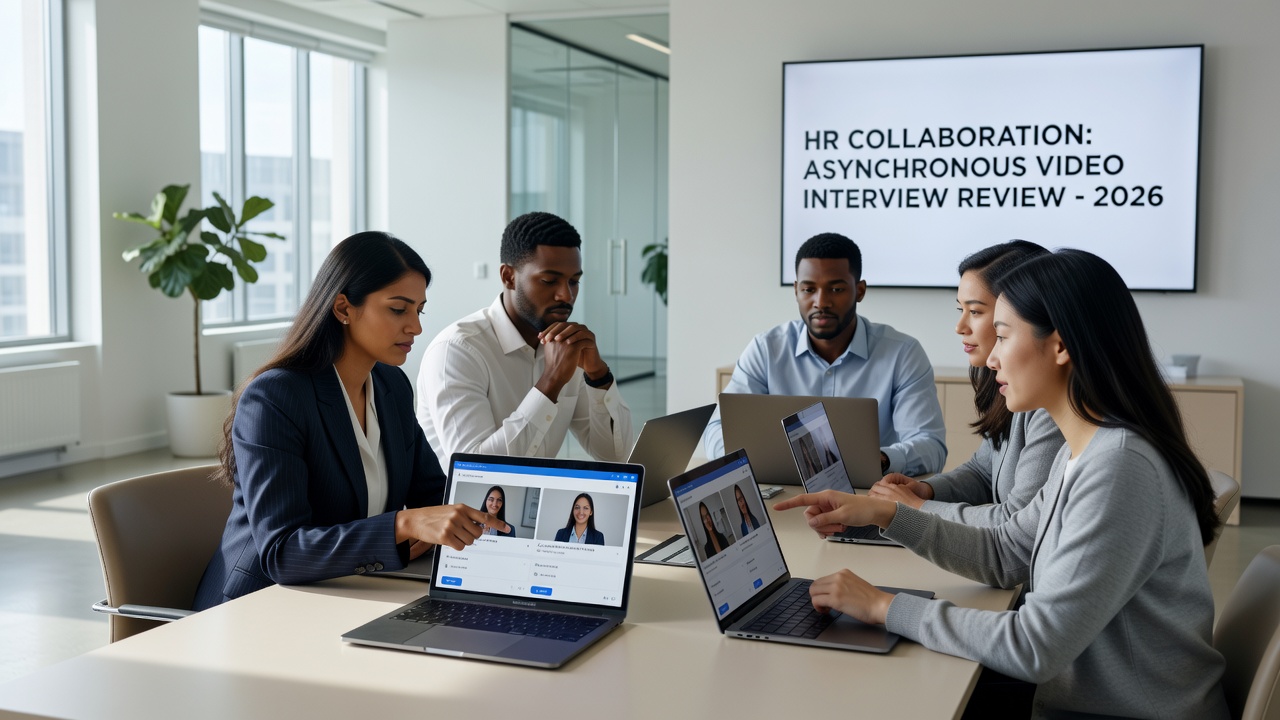
- Allows asynchronous collaboration among hiring committee members
- Reduces travel or venue costs associated with in-person meetings
- Creates a searchable archive of candidate responses for future reference
How Asynchronous Video Interviews Work
The process begins with the hiring team preparing a set of questions tailored to the role. Candidates receive an email invitation containing a unique link, instructions, and any necessary practice opportunities. Once recorded, submissions are automatically organized within the platform dashboard for easy access by reviewers. Notifications can be configured to alert the team when new videos arrive.
Most platforms support both one-way recorded responses and limited two-way elements if desired, though the primary value remains in the asynchronous nature. Data security features such as encryption and access controls ensure compliance with privacy regulations throughout the workflow.
Selecting the Right Platform
Platform choice significantly impacts adoption success. Prioritize solutions that offer intuitive interfaces for candidates, robust analytics for reviewers, and strong integration capabilities. Essential features include customizable question banks, response time limits, and mobile optimization to accommodate diverse candidate devices.
Evaluate vendors based on ease of setup, customer support responsiveness, and compatibility with your existing technology stack. Requesting demonstrations and conducting internal pilot tests with a small number of roles helps identify the best fit before full rollout.
Creating Effective Question Prompts
Well-designed questions are the foundation of valuable insights. Focus on behavioral prompts that encourage candidates to share specific examples from their experience, such as describing a time they resolved a team conflict or led a project under tight deadlines. Situational questions can also reveal problem-solving approaches relevant to the position.
Keep the total number of questions between four and six to respect candidate time. Include clear instructions on response length and allow a brief practice question to help candidates feel prepared. Varying question types—mixing video and text-based elements where supported—can provide a more complete picture of communication skills.
Evaluating Responses Objectively
Objective evaluation requires structured rubrics that score key competencies on a consistent scale. Categories might include clarity of communication, depth of examples provided, alignment with role requirements, and overall professionalism. Multiple reviewers should complete independent assessments before convening to discuss discrepancies.

Regular calibration sessions among evaluators help maintain scoring consistency over time. Documenting rationale for each rating creates an audit trail that supports transparent decision-making and can be useful during compliance reviews.
Integrating with ATS Systems
Integration with applicant tracking systems ensures interview data flows seamlessly into the broader recruiting workflow. Connections to platforms such as Workday or Greenhouse automatically attach video links to candidate profiles and update statuses as reviews progress. This reduces duplicate data entry and provides hiring managers with a single source of truth.
Implementation usually involves configuring API keys or using pre-built connectors provided by the video interview vendor. Testing the integration thoroughly with sample candidates prevents disruptions once live roles are active.
Step-by-Step Setup Instructions
- Identify target roles and define success criteria for the interview stage.
- Choose a platform and complete account setup with branding elements.
- Build question templates and assign appropriate time limits per response.
- Configure reviewer access permissions and rubric templates.
- Connect the platform to your ATS for automated data synchronization.
- Send test invitations to internal team members for quality assurance.
- Launch the process with live candidates and monitor completion rates.
- Review submissions, score responses, and advance top performers.
Real-World Examples from Mid-Size Companies
A 250-employee software company in Denver implemented asynchronous interviews for engineering roles and observed a 35 percent increase in candidate completion rates within the first quarter. The structured format allowed their distributed team to evaluate submissions across different time zones without additional meetings.
Another example comes from a healthcare services firm with 180 employees that used async video for administrative positions. By standardizing questions and rubrics, they reduced bias concerns and improved diversity in their shortlist of candidates compared to previous live screening rounds.
Common Pitfalls to Avoid
Teams new to this method sometimes create overly long question sets that frustrate candidates. Others neglect to provide clear instructions, leading to incomplete submissions. Ensuring technical support contacts are readily available and testing all links before sending invitations helps prevent these issues.
Addressing Candidate Experience and Bias Reduction
Candidate experience improves when clear expectations and practice opportunities are provided upfront. Most applicants value the flexibility, particularly those balancing current jobs or caregiving responsibilities. To minimize bias, organizations can anonymize certain elements of submissions where technology allows and involve diverse review panels.
Guidance from established resources such as SHRM and EEOC supports the development of equitable evaluation processes that focus on job-related criteria.
FAQ
How do asynchronous interviews impact candidate experience?
They generally enhance experience through scheduling convenience, although some roles may still benefit from a final live conversation to assess cultural fit.
Can these interviews reduce unconscious bias?
Yes, when paired with standardized rubrics, diverse reviewers, and structured scoring, they promote more consistent and objective assessments across candidates.
What technical requirements are needed for candidates?
Only a device with a camera and microphone plus a stable internet connection is required; most platforms are compatible with both desktop and mobile browsers.
How long should each recorded response be?
Two to three minutes per question is typically sufficient to gather meaningful information while keeping the overall interview manageable.
Are asynchronous interviews suitable for all roles?
They work well for most positions but may be supplemented with live interviews for highly collaborative or client-facing roles where real-time interaction is critical.
Conclusion
Asynchronous video interviews provide a practical, scalable solution for streamlining hiring processes in 2026. By focusing on thoughtful platform selection, well-crafted questions, objective evaluation methods, and smooth ATS integration, HR teams can improve both efficiency and candidate quality. Implementing the steps and best practices outlined above positions organizations to attract and assess top talent more effectively in a competitive market.


No comments yet. Be the first!