 Jobboy

2026 Equity Tax Strategies for Maximum Net Compensation
Equity awards such as restricted stock units, stock options, and phantom stock continue to form a major part of total compensation packages in 2026. However, without careful planning, taxes can reduce their value dramatically. Mid-career professionals seeking to boost net compensation must master timing strategies, understand alternative minimum tax exposure, optimize withholdings, and account for vesting impacts. This comprehensive guide delivers in-depth coverage of these topics along with calculation examples, checklists, and negotiation advice to help you retain more of your hard-earned equity.
Understanding Different Equity Awards
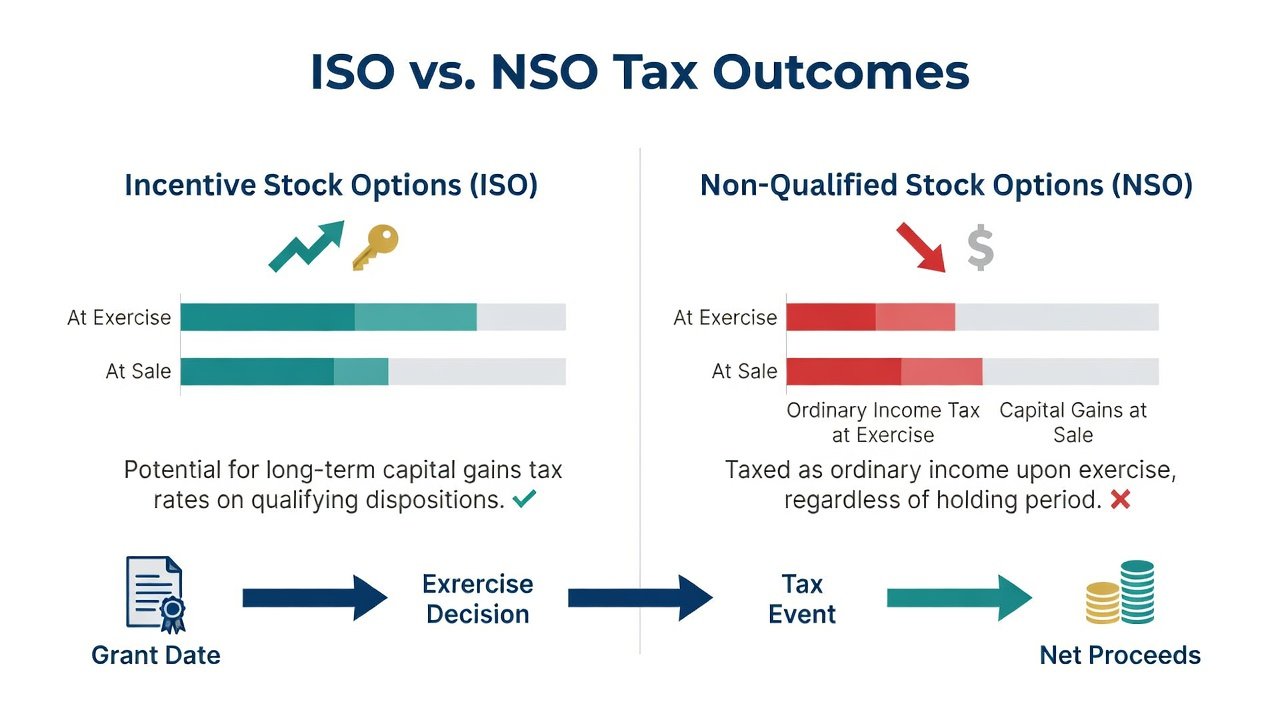
Restricted stock units become taxable as ordinary income upon vesting based on the fair market value at that moment. Incentive stock options provide the opportunity for long-term capital gains treatment provided specific holding periods are satisfied, though they carry alternative minimum tax risks at exercise. Non-qualified stock options trigger ordinary income tax on the spread between exercise price and fair market value at the time of exercise. Phantom stock plans deliver cash or stock equivalents tied to company valuation but are typically taxed as ordinary income when paid. Each vehicle requires distinct planning approaches to minimize the overall tax burden while aligning with personal financial goals and cash flow needs.
Strategic Capital Gains Timing
Timing the sale of equity shares can shift taxation from ordinary income rates to preferential long-term capital gains rates. For RSUs, the clock for long-term treatment generally starts at vesting. Professionals should evaluate whether holding shares for at least one year after vesting and meeting any additional grant-date requirements makes sense given expected price movements and liquidity requirements. In practice, modeling multiple sale scenarios helps identify the break-even point where the tax savings outweigh the risk of stock price declines. Early planning around anticipated life events such as home purchases or education expenses ensures that sales align with both tax efficiency and cash needs.
Managing AMT for ISOs
Incentive stock options can generate significant alternative minimum tax liability in the year of exercise because the spread between exercise price and fair market value is treated as an AMT preference item. Spreading exercises over several tax years, exercising early in the calendar year to allow time for planning, or pairing exercises with sales that generate AMT credits are common mitigation tactics. Professionals should project their regular tax liability versus AMT liability well in advance and consider exercising a portion of options in December of one year and January of the next when appropriate. Tracking carried-forward AMT credits remains essential for future tax years when regular tax exceeds AMT.
Optimizing Tax Withholding
Supplemental wage withholding rules often result in flat-rate withholdings on equity income that may not match an individual’s actual tax bracket. Adjusting Form W-4 allowances or requesting additional voluntary withholdings before major vesting or exercise events can prevent underpayment penalties. Some employers permit “sell-to-cover” transactions that automatically sell enough shares to satisfy tax obligations, reducing the need for out-of-pocket cash. Reviewing paystubs after each equity event and comparing cumulative withholdings against projected annual tax liability allows timely corrections throughout the year.
Impact of Vesting Schedules
Vesting schedules directly influence the year in which income is recognized. Front-loaded schedules accelerate taxation into earlier years that may have lower marginal rates, while back-loaded schedules defer recognition. Change-in-control provisions can accelerate vesting unexpectedly, creating large taxable events. When negotiating offers, individuals should request provisions allowing early exercise of options or the ability to file an 83(b) election on restricted stock to lock in taxation at grant rather than vesting. Understanding how graded versus cliff vesting interacts with personal tax projections enables more precise planning.
ISO vs NSO: Detailed Outcomes
The choice between incentive and non-qualified stock options produces markedly different tax profiles. ISOs avoid regular income tax at exercise but expose the holder to AMT and require strict holding periods for favorable capital gains treatment. NSOs create immediate ordinary income on the spread at exercise with no holding requirements, yet they generate no AMT exposure. In comparative scenarios, exercising a block of ISOs might defer regular tax but create a current-year AMT obligation that must be paid in April, whereas the same number of NSOs produces a predictable ordinary income inclusion. Professionals should run side-by-side projections that incorporate their expected future tax rates, anticipated stock appreciation, and available cash for tax payments before deciding which type to prioritize during negotiations.
Negotiating Equity in Offers
Job candidates can request several tax-friendly modifications during the offer stage. These include early-exercise provisions for options, company reimbursement for tax gross-ups on phantom stock awards, or flexible vesting that accommodates personal tax planning. Asking about reload features or the ability to exchange underwater options for new grants can also improve outcomes. Documenting these requests in writing and discussing them with both the hiring manager and compensation team increases the likelihood of favorable terms being incorporated into the final offer letter.
Handling Taxes as a Remote Worker
Remote and hybrid work arrangements introduce complex state tax sourcing rules for equity income. Some states tax based on the location where services were performed during the grant or vesting period, while others focus on residency at the time of income recognition. Maintaining detailed calendars of workdays by state, understanding reciprocal agreements, and timing residency changes around major equity events can reduce multi-state filing obligations. Consulting the revenue departments of relevant states and reviewing publications on telecommuter taxation provides the necessary guidance for compliant planning.
Practical Tools and Benchmarks
Spreadsheet models that incorporate current tax brackets, projected stock prices, and AMT calculations serve as essential planning tools. Many professionals also use dedicated equity compensation software that integrates with payroll systems to forecast after-tax proceeds under different sale and exercise scenarios. Benchmarking personal equity holdings against industry averages for similar roles helps identify whether current grants align with market standards and whether additional negotiation is warranted.
Step-by-Step Tax Planning Checklist
- Inventory all outstanding equity grants, including grant dates, vesting schedules, and current values at the beginning of each tax year.
- Run AMT projections for any planned ISO exercises at least six months in advance.
- Adjust W-4 withholdings before large vesting or exercise events to align with expected liability.
- Evaluate holding periods required for long-term capital gains on each award type.
- Coordinate with a tax professional on multi-state filings if you work remotely across state lines.
- Track basis adjustments and carried AMT credits annually in a dedicated spreadsheet.
- Review offer letters for any equity-related tax gross-up or early-exercise language before accepting new roles.
Common Pitfalls to Avoid
Overlooking AMT on ISO exercises remains one of the most costly mistakes. Another frequent error involves selling shares before satisfying long-term capital gains holding periods, resulting in ordinary income treatment on the entire gain. Failing to account for state taxes when relocating or working remotely can lead to unexpected liabilities and penalties. Professionals should also avoid exercising options without sufficient cash reserves to cover the resulting tax bill.
Frequently Asked Questions
How do I calculate tax on vested RSUs?
Multiply the fair market value on the vesting date by the number of shares vested and apply your ordinary income tax rate. Subtract any taxes already withheld by your employer to determine additional liability or refund.
Can I defer taxes on phantom stock?
Certain plans permit deferral elections under IRC Section 409A, but distributions remain subject to ordinary income tax rates when ultimately paid.
What resources help with 2026 planning?
The IRS website publishes updated forms, instructions, and publications covering equity compensation each year. Professional tax advisors and specialized equity planning software provide personalized modeling.
How does remote work affect state taxation of equity?
States may source equity income based on work performed in the state during the relevant period. Detailed records of work locations help determine filing requirements.
Should I exercise ISOs early?
Early exercise can start the capital gains holding period sooner and potentially reduce AMT exposure if the stock has not appreciated much, but it requires cash for the exercise price and carries forfeiture risk if employment ends.
Conclusion
Implementing advanced equity tax strategies in 2026 demands a proactive, multi-faceted approach. By mastering capital gains timing, managing AMT exposure, optimizing withholdings, negotiating favorable terms, and addressing remote work complexities, professionals can substantially increase their net compensation from equity awards. Begin planning early each year, build robust models, and consult qualified advisors to execute these strategies effectively and confidently.

No comments yet. Be the first!