 Jobboy

Introduction to Equity Refreshes in 2026
Tech managers in 2026 face an evolving compensation landscape where equity refreshes serve as critical tools for retention and wealth building. These grants help offset the dilution of initial stock awards and keep incentives aligned with long-term company performance. Understanding how to negotiate refreshes effectively requires deep knowledge of valuation methods, tax implications, and market dynamics. This comprehensive playbook explores every facet of the process, from timing RSU valuations to adjusting vesting schedules and handling cost-of-living factors in remote setups. Managers who prepare thoroughly can significantly boost their total compensation packages.
Understanding the 2026 Equity Landscape
The equity refresh process has grown more sophisticated amid market volatility and shifting talent expectations. Companies increasingly use refreshes not just as retention mechanisms but as performance motivators. Tech managers must stay informed about industry trends, including how economic conditions influence grant sizes and structures. Preparation starts with reviewing your current equity position, outstanding grants, and upcoming vesting events. This foundational knowledge allows for data-driven discussions during negotiations.
RSU Valuation Timing Strategies
Strategic timing of RSU valuations can dramatically affect the perceived and actual value of your refresh. Focus on periods following strong earnings releases or major product launches when stock prices tend to rise. Many firms base refresh grants on a trailing 30-day average, so monitoring daily closes and identifying upward trends is essential. Advanced managers also consider blackout periods and insider trading rules that might delay requests. By aligning your ask with positive momentum, you position yourself for higher grant values without appearing opportunistic.
Tax Optimization Techniques
Tax efficiency remains a cornerstone of successful equity planning. Techniques include spreading RSU vestings across multiple years to avoid pushing income into higher brackets and exploring qualified small business stock exclusions where eligible. Deferral options through retirement accounts or specific elections can further reduce immediate liabilities. Managers should model different scenarios using tax software or advisors to understand net outcomes. Refer to official guidance from the IRS for the latest rules on restricted stock taxation and reporting requirements. Integrating these strategies early prevents surprises at filing time.
Adjusting Vesting Schedules
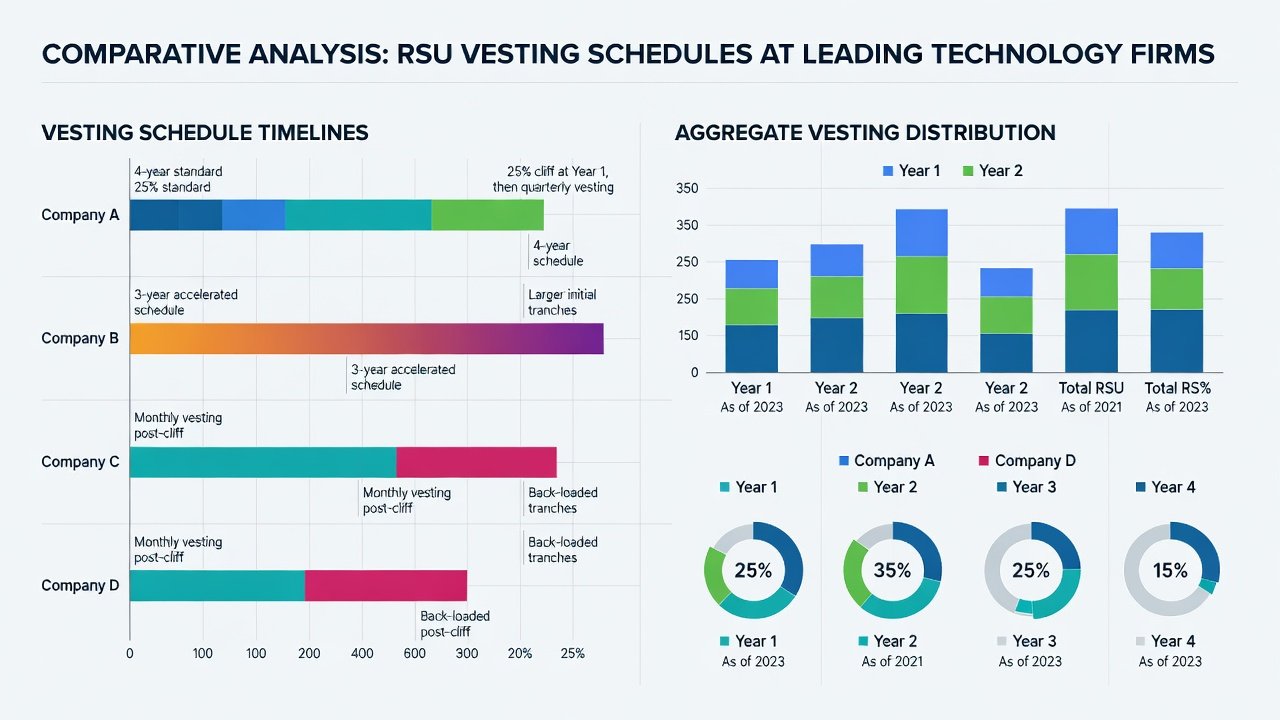
Customizing vesting terms allows managers to balance liquidity needs with long-term alignment. Common requests include shortening initial cliffs from one year to six months or adding performance accelerators tied to team milestones. Hybrid schedules that combine time-based and metric-based vesting provide flexibility while demonstrating commitment. Negotiators should present these adjustments as mutually beneficial, showing how they encourage sustained contributions. Document all proposed changes clearly to facilitate approval from compensation committees.
Comparing Refresh vs. Initial Grant Packages
Initial grants typically award larger equity blocks with standard four-year vesting and one-year cliffs. Refresh packages, by contrast, emphasize ongoing retention and often feature smaller, more frequent awards calibrated to current role and market conditions. Real-world examples from firms like Meta and Amazon illustrate how refreshes might represent 25 to 45 percent of original grant values, adjusted for tenure and impact. These comparisons highlight the importance of negotiating refreshes proactively rather than waiting for standard cycles. Understanding these differences empowers managers to advocate for packages that reflect their evolving contributions.
Step-by-Step Negotiation Scripts
Effective negotiation begins with thorough preparation and confident delivery. Start by stating your achievements: "Over the past year, I led initiatives that increased platform efficiency by 30 percent, directly supporting our growth targets." Transition to the request: "To ensure continued alignment, I propose an equity refresh based on current benchmarks for my level." Address potential objections with data: "Market data shows similar roles at peer companies receive refreshes averaging X percent of initial grants." Follow up in writing with a summary email outlining key terms, timelines, and any vesting preferences discussed. Practice variations of these scripts to handle different manager styles and company policies.
COL Adjustments for Remote Roles
Remote work introduces unique considerations around cost-of-living adjustments in equity discussions. Managers in lower-cost regions may request location-agnostic grants to maintain parity with headquarters-based peers. Conversely, those in high-cost areas can leverage data on housing and taxes to justify larger awards. Companies are increasingly open to these conversations as distributed teams become standard. Present your case with specific examples of how location affects your overall financial picture while emphasizing productivity and results.
Benchmarks by Experience Level and Industry Data
Benchmarks vary widely by seniority and sector. Early-career managers typically target refreshes equating to 15-30 percent of base equity holdings. Mid-level professionals often secure 35-55 percent, while senior leaders negotiate 60 percent or more with added performance components. Industry reports from regulatory filings provide valuable context for these figures. Cross-reference your asks against data from the SEC to ensure competitiveness. Incorporating this evidence strengthens your position during talks.
FAQs on Phantom Stock Alternatives
Phantom stock plans offer a compelling alternative when traditional equity is limited. These arrangements deliver cash payouts tied to stock performance without issuing actual shares, reducing dilution concerns. Key questions include: How are taxes handled on phantom units? Payouts are generally taxed as ordinary income upon vesting. Are they suitable for remote employees? Yes, they provide flexibility across geographies. What are the risks compared to RSUs? Phantom plans may lack voting rights and can be subject to company-specific clawback provisions. Exploring these options during refresh discussions can unlock additional compensation pathways.
Preparation Checklist for Your Refresh Request
- Compile a detailed record of achievements, metrics, and contributions over the review period.
- Analyze current equity holdings, vesting schedules, and potential dilution impacts.
- Research peer benchmarks and recent company grant patterns using public filings.
- Model multiple tax and valuation scenarios to identify optimal terms.
- Draft negotiation scripts and anticipate common objections with prepared responses.
- Schedule the conversation during a low-stress period for your manager.
- Follow up in writing and request a timeline for decision-making.
Common Pitfalls to Avoid
Many managers undermine their position by accepting the first offer without countering or failing to quantify their impact with specific results. Others overlook post-employment exercise windows or ignore the tax consequences of different vesting structures. Another frequent error is neglecting to consider remote work implications until late in the process. By anticipating these issues and preparing alternatives in advance, you maintain control over the outcome and avoid leaving value on the table.
Conclusion
Mastering the 2026 equity refresh process positions tech managers for sustained financial growth. Through careful attention to valuation timing, tax strategies, vesting customization, and informed negotiation, professionals can secure packages that reflect their true contributions. Use the checklist and scripts provided to approach these conversations with confidence and data-backed arguments. Regular reviews of your equity strategy will ensure continued alignment with both personal goals and company performance.

No comments yet. Be the first!