 Jobboy

Introduction to Equity Compensation in 2026
Equity compensation continues to play a central role in total rewards packages for professionals at every career stage. In 2026, companies across industries use equity instruments such as restricted stock units (RSUs), stock options, and profit-sharing arrangements to attract and retain talent. Experience level significantly influences both the size and structure of these grants. Junior professionals often receive smaller initial awards focused on retention, while mid-level and senior employees negotiate larger grants aligned with performance and company growth. This comprehensive guide examines valuation methods, tax considerations, vesting mechanics, industry-specific benchmarks, and actionable negotiation strategies to help readers maximize their compensation outcomes.
Equity Benchmarks by Experience Level
Benchmarks for equity grants vary widely depending on role, company stage, and geographic location. Understanding these differences allows candidates to evaluate offers more effectively and set realistic expectations during discussions with recruiters and hiring managers.
Junior-Level Equity Packages
Professionals with zero to three years of experience typically receive equity grants that represent a modest percentage of total compensation. These awards serve primarily as retention tools rather than wealth-building vehicles. For example, a junior software engineer at a growth-stage technology firm might receive an initial grant that vests over four years, encouraging long-term commitment while the employee gains foundational skills. Companies structure these packages to minimize dilution while still providing meaningful upside if the organization succeeds.
Mid-Level Equity Packages
With three to seven years of experience, professionals move into roles where equity grants increase substantially. These individuals often lead projects or manage small teams, justifying larger awards. Mid-level packages frequently incorporate performance-based elements, such as additional grants triggered by meeting revenue or product milestones. Negotiation at this stage focuses on balancing cash salary with equity to optimize after-tax outcomes.
Senior-Level Equity Packages
Senior professionals with eight or more years of experience command the most sophisticated equity arrangements. These packages commonly combine RSUs, options, and profit-sharing to align personal incentives with long-term company success. Executives may also receive sign-on grants or refreshers that vest on accelerated schedules. The emphasis shifts toward risk management and tax efficiency.
Valuation Techniques for Common Equity Types
Proper valuation requires understanding the mechanics of each equity type. RSUs are valued at the fair market value of the underlying shares on the vesting date, making them relatively simple to calculate. Stock options require more complex modeling because their value depends on the difference between the strike price and future share price. Common approaches include the Black-Scholes model for publicly traded companies and 409A valuations for private firms. Profit-sharing plans distribute a portion of company profits according to a predetermined formula, often based on annual financial performance. Professionals should request detailed plan documents and consult financial advisors to model potential outcomes under different scenarios.
IRS guidelines offer authoritative information on reporting requirements for these instruments.
Tax Implications Across Career Stages
Tax treatment represents one of the most critical yet overlooked aspects of equity compensation. RSUs are taxed as ordinary income at the time of vesting based on the fair market value of the shares. This can create significant tax liabilities if a large grant vests in a single year. Stock options may qualify for favorable long-term capital gains rates if specific holding periods are satisfied after exercise. Profit-sharing distributions are generally taxed as ordinary income in the year received. Junior employees should plan for the cash flow impact of vesting events, while seniors often explore strategies such as tax-loss harvesting or deferral elections to manage liabilities. Different career stages present unique opportunities and risks; for instance, mid-level professionals transitioning between companies must carefully time equity exercises to avoid overlapping tax events.
Vesting Schedules and Their Impact
Vesting schedules determine when equity actually becomes owned by the employee. The standard four-year schedule with a one-year cliff remains prevalent across industries, meaning 25 percent vests after the first year and the remainder vests monthly or quarterly thereafter. Accelerated vesting provisions can trigger full ownership upon a change of control or termination without cause. Professionals evaluating offers should consider personal financial needs, such as upcoming home purchases or family expenses, when assessing vesting terms. Longer cliffs protect employers but can create retention challenges for employees who feel locked in.
Industry Comparisons: Tech, Finance, and Healthcare
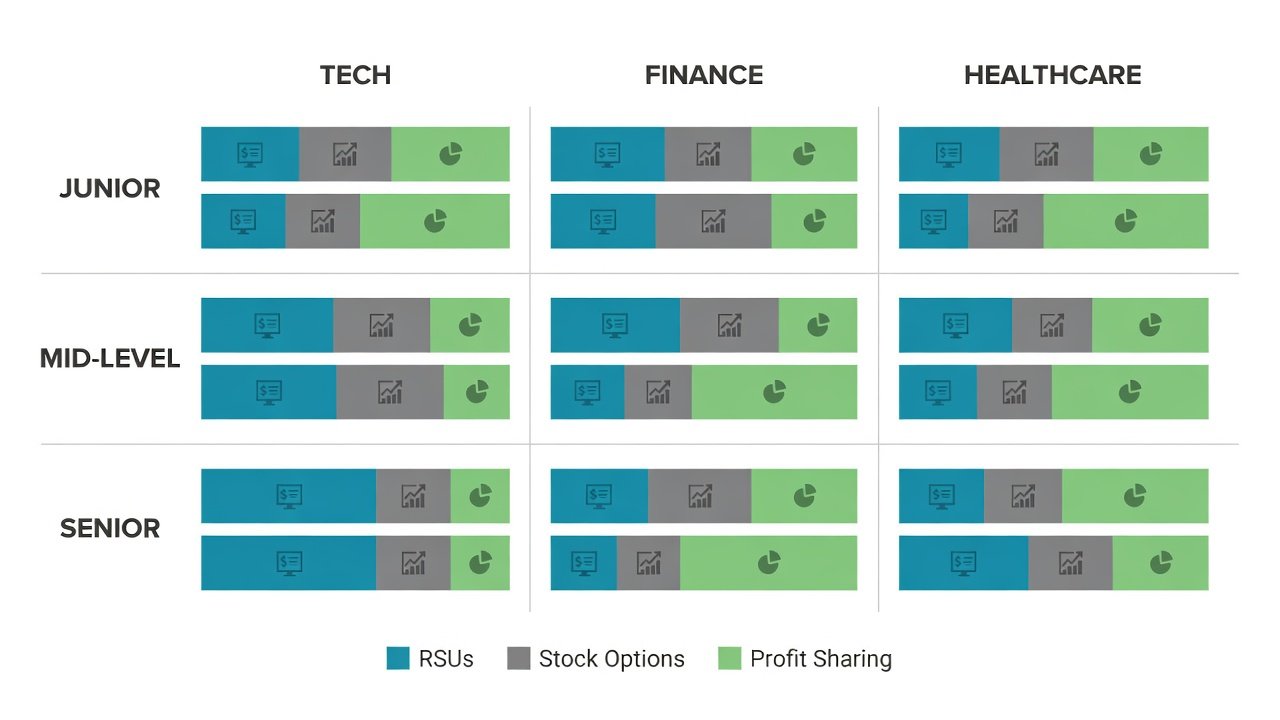
Equity practices differ markedly across sectors. Technology companies often grant larger equity packages because of high growth potential and frequent valuation increases. Finance roles balance equity with substantial cash bonuses due to regulatory requirements that limit certain incentive structures. Healthcare organizations tend to emphasize stable, long-term equity tied to regulatory approvals and steady revenue streams. When comparing offers, candidates should examine not only grant size but also the liquidity timeline and downside protection mechanisms unique to each industry.
- Tech: Rapid equity appreciation potential but higher volatility.
- Finance: Regulatory oversight leads to conservative grant sizes and stronger cash components.
- Healthcare: Focus on milestone-based vesting linked to clinical or operational achievements.
Step-by-Step Negotiation Scripts and Examples
Effective negotiation begins with thorough preparation. Research comparable roles using industry reports and salary surveys. During conversations, emphasize value delivered rather than personal needs. A sample script for a mid-level candidate might read: “Given my track record leading cross-functional initiatives that increased efficiency by 30 percent, I would like to discuss adjusting the equity component to align more closely with market benchmarks for similar experience levels.” Another approach involves requesting a mix of instruments: “Would it be possible to convert a portion of the proposed RSU grant into options with a lower strike price to improve long-term upside?” Always follow up in writing to document agreements.
Common Pitfalls to Avoid
Many professionals undervalue the importance of reviewing full equity plan documents before signing. Ignoring potential dilution from future funding rounds can significantly reduce the actual value received. Another frequent mistake involves failing to model tax consequences in advance, leading to unexpected cash shortfalls at vesting. Candidates should also avoid over-relying on equity at the expense of base salary, particularly in early-stage companies where liquidity events may be delayed. Seeking input from tax professionals and compensation specialists helps mitigate these risks.
FAQ on Phantom Stock and Long-Term Incentives
What is phantom stock?
Phantom stock provides cash payments equivalent to the value of actual shares without transferring ownership. It is particularly useful for private companies that wish to avoid issuing real equity.
How do long-term incentives differ by career stage?
Junior roles typically feature time-based vesting to encourage retention, whereas senior packages often include performance metrics tied to revenue, profitability, or strategic goals.
Can equity grants be renegotiated after acceptance?
While possible during annual reviews or promotion cycles, initial offers are usually more flexible. Document any verbal discussions and request written amendments.
Additional regulatory context is available from SEC resources on equity disclosures and compensation reporting.
Conclusion
Navigating equity compensation in 2026 requires a thorough understanding of how experience shapes grant size, structure, and tax treatment. By mastering valuation techniques, anticipating tax implications, and applying proven negotiation strategies, professionals can secure packages that support both immediate needs and long-term wealth creation. Always approach offers holistically and seek expert guidance when evaluating complex terms.

No comments yet. Be the first!