 Jobboy

Introduction to Common Resume Pitfalls
Your resume is your first impression in the job hunt—make it count. Unfortunately, many sabotage their chances with avoidable errors. In this guide, we'll explore the top 10 resume mistakes and provide actionable tips to sidestep them, helping you craft a standout document that lands interviews.
1. Ignoring Typos and Grammar Errors
Nothing screams unprofessional like spelling mistakes. Recruiters spend seconds scanning resumes, and errors can lead to instant rejection.
- Proofread multiple times.
- Use tools like Grammarly.
- Ask a friend for a fresh review.
2. Using a Generic Template
A one-size-fits-all resume won't highlight your fit for specific roles. Tailoring shows you've done your homework.
- Customize for each job description.
- Incorporate keywords from the posting.
- Emphasize relevant experiences.
3. Making It Too Long or Too Short
Resumes should be concise—ideally one page for most professionals. Overloading bores readers; being too brief misses details.
- Aim for 1-2 pages max.
- Prioritize recent, relevant info.
- Cut fluff and quantify achievements.
4. Poor Formatting and Design
A cluttered or hard-to-read layout distracts from your content. ATS systems also favor clean formats.
- Use consistent fonts (e.g., Arial, 10-12pt).
- Employ bullet points and white space.
- Save as PDF to preserve layout.
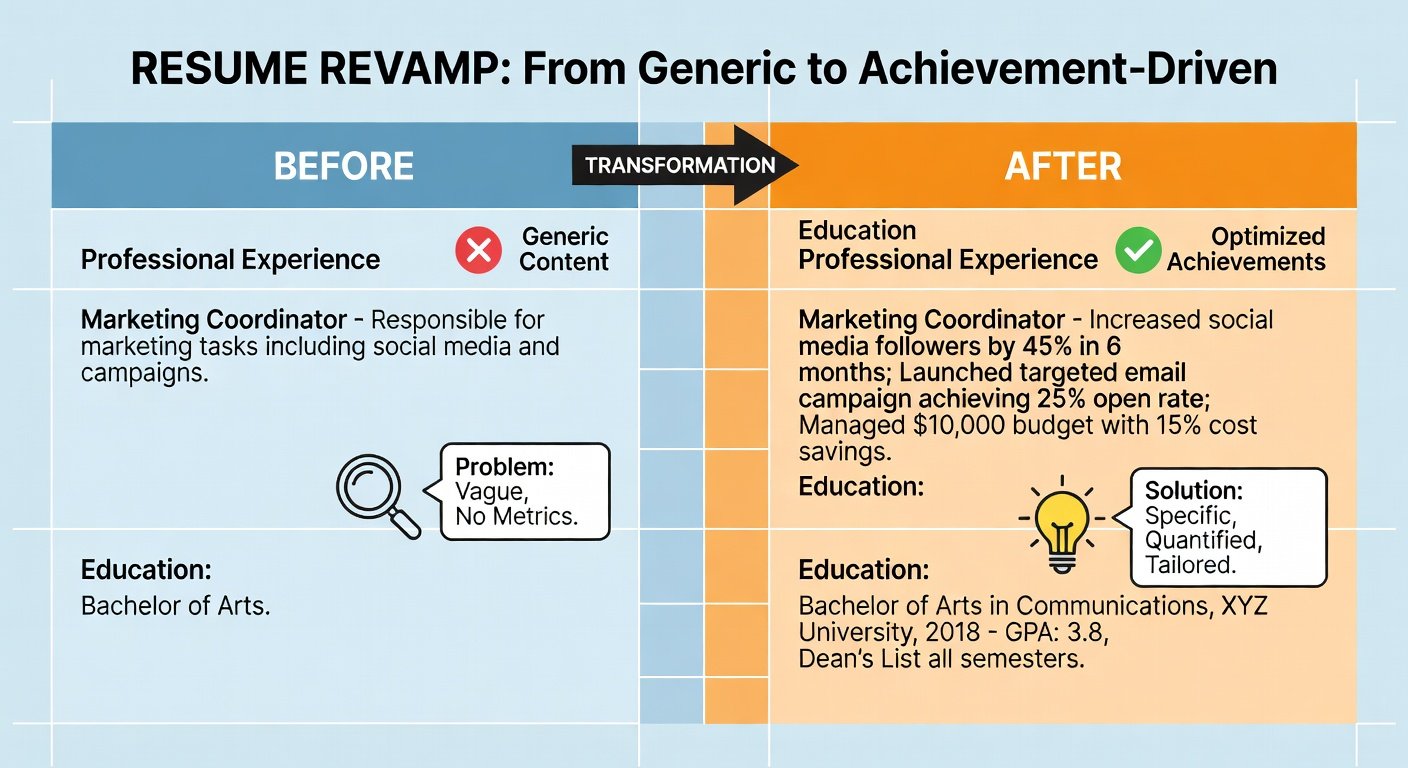
5. Listing Duties Instead of Achievements
Employers want impact, not just tasks. Shift from 'what you did' to 'what you accomplished'.
- Use action verbs like 'led' or 'increased'.
- Quantify results (e.g., 'Boosted sales 20%').
- Focus on outcomes that matter to the role.
6. Not Tailoring to the Job
Submitting the same resume everywhere ignores the employer's needs, reducing your relevance score.
- Match skills to job requirements.
- Research the company culture.
- Highlight transferable skills if switching fields.
7. Including Irrelevant Information
High school jobs or hobbies unrelated to the position dilute your focus. Keep it professional and pertinent.
- Exclude outdated or non-essential details.
- Omit personal info like age or photo (unless required).
- Prioritize career progression.
8. Outdated or Incomplete Contact Info
If recruiters can't reach you easily, you'll miss opportunities. Ensure your details are current and professional.
- Include a professional email and .
- Use a reliable phone number.
- Avoid quirky emails like 'partyguy@email.com'.
9. Exaggerating or Lying
Inflating experiences might get you an interview, but it'll backfire during verification or interviews.
- Be honest and accurate.
- Focus on verifiable achievements.
- If gaps exist, address them briefly and positively.
10. Skipping ATS-Friendly Keywords
Many companies use Applicant Tracking Systems (ATS) to filter resumes. Without keywords, yours may never reach human eyes.
- Scan job descriptions for key terms.
- Incorporate them naturally.
- Test your resume with free ATS scanners.
Final Tips for Resume Success
After avoiding these pitfalls, get feedback from mentors and update your resume regularly. A polished resume is your ticket to more interviews—start refining yours today!

No comments yet. Be the first!