 Jobboy

Understanding Applicant Tracking Systems (ATS)
In today's competitive job market, submitting a resume feels like throwing it into a black hole. But behind the scenes, Applicant Tracking Systems (ATS) are the gatekeepers deciding if your application sees the light of day. These software tools, used by over 90% of Fortune 500 companies, automate the initial screening process, saving recruiters time but creating hurdles for . In this guide, we'll break down how ATS works, why tailoring your resume is crucial, and provide actionable advice on keywords and formatting to ensure your resume gets past the bots.
What is an ATS and How Does It Work?
An Applicant Tracking System is a software application that manages the recruitment process. It collects, sorts, and ranks based on predefined criteria set by employers. When you apply for a job online, your resume is uploaded into the ATS, where it's parsed—meaning the system reads and extracts key information like your name, contact details, work experience, education, and skills.
The parsing process uses algorithms to scan for matches against the job description. For instance, if the mentions 'project management' five times, the ATS prioritizes resumes with similar phrasing. It then scores your resume on relevance, often ranking candidates numerically. Only the top-scoring ones (typically 10-20%) advance to a human recruiter.
Popular ATS platforms include Taleo, Workday, iCIMS, and Greenhouse. According to a , these systems reject up to 75% of resumes before they're even reviewed by a person. Understanding this workflow is the first step to optimizing your application.
Why Tailoring Your Resume for ATS is Crucial
Tailoring isn't just a best practice—it's a necessity in an era where companies receive hundreds of applications per role. A generic resume might showcase your skills beautifully to a human eye, but it could flop against ATS filters due to mismatched keywords or incompatible formats.
Consider this: Recruiters spend an average of six seconds scanning a resume manually, but ATS does it in milliseconds, focusing on quantifiable matches. Without customization, your years of experience might go unnoticed if the system can't 'read' it properly. Tailoring increases your visibility by aligning your content with the job's requirements, boosting your chances of reaching the interview stage.
Moreover, as AI evolves, ATS is getting smarter. Modern systems use natural language processing (NLP) to understand context better, but they still rely heavily on exact keyword matches. Failing to adapt means your resume could be sidelined, even if you're the perfect fit. A study by Ladders found that 99% of Fortune 500 companies use ATS, underscoring the urgency of optimization.
Mastering Keywords: The Heart of ATS Optimization
Keywords are the lifeblood of ATS compatibility. They are specific terms, phrases, and acronyms pulled directly from the job description that signal to the system you're a strong match.
How to Identify and Use Keywords Effectively
- Scan the : Read the entire description, noting skills, qualifications, and responsibilities. For a marketing role, keywords might include 'SEO optimization,' 'content strategy,' or 'Google Analytics.'
- Prioritize Hard Skills: ATS favors technical terms like 'Python programming' over soft skills like 'team player,' though include both for human reviewers.
- Use Variations: If the job says 'customer service,' include synonyms like 'client support' if relevant, but mirror the exact phrasing where possible.
- Avoid Keyword Stuffing: Integrate them naturally—aim for 2-3% density. Place them in your summary, skills section, and experience bullets.
For example, if applying for a software engineer position, weave in 'Agile methodology' and 'Java development' into your work history descriptions. Tools like Jobscan or Resunate can analyze your resume against the job ad for keyword matches, helping you refine without guesswork.
Remember, while keywords get you past ATS, they must be backed by real experience to impress recruiters later.
Formatting Tips to Ensure ATS Readability
Even with perfect keywords, poor formatting can render your resume unreadable to ATS. These systems prefer clean, standard structures over creative designs.
Essential Formatting Best Practices
- Stick to Standard Fonts and Layouts: Use fonts like Arial, Calibri, or Times New Roman (10-12 pt). Avoid fancy scripts or images that ATS can't parse.
- Use Standard Section Headings: Label sections as 'Work Experience,' 'Education,' and 'Skills'—not 'My Career Journey' or creative alternatives.
- Save as .docx or PDF: Most ATS handle Word files well; for PDFs, ensure they're text-based, not scanned images. Test by copying text—if it pastes cleanly, it's good.
- Avoid Tables, Graphics, and Headers/Footers: These can confuse parsers. Place contact info at the top in plain text, not in a header.
- Keep It Chronological: Reverse-chronological format is ATS-friendly. Use bullet points for experiences, starting with action verbs like 'Led' or 'Developed.'
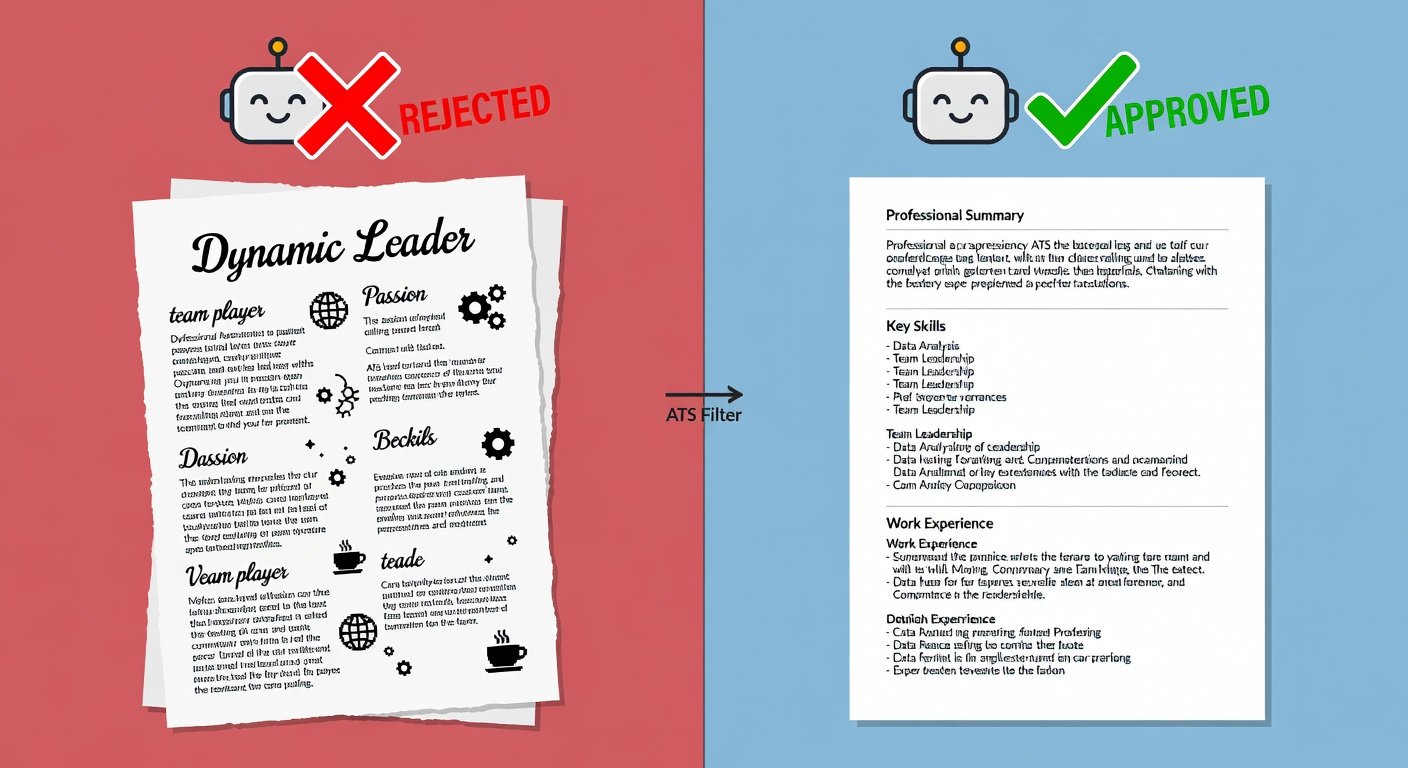
Visual elements like charts might look great but often get stripped out or ignored. Focus on text-based content. For a quick test, run your resume through a free ATS simulator like those offered by .
Common Formatting Pitfalls to Avoid
Steer clear of acronyms without spelling them out first (e.g., ' Engine Optimization (SEO)'), as ATS might not recognize them. Also, don't use special characters or non-standard bullets—stick to hyphens or asterisks.
Advanced Strategies and Tools for ATS Success
Beyond basics, leverage tools to stay ahead. Resume builders like Canva or Google Docs have ATS templates, but always export and check compatibility. AI-powered services such as ResumeWorded provide feedback on ATS scores.
Track application outcomes: If you're consistently ghosted, tweak your resume iteratively. on platforms like can bypass ATS altogether, but for volume applications, optimization is key.
In a post-pandemic job market with remote surging, ATS usage has spiked. Adapting ensures you're not lost in the digital shuffle.
Conclusion: Take Control of Your
Mastering ATS isn't about gaming the system—it's about making your qualifications shine through automation. By understanding how these systems work, tailoring with targeted keywords, and formatting for machine readability, you'll significantly boost your interview odds. Start by reviewing your current resume against a today. With these strategies, your next application could be the one that lands you the role.


No comments yet. Be the first!