 Jobboy

Introduction to Resume Narratives
Your resume is more than a document listing jobs and skills—it's the opening chapter of your professional story. In a sea of applications, managers spend mere seconds scanning resumes. To capture their attention, you need to weave a narrative that showcases your journey, achievements, and unique value. This approach turns dry facts into an engaging tale that resonates with recruiters, making them eager to learn more about you in an interview.
Whether you're a recent graduate, a career changer, or a seasoned professional, mastering the art of resume storytelling can set you apart. In this guide, we'll explore how to craft a compelling narrative, highlight your accomplishments effectively, and present your skills in a way that feels authentic and impactful.
Why Narrative Matters in Your Resume
Resumes that tell a story create an emotional connection. Instead of bullet points that read like a grocery list, a narrative resume demonstrates growth, resilience, and progression. It answers the unspoken question: "Why should we hire you?" by framing your experiences as a cohesive path toward your career goals.
Research from career experts shows that storytelling in professional documents can increase callback rates by up to 30%. For instance, the U.S. Bureau of Labor Statistics highlights how structured career narratives help in competitive job markets. By focusing on your 'why' and 'how,' you position yourself not just as qualified, but as the ideal fit for the role.
Crafting Your Professional Story
Start by reflecting on your career arc. Think of your resume as a timeline: where you've been, what you've overcome, and where you're headed. Begin with a strong professional summary that hooks the reader like the first line of a novel.
Building a Strong Opening Summary
Your summary should be 3-5 sentences that encapsulate your narrative. For example, if you're transitioning from marketing to project management, don't just state your roles—explain how your creative campaigns taught you to lead cross-functional teams under tight deadlines. This sets the stage for the rest of your resume.
- Identify your core theme: What ties your experiences together? (e.g., innovation, leadership, problem-solving)
- Use active language: Words like "orchestrated," "pioneered," or "transformed" add dynamism.
- Tailor to the job: Mirror the company's values and the role's requirements in your story.
Weaving in Your Journey Through Experience Sections
Organize your work history chronologically but infuse it with narrative flow. For each role, start with a brief overview of your responsibilities, then dive into achievements that advance your story. Use the STAR method (Situation, Task, Action, Result) to structure bullets, turning them into mini-stories.
For instance, instead of "Managed a team of 5," say: "Led a team of 5 through a company pivot during economic downturn, resulting in 20% revenue growth by implementing agile methodologies." This shows progression and impact.
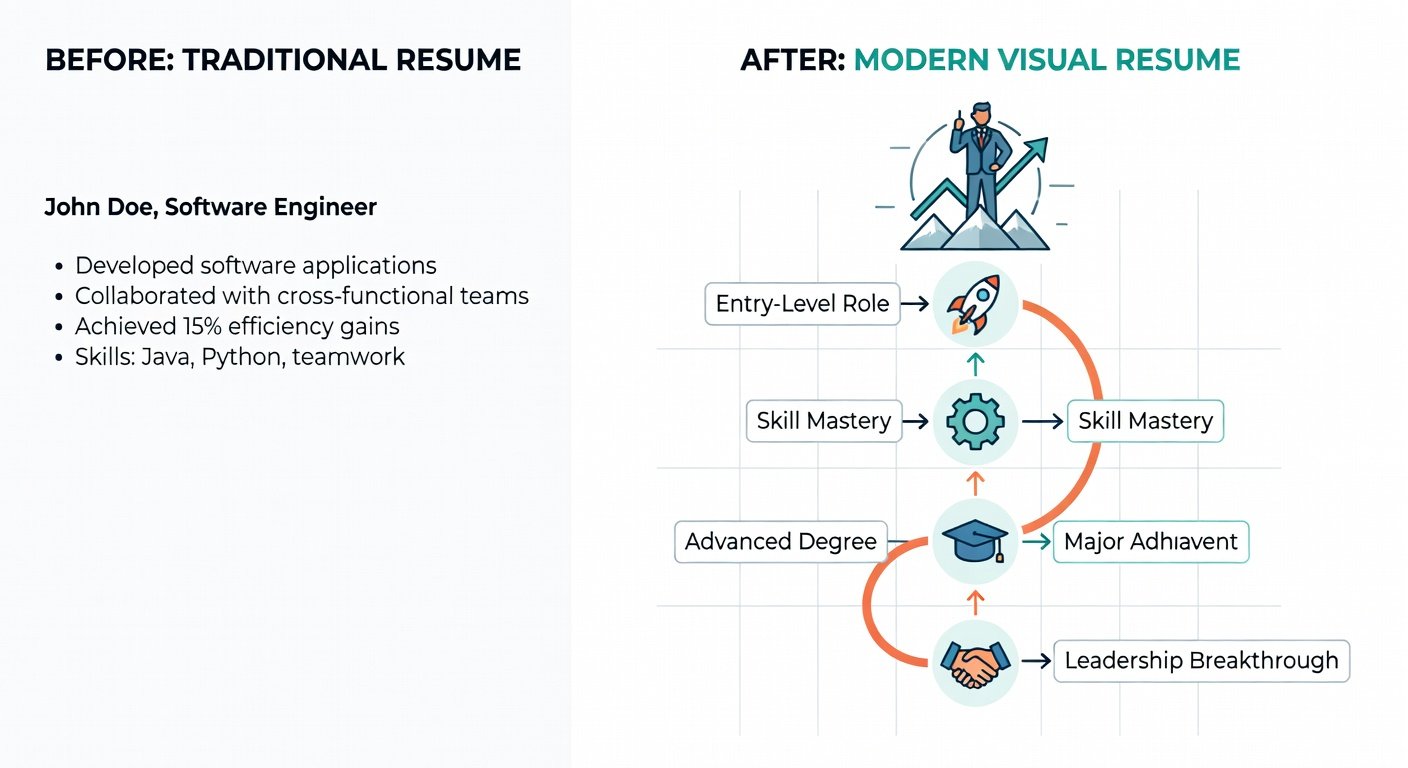
As you move from one job to the next, highlight transitions. If you advanced internally, emphasize how each step built on the last. For career gaps or shifts, frame them positively: "Took a sabbatical to upskill in data analytics, returning with certifications that boosted team efficiency by 15%."
Showcasing Achievements Effectively
Achievements are the plot points that drive your narrative forward. Quantify them wherever possible to add credibility and excitement. Numbers make your story tangible—"increased sales by 40%" paints a vivid picture of success.
Tips for Highlighting Key Wins
- Focus on Relevance: Prioritize accomplishments that align with the job. If applying for a sales role, lead with revenue-generating feats.
- Use Action Verbs: Start bullets with verbs like "engineered," "revitalized," or "championed" to propel the narrative.
- Show Impact: Always connect the achievement to a broader outcome, like team success or business growth.
According to insights from the , resumes with quantifiable achievements are 2.5 times more likely to advance in the process. Remember, it's not just what you did, but how it advanced your story and the organization's goals.
Balancing Personal and Professional Elements
Infuse subtle personal touches to humanize your resume without overdoing it. If a volunteer role sparked your passion for sustainability, mention how it influenced your corporate initiatives. This weaves your personal journey into the professional fabric, showing authenticity.
Presenting Skills in a Narrative Context
Skills sections often get overlooked, but in a narrative resume, they reinforce your story. Instead of a generic list, group skills thematically and tie them to experiences.
Strategic Skill Storytelling
- Technical Skills: For roles in tech, narrate how you applied Python to solve a real-world problem, linking to an achievement.
- Soft Skills: Demonstrate leadership by describing how you mentored juniors, fostering a collaborative environment.
- Transferable Skills: If switching industries, highlight how communication skills from teaching translate to client relations in sales.
Place a concise skills summary near the top, using it as a bridge to your experiences. Tools like keyword optimization from job descriptions ensure your narrative aligns with applicant tracking systems (ATS) while remaining engaging for human readers.
Common Pitfalls to Avoid in Resume Narratives
Even the best stories can falter with poor execution. Avoid these mistakes:
- Overloading with Details: Keep it concise—resumes should fit one page for most professionals.
- Lack of Consistency: Ensure your narrative voice remains professional and positive throughout.
- Ignoring ATS: While storytelling is key, incorporate job-specific keywords naturally to pass initial screens.
- Neglecting Proofreading: Typos break the immersion; have a trusted peer review your story.
Finally, customize every resume. A one-size-fits-all approach dilutes your narrative's power.
Conclusion: Your Resume as a Launchpad
Crafting a narrative resume is about authenticity and strategy. By weaving your personal and professional journeys into a compelling tale, you transform your application from forgettable to unforgettable. Start drafting today: outline your story, quantify your wins, and let your achievements shine. The right narrative doesn't just get you noticed—it gets you hired.
Ready to refine your resume? Experiment with these tips and watch your career story unfold.


No comments yet. Be the first!