 Jobboy

Introduction: Why Resume Analytics Matter in 2026
Job seekers today face an increasingly competitive market where generic resumes no longer suffice. Resume analytics tools go beyond basic Applicant Tracking System (ATS) compatibility by providing data-driven insights into keyword density, readability, and overall performance. These platforms help refine applications using metrics that hiring managers and algorithms prioritize. In 2026, with AI-driven hiring processes becoming standard, relying solely on manual edits is inefficient. Analytics reveal patterns in successful applications, such as optimal section lengths and verb choices that correlate with higher interview rates.
In this guide, we explore top platforms, key metrics, interpretation steps, free versus paid comparisons, real-world optimization examples, A/B testing strategies, cover letter integration, and common pitfalls. By the end, you will have actionable steps to elevate your job search success. Understanding these tools empowers candidates to make informed adjustments rather than guessing what recruiters want.
Top Resume Analytics Platforms in 2026
Several established tools lead the market. LinkedIn offers built-in analytics through its premium features for profile optimization, allowing users to see how their resumes align with job postings shared on the platform. Other popular options include Jobscan for ATS simulation and ResumeWorded for detailed scoring. Each provides unique dashboards tracking match rates against job descriptions. For instance, some tools simulate recruiter views by scoring visual appeal and formatting alongside content.
When choosing a platform, consider integration capabilities with job boards like Indeed. Users report higher success rates when combining multiple tools for comprehensive analysis. Advanced platforms now incorporate machine learning to predict how changes affect application performance across industries, giving job seekers a competitive edge in fields like tech, healthcare, and finance.
Key Metrics: Keyword Density and Readability Scores
Keyword density measures how often target terms appear relative to total word count. Optimal ranges typically fall between 2-4% to avoid stuffing penalties while ensuring relevance. Readability scores, often based on Flesch-Kincaid metrics, aim for grades 8-10 to ensure clarity for recruiters who scan quickly. Tools may also track passive voice usage, sentence variety, and buzzword frequency to prevent common issues that lower engagement.
Additional metrics include section balance, action verb usage, and length optimization. Tools calculate these automatically, highlighting weaknesses like overused phrases or missing skills. For example, a low action verb score might prompt replacing generic terms like "responsible for" with dynamic ones like "led" or "developed." Interpreting these metrics requires context, as industry norms vary—technical roles prioritize precise jargon while creative fields value concise storytelling.
Steps to Interpret Performance Data
- Upload your resume and a target job description into the chosen analytics platform.
- Review the overall score and breakdown by category, noting any red flags in formatting or content gaps.
- Identify low-scoring sections and prioritize fixes, such as adding quantifiable achievements where impact metrics are missing.
- Track changes over multiple iterations by saving versions and comparing scores side-by-side.
- Export reports for ongoing reference and share insights with career coaches if needed.
This systematic approach turns raw data into targeted improvements. Revisit metrics after each major edit to ensure progress, and cross-reference with real job postings for accuracy.
Free vs Paid Tools: Making the Right Choice
Free versions offer basic scans and limited reports suitable for initial reviews. They often cap the number of uploads or omit advanced visualizations. Paid subscriptions unlock features like unlimited uploads, detailed competitor analysis, and personalized recommendations based on your career history. Evaluate based on your job search volume and need for depth rather than cost alone. Many professionals start with free tiers to test usability before committing.
Real-World Examples of Before-and-After Optimizations
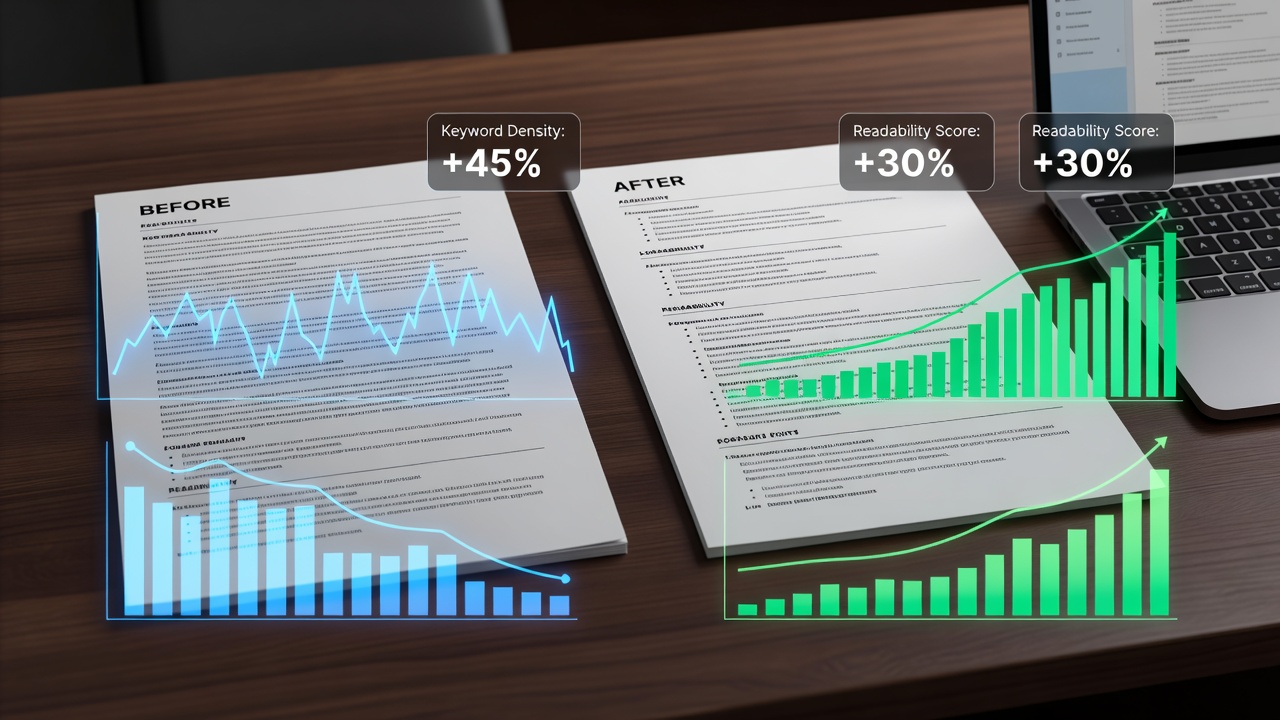
Consider a marketing professional's resume scoring 45% initially due to low keyword density for "SEO strategy" and "campaign analytics." After adjustments increasing density to 3.2% and improving readability to grade 9, the score rose to 82%. Interview callbacks increased by 40% in subsequent applications. The candidate also restructured the experience section to lead with results, which the tool flagged as a high-impact change.
Another example involves a software engineer who balanced sections better, reducing bullet points from 12 to 8 per role while emphasizing quantifiable achievements. Performance data guided these precise edits, resulting in a 30-point score jump and three additional recruiter messages within a week. These cases illustrate how small, metric-guided tweaks compound into meaningful outcomes.
Tips for A/B Testing Resume Versions
Create two variants: one emphasizing skills and another focusing on achievements. Submit to similar job postings and track response rates over two weeks using a simple spreadsheet. Use analytics tools to compare scores before testing live, ensuring both versions meet baseline thresholds. Document results to refine future versions systematically and avoid confirmation bias by testing across multiple industries if possible.
Integrating Analytics with Cover Letters
Apply the same keyword insights to cover letters for consistency across your application package. Tools that analyze both documents together ensure alignment in tone and emphasis. This unified approach strengthens applications and reinforces key qualifications. For instance, if analytics suggest boosting "project management" mentions, weave the term naturally into both resume bullets and cover letter anecdotes for a cohesive narrative.
Common Pitfalls to Avoid
- Over-optimizing for keywords at the expense of natural language, which can make resumes feel robotic and reduce human appeal.
- Ignoring readability in favor of high scores, leading to dense text that fatigues recruiters.
- Neglecting to update data as job markets evolve, since keyword trends shift with new technologies and roles.
- Sharing sensitive resume information without reviewing privacy policies, risking data exposure on less secure platforms.
- Relying solely on one tool without cross-verification, as algorithms differ in their weighting of metrics.
Conclusion
Resume analytics tools provide a powerful edge in 2026 by turning subjective resume writing into a measurable process. By mastering metrics, testing variations, and integrating insights across documents, job seekers can significantly improve their chances of landing interviews. Start with a trusted platform, apply changes methodically, and monitor results to refine your strategy over time.
FAQ
How accurate are resume analytics tools?
Accuracy varies but has improved with AI advancements. They provide reliable benchmarks when calibrated against real job postings from sources like Glassdoor, though they should complement—not replace—human feedback.
What about privacy concerns?
Reputable platforms encrypt data and allow deletion requests. Always review terms before uploading personal information to protect against breaches.
Can these tools guarantee job offers?
No tool guarantees success, but they significantly improve application quality and response rates when used consistently alongside networking and interview preparation.


No comments yet. Be the first!