 Jobboy
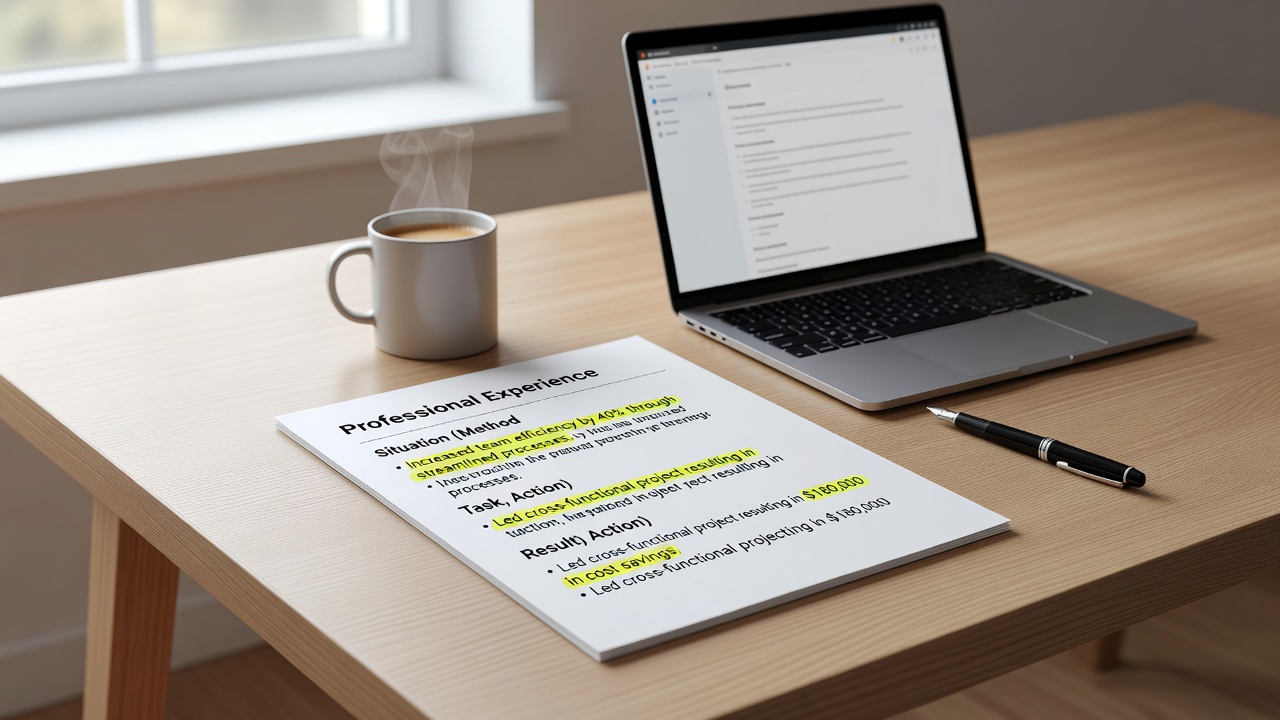
Introduction: Why the STAR Method Matters for Resumes in 2026
Job seekers in 2026 face an increasingly competitive market where recruiters and applicant tracking systems (ATS) scan resumes in seconds. Generic bullet points listing duties no longer suffice. The STAR method—Situation, Task, Action, Result—transforms ordinary responsibilities into compelling, quantifiable achievements. This approach directly supports resume writing best practices and helps optimize content for ATS resume parsing tools.
By applying STAR, candidates turn vague statements into evidence-based accomplishments that align with target keywords and demonstrate impact. This article provides a complete, practical guide with industry examples, before-and-after samples, step-by-step instructions, common pitfalls, and advice for cover letters and ATS optimization. Understanding this framework can dramatically improve interview callbacks by making your contributions visible at a glance.
Understanding the STAR Method Components
The STAR framework breaks achievements into four clear parts. Each element builds on the previous one to create a concise narrative that highlights problem-solving and results. Mastering these components ensures your bullets remain focused and persuasive.
Situation: Set the Context
Describe the background or challenge briefly. Keep it to one sentence to maintain focus on your contribution. For example, mention a specific project deadline, market shift, or team shortfall without unnecessary details that dilute the impact.
Task: Define Your Responsibility
Explain your specific role or goal within that situation. This shows ownership without over-explaining team dynamics. Clarify what you were personally accountable for achieving.
Action: Detail the Steps You Took
Outline the concrete actions you performed. Use strong verbs and focus on your individual efforts rather than team activities. Break down key initiatives such as research, implementation, or collaboration strategies.
Result: Quantify the Outcome
End with measurable results. Include percentages, dollar amounts, time saved, or other metrics that prove success. This final element is often the most powerful for recruiters and ATS resume algorithms alike.
Why the STAR Method Excels in the 2026 Job Market
With remote work and automated screening tools more prevalent than ever, resumes must convey immediate value. STAR bullets help candidates stand out by providing proof rather than promises. They naturally incorporate keywords like resume writing and ATS resume while maintaining readability for human reviewers. Research from major career platforms shows that achievement-oriented resumes receive significantly higher response rates compared to duty-focused ones.
Before-and-After Examples Across Industries
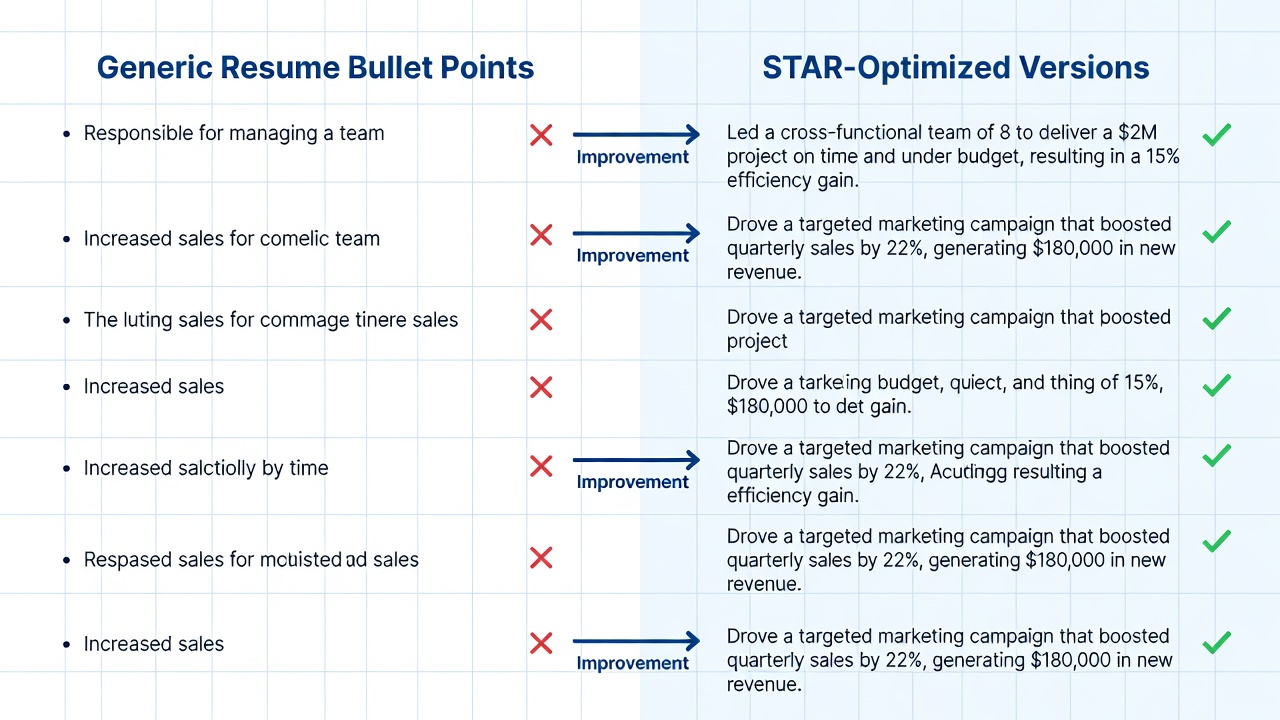
Generic bullets focus on duties. STAR bullets emphasize achievements and incorporate keywords naturally. Below are expanded examples from four sectors.
Marketing Example
Before: Managed social media accounts and created content.
After: Faced declining engagement rates (Situation), was tasked with increasing follower interaction by 30% (Task), developed a content calendar and ran targeted campaigns (Action), resulting in a 45% rise in engagement and 12,000 new followers within six months (Result).
Software Engineering Example
Before: Wrote code and fixed bugs.
After: Encountered frequent system outages affecting 5,000 users (Situation), assigned to reduce downtime by 50% (Task), implemented automated testing and refactored legacy modules (Action), achieving 62% fewer outages and saving $180,000 annually (Result).
Healthcare Administration Example
Before: Coordinated patient scheduling and handled records.
After: Noticed long wait times averaging 45 minutes (Situation), responsible for improving patient flow (Task), redesigned scheduling software and trained staff on new protocols (Action), cutting average wait times by 35% and boosting satisfaction scores to 92% (Result).
Finance Example
Before: Prepared monthly financial reports.
After: Identified discrepancies in quarterly forecasts (Situation), tasked with improving accuracy (Task), introduced new reconciliation processes and data validation checks (Action), reducing reporting errors by 78% and accelerating close cycles by two days (Result).
Step-by-Step Guide to Applying STAR on Your Resume
- Review your target job description and extract keywords such as “resume writing” and “ATS resume.”
- List 3–5 major achievements from each role, focusing on challenges you personally addressed.
- Map each achievement to the four STAR elements, writing one sentence per component initially.
- Condense into 1–2 lines per bullet, starting with a strong action verb and ending with a quantified result.
- Quantify results wherever possible and integrate relevant keywords without forcing them unnaturally.
- Review for ATS compatibility by avoiding tables, graphics, and special characters; test formatting in plain text.
- Seek feedback from a mentor or use online resume builders to refine clarity and impact.
- Update your LinkedIn profile to mirror the same STAR structure for consistency across platforms.
Repeat this process for every position to maintain consistency throughout your resume. This methodical approach ensures no achievement is overlooked.
Common Mistakes to Avoid When Using STAR
- Over-describing the Situation and Task while under-emphasizing Action and Result, which weakens the overall impact.
- Using vague metrics or omitting numbers entirely, leaving recruiters without clear evidence of success.
- Focusing on team achievements instead of individual contributions, which can obscure your personal role.
- Ignoring keyword integration, which reduces ATS resume ranking potential and visibility in searches.
- Writing overly long bullets that lose recruiter attention within the first few seconds of scanning.
- Failing to tailor examples to the specific job, resulting in generic content that does not align with employer needs.
Optimizing STAR Bullets for ATS Resume Systems
ATS software scans for keywords, standard section headings, and clean formatting. Place STAR bullets under clear headings like “Professional Experience.” Use standard fonts and file formats such as .docx or PDF. Incorporate exact phrases from job postings without keyword stuffing. Test your resume with free ATS simulators before submitting applications. Many platforms now integrate AI to evaluate narrative strength, making STAR even more valuable for 2026 applications.
Adapting the STAR Method for Cover Letters
Cover letters allow more narrative flexibility. Expand the Result section to tell a short story while maintaining the same four-part structure. Align the story with company values and the specific role. Keep the total length to three or four paragraphs to respect recruiter time. This adaptation helps bridge your resume achievements with the employer’s current challenges.
Frequently Asked Questions
Can STAR be used for entry-level positions?
Yes. Even internships, academic projects, or volunteer work can be framed using STAR by highlighting challenges overcome and measurable outcomes achieved.
How many STAR bullets should appear per job?
Aim for three to five strong bullets per role, prioritizing those most relevant to the target position.
Does STAR work for technical resumes?
Absolutely. Technical roles benefit greatly from quantified results such as code efficiency gains or system improvements.
Conclusion
Mastering the STAR method elevates your resume from a list of tasks to a powerful showcase of impact. In 2026’s job market, this technique helps candidates stand out to both human readers and ATS resume systems. Apply the steps outlined here, review your bullets for clarity and metrics, and tailor content to each application. The result is a stronger, more persuasive resume that drives interviews and career advancement.


No comments yet. Be the first!