 Jobboy

Introduction: Why Quantifying Transferable Skills Matters in 2026
Career changers frequently face challenges when translating project experience from non-traditional backgrounds into compelling resume content that stands out. In 2026, recruiters and hiring managers expect resumes to feature clear impact metrics that demonstrate tangible value rather than simply listing duties or responsibilities. This comprehensive guide delivers actionable steps to quantify essential skills such as coordination, budgeting, timeline management, and leadership. By using data-driven language, your resume can pass applicant tracking systems while resonating with decision-makers across industries.
Transferable project skills emerge from diverse sources including volunteering, freelance assignments, academic collaborations, community initiatives, and personal side projects. The transformation from vague statements to measurable achievements requires careful analysis and precise wording that highlights your capacity to drive results in any setting.
Understanding 2026 Recruiter Expectations for Impact Metrics
Modern recruiters prioritize resumes that showcase quantifiable outcomes instead of generic task lists. They actively search for numbers that convey scale, efficiency improvements, and direct contributions to goals. Career platforms emphasize that resumes incorporating specific metrics tend to attract more views and responses from employers. For project coordination, detail the number of team members involved or deadlines achieved ahead of schedule. For budgeting, highlight exact cost reductions, fund allocations, or resource optimizations achieved through your efforts. These expectations have intensified as hiring processes incorporate more data analytics to evaluate candidates quickly.
Identifying Your Transferable Project Skills Across Contexts
Begin the process by compiling a complete inventory of projects completed outside traditional employment. Skills like stakeholder coordination, resource allocation, risk assessment, and cross-team communication often transfer seamlessly. Align these with target job descriptions by extracting relevant keywords such as "cross-functional collaboration," "budget oversight," or "process optimization." This mapping ensures your quantified bullets align with what employers seek in 2026 applications.
Expanded Step-by-Step Checklist for Quantifying Skills
- Audit every past project thoroughly, recording raw data points including team sizes, project durations in weeks or months, total budgets handled, participant numbers, and specific outcomes achieved.
- Apply the STAR framework rigorously: describe the Situation, your Task, the Actions taken, and the measurable Result, placing emphasis on numerical outcomes in the final element to create immediate impact.
- Convert qualitative actions into hard metrics wherever possible, such as changing "coordinated a team" into "coordinated an 8-member cross-functional team that delivered results 15% ahead of the original timeline."
- Cross-verify all figures using personal notes, emails, project logs, or confirmations from team members and stakeholders to maintain accuracy and credibility.
- Incorporate ATS-optimized language by weaving in exact phrases from job postings, ensuring the resume parses correctly through automated screening tools.
- Conduct a final review for pitfalls including unsupported claims, excessive jargon, or lack of context around percentages and figures.
- Iterate by soliciting feedback from mentors or career advisors familiar with 2026 hiring trends before finalizing the document.
Multiple STAR-Based Examples from Non-Traditional Backgrounds
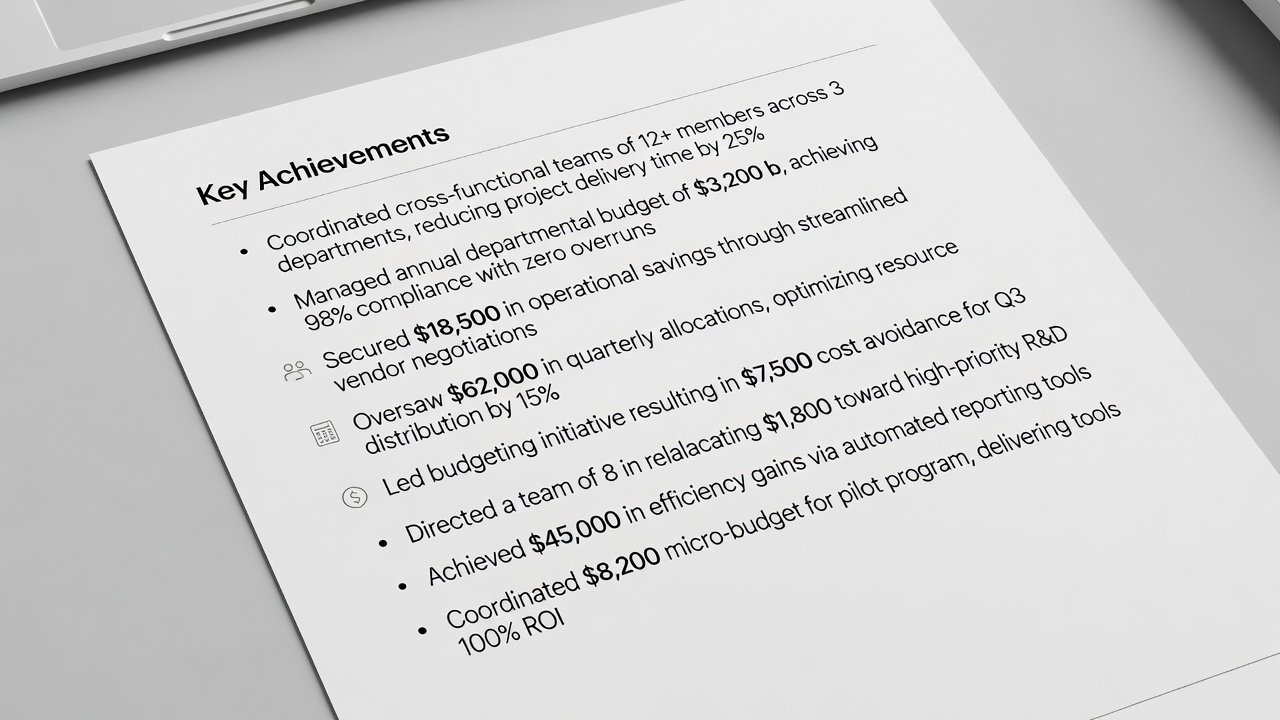
A volunteer community organizer might expand a simple role into: "Situation involved planning annual fundraisers with limited resources; Task was to increase participation; Action included coordinating with 15 local businesses and managing a $3,200 budget; Result delivered 620 attendees and raised $18,500, exceeding prior year totals by 40%."
For freelance consultants handling multiple client projects: "Led budgeting and coordination for 7 client campaigns totaling $62,000, implementing tracking systems that reduced overspending incidents by 22% while maintaining on-time delivery across all deliverables."
Academic or student-led initiatives provide strong examples too. "Directed a 9-person research team analyzing environmental data over 4 months, securing $7,500 in additional funding through a detailed proposal process that outlined projected impacts and resource needs."
Another scenario from event planning in a hobby group: "Managed coordination of monthly workshops for 35 regular participants, optimizing scheduling and vendor contracts to cut costs by $1,800 annually while boosting attendance rates by 28%."
ATS-Friendly Phrasing Techniques and Keyword Strategies
Begin each bullet with strong action verbs such as Orchestrated, Streamlined, Allocated, or Executed. Seamlessly integrate high-value keywords including "project coordination," "budget management," "resource allocation," and "stakeholder engagement." Maintain brevity with bullets spanning no more than two lines. Leverage free online simulators from established career resources to test compatibility before submission.
Additional links for further reading include guidance from LinkedIn on resume optimization and practical advice available at Indeed.
Before-and-After Bullet Comparisons with Detailed Analysis
| Before (Vague) | After (Quantified and ATS-Optimized) |
|---|---|
| Helped with team projects | Facilitated coordination across 5 departments involving 22 stakeholders, improving overall project completion rates by 30% within quarterly deadlines |
| Handled budgets | Managed $45,000 annual project budget through detailed forecasting, achieving consistent 12% cost reductions via strategic vendor renegotiations |
| Organized events | Planned and executed 4 large-scale community events engaging over 200 participants each, generating $8,200 in net funds through targeted sponsorship outreach |
| Supported group initiatives | Coordinated logistics for 3 volunteer-driven initiatives serving 180 individuals, reducing administrative overhead by 18 hours monthly through process automation |
Common Quantification Pitfalls and How to Avoid Them
- Avoid isolated percentages without baselines or context, such as claiming efficiency gains without specifying the original timeframe or team size involved.
- Never rely on rough estimates; always anchor numbers in verifiable records to prevent credibility issues during interviews.
- Prevent bullet overload by limiting each to one or two core metrics, allowing recruiters to absorb information quickly.
- Balance hard numbers with qualitative context when data is sparse, such as incorporating team feedback scores alongside delivery metrics.
- Customize every metric to the target role rather than using generic figures that fail to demonstrate relevance.
Handling Limited Data: Expanded FAQ Section
How do I quantify skills when records are minimal or incomplete?
Apply conservative estimates supported by available documentation and consider noting the basis of your figures during interviews if asked. Prioritize process improvements and efficiency gains when exact totals remain unavailable.
Is it acceptable to present data in ranges for credibility?
Ranges maintain professionalism and accuracy, for example stating "supervised teams ranging from 4 to 12 members across multiple initiatives" while still conveying scope effectively.
What strategies work for small-scale or personal projects?
Highlight proportional impacts such as "optimized personal project workflows saving 10 hours weekly for a core group of 4 contributors" to demonstrate value regardless of overall size.
Should I include third-party validation for my metrics?
Whenever possible, reference confirmations from collaborators or public outcomes to strengthen claims, especially for volunteer or freelance work.
Tailoring Quantified Skills to Specific Industries and Roles
Adapt your examples based on the sector. Technology roles may emphasize coordination speed and budget efficiency in agile environments, while nonprofit positions highlight participant growth and fund allocation success. Review multiple job postings to refine metrics accordingly and test variations for optimal response rates.
Explore additional authoritative resources at CareerOneStop for tools supporting skill quantification and resume development.
Conclusion: Implementing These Strategies for 2026 Success
Effectively quantifying transferable project skills elevates career-changer resumes to meet evolving 2026 recruiter standards. Through detailed checklists, STAR frameworks, expanded examples, and pitfall avoidance, you produce content that is both scannable and impactful. Begin auditing your projects immediately, apply the before-and-after transformations, and refine based on the FAQ guidance to strengthen every application moving forward.

No comments yet. Be the first!