 Jobboy
Introduction: Why Professional Memberships Matter on Modern Resumes
In 2026, recruiters and applicant tracking systems (ATS) continue to value professional memberships as strong signals of industry engagement, continuous learning, and commitment to professional standards. These affiliations can set you apart from other candidates by demonstrating active involvement in your field, access to cutting-edge knowledge, and valuable networking capabilities. Whether you are a mid-career professional, a specialist switching industries, or a recent graduate, strategically listing memberships helps highlight transferable skills such as leadership, collaboration, and technical expertise. This comprehensive guide explores ATS-friendly formatting techniques, optimal placement strategies, detailed citation examples across membership types, impact quantification methods, before-and-after samples, common pitfalls, recruiter perspectives, checklists, and seamless integration with cover letters.
Strategic Placement for Maximum Impact
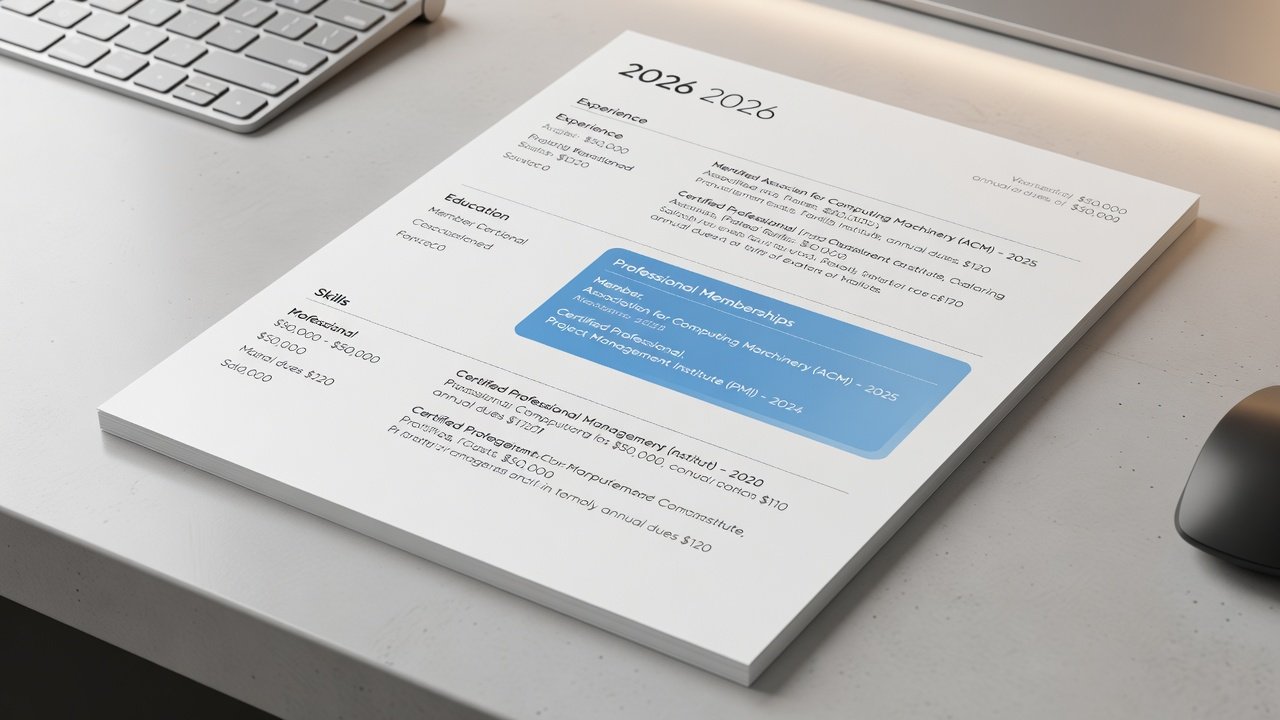
Deciding where to position your professional memberships section requires careful consideration of your career stage and the target role. For most applicants, the ideal location is near the bottom of the resume, following experience and education but preceding the skills section. This placement allows recruiters to focus first on your core qualifications while still encountering your affiliations as supporting evidence of credibility. In specialized fields like consulting, academia, or nonprofit leadership, consider elevating the section immediately after your professional summary to underscore domain expertise early. Always align placement with job description priorities—review the posting for keywords like "industry involvement" or "professional development" and adjust accordingly. Avoid burying relevant memberships in dense blocks of text; instead, use clear headings that ATS software can easily parse.
ATS Optimization Techniques
Applicant tracking systems favor standard, unambiguous section titles such as "Professional Memberships," "Affiliations," or "Professional Associations." Incorporate exact phrases from the job description, such as "project management" or "data analytics," when describing your role within the organization. Spell out acronyms on first mention followed by the abbreviation in parentheses. Refrain from using graphics, tables, or multi-column layouts that may disrupt ATS parsing algorithms. Test your resume by copying the text into a plain document to confirm readability.
Step-by-Step Formatting for Different Membership Types
Formatting varies depending on the nature of each membership. For active memberships, include the full organization name, your membership level or role if applicable, and the start year through present. Example: "American Institute of Certified Public Accountants (AICPA), Active Member, 2022–Present." When leadership positions are involved, add a brief bullet describing contributions: "Served as Chapter Treasurer, managing annual budgets exceeding organizational goals."
Expired or former memberships should be included sparingly and only when they demonstrate enduring relevance to the target position. Format them with end dates and a short note on key outcomes achieved during involvement. Inactive groups lacking recent activity or direct skill alignment are typically best omitted to maintain resume brevity and focus.
Honorary, selective, or invitation-only memberships deserve special emphasis. Use descriptors such as "Invited Fellow" or "Distinguished Member" to convey exclusivity. For student or emerging professional groups, highlight any transition to full professional status and link them explicitly to skills like event coordination or research methodology.
Impact Quantification Tips
Transform passive listings into compelling achievements by adding metrics. Instead of simply naming an organization, quantify your involvement: "Led a subcommittee that developed three industry whitepapers downloaded over 5,000 times, directly informing regulatory changes." Connect these accomplishments to transferable skills valued by employers, such as strategic planning or stakeholder engagement. When possible, reference outcomes that mirror responsibilities in the desired role, creating a clear bridge between membership activities and job performance potential.
Before-and-After Resume Samples
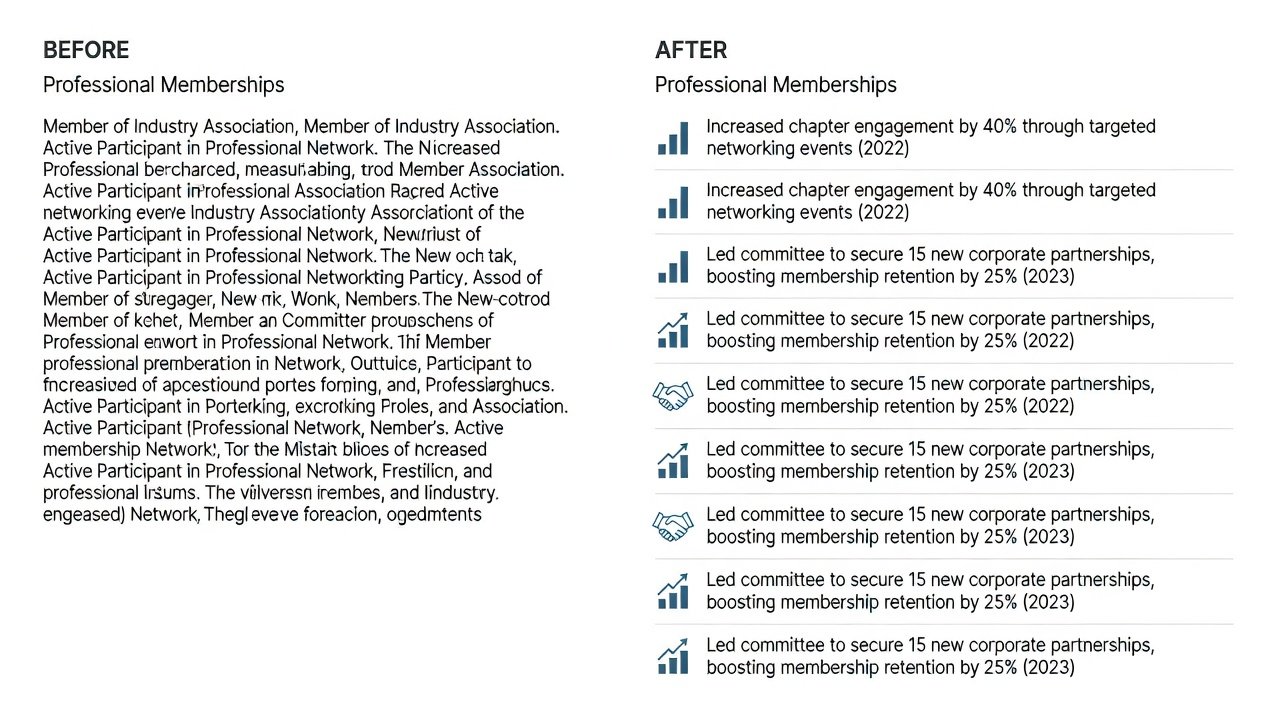
Before example (generic and weak): "Memberships: PMI, AMA, SHRM."
After example (targeted and impactful): "Project Management Institute (PMI), Member, 2021–Present – Organized virtual workshops attended by 150 professionals, resulting in enhanced cross-functional project delivery skills applicable to agile environments."
Another before-and-after pair for a career changer: Before lists unrelated student groups; after reframes one as "Marketing Association, Member, 2020–2023 – Developed campaigns that increased membership engagement by 40%, building digital marketing competencies now applied to B2B sales roles."
Common Pitfalls and How to Avoid Them
One frequent mistake is over-listing every affiliation ever joined, which dilutes focus and suggests lack of discernment. Limit entries to three to five highly relevant groups. Another error involves failing to tie memberships to job-specific skills; always add context that illustrates how participation enhanced abilities like negotiation or data analysis. Including outdated or lapsed memberships without justification can raise questions about currency of knowledge—review each entry annually and remove those no longer aligned with career objectives.
Recruiter Insights and Comprehensive Checklists
Recruiters emphasize quality and relevance above volume. They look for evidence that memberships have translated into tangible professional growth rather than mere name-dropping. Use this detailed checklist when preparing your section: Confirm current membership status through official portals; match organization names and keywords precisely to the job posting; quantify at least one achievement per entry; ensure consistent date formatting throughout the resume; solicit feedback from a mentor or career coach on perceived relevance; and verify that entries do not duplicate information already covered in your experience section.
Integration Strategies with Cover Letters for Career Changers and Specialists
Cover letters provide an excellent opportunity to expand on one or two memberships. For career changers, reference a membership that facilitated skill acquisition in the new field: "My participation in the Data Science Association equipped me with machine learning techniques that I successfully applied during a recent cross-industry project." Specialists can use the letter to demonstrate thought leadership: "As an active contributor to the Institute of Electrical and Electronics Engineers, I have presented at two conferences, experiences that directly prepare me to lead technical teams at your organization." This narrative approach creates cohesion between documents and reinforces your candidacy.
Expanded FAQs on Handling Expired Memberships and Measuring ROI
Q: How should expired memberships be handled if they represent significant past achievements? A: Include them with clear end dates and focus on lasting skills gained, but limit to one or two entries that remain pertinent to current applications.
Q: What methods help measure the ROI of membership dues in job applications? A: Track qualitative returns such as new contacts leading to informational interviews, certifications obtained, or knowledge applied in current roles. Compare these benefits against time invested rather than solely financial costs.
Q: Can memberships from unrelated fields ever be beneficial? A: Only when they showcase universally transferable skills like volunteer leadership or event management that align with the new target industry.
Q: Should recent graduates list academic honor societies alongside professional groups? A: Yes, but transition the focus quickly to any professional organizations joined post-graduation to demonstrate forward momentum.
For additional authoritative guidance on resume best practices, explore resources from LinkedIn, Indeed, and SHRM. Implementing these strategies will help your resume stand out effectively in 2026 hiring landscapes.
No comments yet. Be the first!