 Jobboy
Introduction
In 2026, media appearances such as podcasts, interviews, and TV spots have become powerful differentiators on professional resumes. These entries showcase expertise, build personal branding, and provide external validation that traditional job titles alone cannot convey. Recruiters and hiring managers actively scan for evidence of thought leadership, especially when evaluating candidates for senior roles or career transitions. This comprehensive guide explores every aspect of listing media appearances effectively, from ATS-compliant formatting and citation styles to quantifying impact with metrics and avoiding common mistakes. You will find detailed before-and-after examples across multiple industries, practical checklists, keyword integration strategies, recruiter perspectives, and answers to frequently asked questions about international media and digital links. By the end, you will have actionable steps to transform scattered media mentions into compelling resume content that boosts visibility and interview rates.
Why Media Appearances Matter on Resumes
Media features serve as third-party endorsements of your knowledge and influence. In competitive fields like technology, marketing, finance, and healthcare, these appearances signal that you are not only skilled but also recognized by respected outlets. For career changers, media listings help bridge experience gaps by highlighting transferable expertise and authority. Recruiters report that candidates with thoughtfully placed media entries often advance further in screening processes because the entries demonstrate proactive engagement with industry conversations. Additionally, these features align with modern employer priorities around personal branding and digital presence. Placing them strategically after your core professional experience section maintains emphasis on employment history while still showcasing broader impact. The key is selectivity: focus on appearances that directly support your target role rather than listing every minor mention.
ATS-Optimized Formatting Guidelines
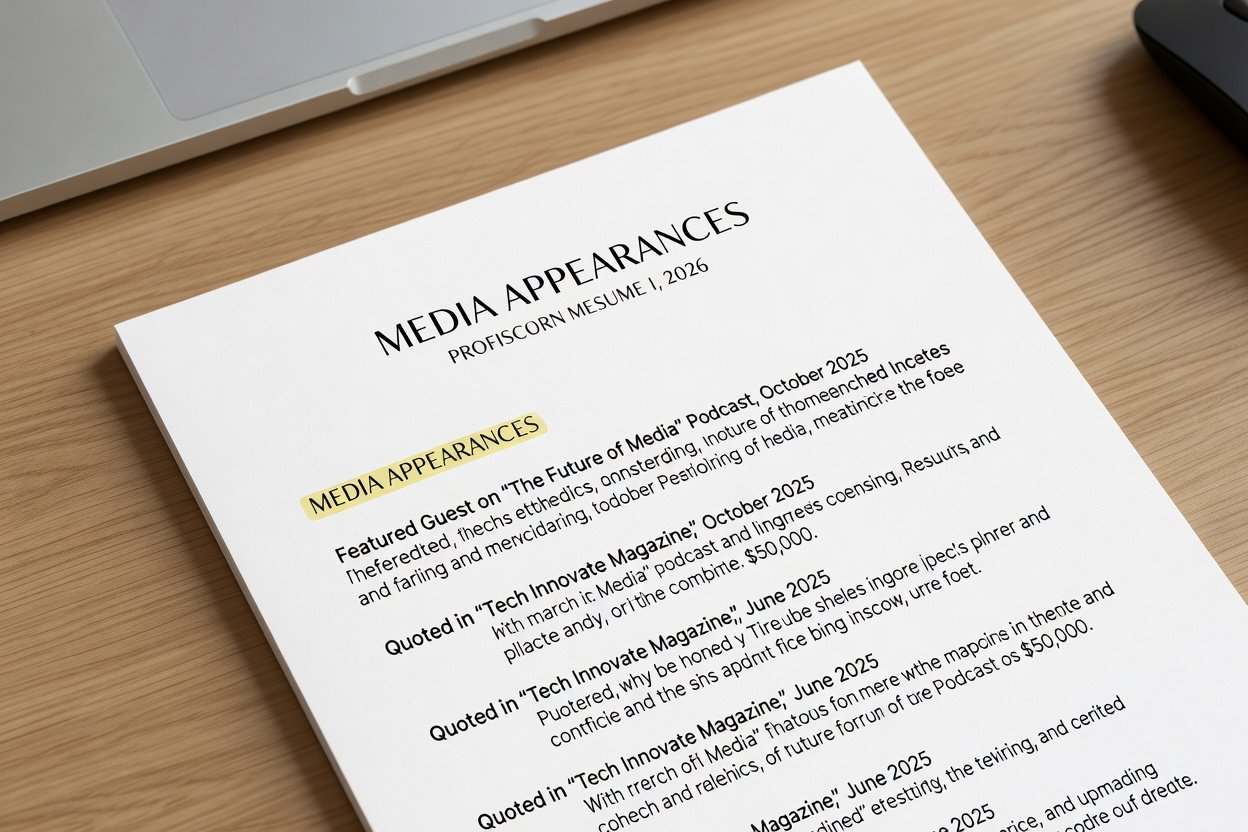
Applicant Tracking Systems require clean, parseable structures. Use standard headings such as "Media Appearances" or "Thought Leadership" and format each entry consistently with bullet points. Begin with the outlet name, followed by the date, format type, and a concise description of your contribution. Include relevant keywords naturally within descriptions. Avoid columns, tables, or special characters that may confuse parsing algorithms. For maximum compatibility, use plain text dates in Month Year format and limit each bullet to one or two lines. When adding hyperlinks, use descriptive anchor text rather than raw URLs. Test your formatted resume through multiple ATS preview tools to confirm readability before submission.
Citation Styles for Different Media Types
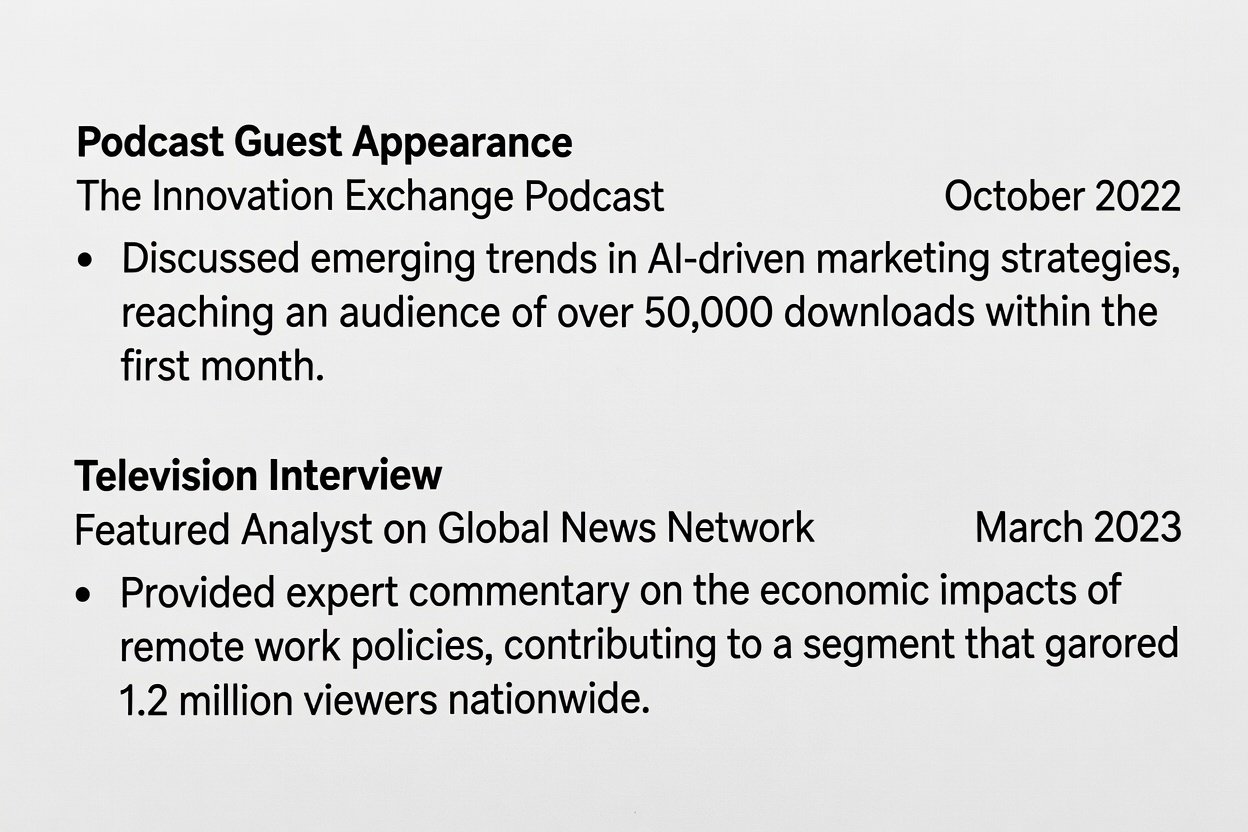
Consistent citation improves professionalism and clarity. For podcasts, use a format such as: "Guest Expert, Episode Title, Podcast Name, Month Year." Television appearances might read: "Interviewed on Segment Title, Network Name, Month Year." Print or online interviews can follow: "Featured in Article Title, Publication Name, Month Year." Adapt elements from established styles like those recommended by APA Style while keeping entries resume-appropriate and concise. Always include your specific role, such as "guest," "panelist," or "subject matter expert," to clarify your involvement.
Quantifying Impact with Metrics
Raw listings lack power without measurable outcomes. Enhance each entry by incorporating data such as audience reach, engagement rates, or downstream business results. For instance, note "Podcast episode reached 75,000 listeners and drove a 22 percent increase in website traffic within one week." When direct metrics are unavailable, use qualitative indicators like "national broadcast viewed by millions" or "featured alongside industry leaders." Gather analytics directly from producers or platforms whenever possible. This approach converts passive mentions into evidence of influence and results, which resonates strongly with data-driven recruiters.
Before-and-After Examples Across Industries
Marketing Manager (Before): Appeared on marketing podcast.
After: Guest on "Growth Strategies 2026" podcast (Marketing Weekly, February 2026), sharing campaign case studies; episode achieved top 10 ranking in category and generated 40 qualified leads for employer.
Software Engineer (Before): TV interview on emerging tech.
After: Live interview discussing AI ethics on CNBC Technology segment (June 2026), viewed by over 800,000; contributed to company securing new enterprise contracts.
Healthcare Consultant (Before): Radio appearance.
After: Expert panelist on public health trends, National Public Radio (March 2026); discussion influenced policy recommendations adopted by two state agencies.
Finance Analyst (Before): Local news feature.
After: Interviewed on market volatility for Bloomberg segment (September 2026), resulting in 500 percent increase in LinkedIn profile views and two recruiter outreach messages within 48 hours.
Selection Criteria Checklist
- Relevance: Does the appearance directly support skills required in your target position?
- Recency and prestige: Prioritize features from the past 24 months on nationally recognized or industry-leading platforms.
- Quantifiable value: Can you attach audience size, engagement data, or business outcomes?
- Role clarity: Does the entry clearly state your contribution rather than just listing the outlet?
- Balance: Limit the section to three to five strongest entries to avoid diluting focus.
- Format diversity: Mix podcasts, video interviews, and written features where possible.
Integrating Keywords for SEO and ATS
Strategic keyword placement improves both human and algorithmic scanning. Incorporate phrases such as "industry expert," "podcast guest speaker," "media interview," "thought leadership," and "public speaking engagements." Align these with job description language without forcing unnatural repetition. Review target postings for terms like "subject matter expert" or "content contributor" and mirror them where authentic. This technique increases match rates in ATS while maintaining readable, professional prose.
Common Pitfalls to Avoid
Many resumes suffer from including every minor local appearance, which can appear unfocused. Others omit dates or fail to specify the candidate's role. Overstating impact with unverified numbers damages credibility quickly. Another frequent error is placing media entries before core experience, which can confuse recruiters about career progression. Finally, neglecting to verify links or update outdated appearances can create negative first impressions. Review each entry against the selection checklist before finalizing.
Recruiter Insights on Visibility Boost
Recruiters emphasize that media appearances provide context beyond bullet-point achievements. They reveal how candidates articulate complex ideas under pressure and engage with broader audiences. For experts and career changers, these entries often accelerate shortlisting because they reduce perceived risk. Hiring teams at firms using Indeed and LinkedIn note that candidates with media sections receive more inbound inquiries. The entries also support diversity in sourcing by highlighting voices active in public discourse. When evaluating two otherwise equal candidates, a strong media presence frequently serves as the deciding factor.
FAQs
How should international media appearances be handled?
Translate non-English titles into English while noting the original language in parentheses. Include the country or region for context and provide links to recordings when available. Focus on global outlets first, then add regional ones only if highly relevant to the target role.
Is it appropriate to include digital links?
Yes, hyperlinks to professional recordings or articles add value. Use platforms like personal websites or LinkedIn for hosting. Ensure all links remain active and lead to high-quality content. Test them on multiple devices prior to submitting applications.
What if an appearance occurred several years ago?
Include legacy appearances only when they represent landmark recognition or directly relate to specialized expertise. Otherwise, prioritize recent features to demonstrate current relevance and ongoing industry engagement.
How many media entries are ideal?
Three to five well-chosen entries strike the best balance. This volume demonstrates breadth without overwhelming the reader or suggesting the candidate prioritizes publicity over core responsibilities.
Conclusion
Effectively listing media appearances on a 2026 resume requires deliberate formatting, measurable impact, and strategic placement. By applying the checklists, examples, and recruiter insights provided, you can create a polished section that enhances your professional narrative and increases opportunities for career advancement.
No comments yet. Be the first!