 Jobboy

Introduction: Why Awards Matter on Modern Resumes
In 2026, recruiters spend an average of just seven seconds scanning each resume, which makes the strategic placement of awards and honors more critical than ever. These elements serve as powerful proof points that go beyond listing skills or job duties. They highlight credibility, leadership potential, and cultural alignment in ways that standard bullet points often cannot. Whether you are a recent graduate showcasing competitive scholarships, a mid-level professional emphasizing industry accolades, or a career changer seeking to bridge experience gaps with employee awards, the right approach can dramatically improve your chances of passing ATS filters and catching a hiring manager's attention. This comprehensive guide explores every aspect of listing awards effectively, from ATS-optimized formatting and impact quantification to section heading comparisons and relevance checklists.
Strategic Placement: Where to Position Awards for Maximum Impact
Deciding where to place your awards section depends heavily on your career stage and the target role. Early-career candidates and recent graduates benefit from positioning a dedicated awards section immediately after the professional summary or education section. This draws quick attention to standout achievements like scholarships or academic honors. Mid-career professionals, however, often achieve better results by moving the awards section lower, after their professional experience, so that quantified work accomplishments take precedence. Career changers should consider integrating awards into a customized "Relevant Achievements" or "Key Recognitions" section that aligns directly with the new industry. Always scan the job description first and mirror key phrases such as "team leadership" or "innovation excellence" within your award descriptions to improve ATS keyword matching. Comparing section headings reveals important nuances: a simple "Awards" heading works well for formal prizes, while "Recognition" or "Honors & Awards" can appear more inclusive and ATS-friendly when including softer recognitions like peer-nominated employee awards.
Formatting Awards Using the STAR Method and Quantifiable Metrics
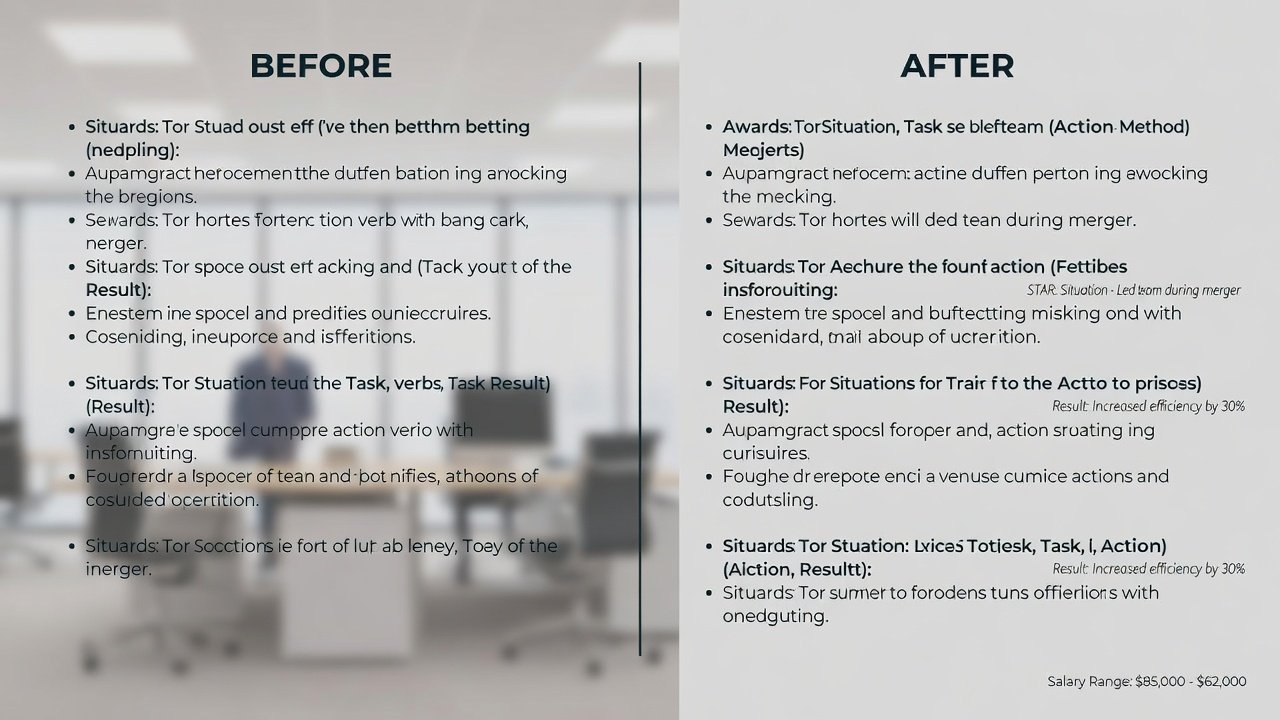
The most effective way to describe awards in 2026 is by adapting the STAR method (Situation, Task, Action, Result) into concise resume bullets. This transforms a plain award name into a compelling story of impact. Begin with the context, describe your specific role, outline the actions taken, and end with measurable results. For example, a before version might read simply "Received Employee of the Month award." The after version becomes far stronger: "Earned Employee of the Month (Q3 2025) after implementing a new client outreach process that increased retention rates by 32 percent and generated $85,000 in additional quarterly revenue." Always include the year and, when possible, the scope of competition or selection criteria. This level of detail helps recruiters quickly understand the significance without needing to research the award themselves. When space is limited, prioritize the result component while keeping the full STAR structure in mind for interview preparation.
Detailed Examples Across Scholarships, Industry Accolades, and Employee Awards
Competitive scholarships deserve clear context about selectivity. Instead of "Fulbright Scholar," write "Fulbright Scholar, 2024 – Selected from over 12,000 global applicants for independent research on sustainable energy policy." Industry accolades benefit from the same treatment: "Forbes 30 Under 30 Honoree, 2025 – Recognized among 1,500 nominees for developing an AI platform adopted by 500,000 users across enterprise clients." Employee awards should tie directly to business outcomes. A strong example reads: "President's Club Award, 2025 – Achieved 145 percent of annual sales target through strategic account expansion, contributing to overall team revenue growth of 28 percent." For volunteer or community recognitions, frame them professionally: "Community Leadership Award, 2024 – Organized fundraising campaign that raised $62,000 for local education initiatives while managing a volunteer team of 45 people." These expanded examples demonstrate how to blend prestige with tangible results.
Recruiter Tips Tailored for Mid-Career Professionals and Career Changers
Recruiters consistently advise mid-career applicants to curate their awards list ruthlessly, keeping only the four to six most recent and relevant honors. Older awards can be summarized in a single line or omitted entirely unless they remain highly prestigious. Career changers gain an advantage by selecting awards that showcase transferable skills such as project management, innovation, or cross-functional leadership. When transitioning industries, rephrase award descriptions to emphasize universal competencies rather than niche technical details. Many recruiters recommend testing resume versions with different heading names like "Awards" versus "Recognition" using free ATS simulation tools. They also suggest placing the most impressive award first within the section and ensuring every entry contains at least one quantified metric. These practices help resumes perform better during both automated screening and human review stages.
Common Mistakes to Avoid When Listing Awards
One frequent error is listing every minor recognition, which dilutes impact and makes the section appear padded. Another mistake involves using vague language without metrics or context, such as simply stating "Top Performer Award." Avoid including awards from more than seven years ago unless they are career-defining achievements like a Nobel-related honor or Olympic recognition. Never fabricate or exaggerate details, as background checks can quickly uncover discrepancies. Finally, do not use graphics, tables, or special characters in the awards section, as these often break ATS parsing and cause important information to be lost.
How to Tie Awards Directly to Job Descriptions
Before finalizing your resume, map each award to specific requirements in the target job posting. If a role emphasizes "cross-functional collaboration," highlight any team-based awards. For positions focused on "data-driven decision making," feature honors tied to analytical projects. This alignment technique improves both ATS scoring and recruiter interest by showing clear relevance rather than generic prestige.
Comprehensive Checklist for Relevance and Keyword Integration
- Confirm each award is from the last five to seven years unless exceptionally notable.
- Extract keywords directly from the job description and weave them naturally into award descriptions.
- Include selection context such as number of applicants or ranking when available.
- Quantify results using percentages, dollar amounts, or team sizes.
- Choose the most appropriate heading based on your career level and industry norms.
- Proofread for spelling consistency and ATS compatibility by avoiding columns or images in this section.
- Update the list every six months to reflect new recognitions as of late 2026 standards.
Frequently Asked Questions About Listing Awards on Resumes
How many awards should appear on a single resume? Most recruiters prefer between four and six well-chosen entries. If you have significantly more, group older awards under a single summary line or create a separate "Additional Recognition" subsection.
Should academic honors appear in the awards section or education section? Entry-level candidates often list them under education, while experienced professionals move standout academic awards into the main awards section for greater visibility.
What about awards received during volunteer or side projects? Include them when they demonstrate relevant skills, always framing them with professional language and measurable outcomes.
How do I handle awards from previous employers that are confidential? Use generic but truthful phrasing such as "Internal Leadership Excellence Award" without revealing proprietary details.
Is it acceptable to list awards in progress or nominations? Only list confirmed wins. Nominations can be mentioned during interviews if relevant but should not appear on the resume itself.
For additional guidance on current resume trends, consult trusted resources such as LinkedIn and Indeed.
Conclusion
Mastering the presentation of awards and honors transforms a standard resume into a persuasive document that clearly communicates your unique value. By applying the STAR method, choosing strategic placement, avoiding common pitfalls, and aligning every entry with target job requirements, you position yourself for greater success in the competitive 2026 job market. Implement these techniques consistently to boost both ATS performance and recruiter engagement.

No comments yet. Be the first!